


Last Watched

"Creation"  Sort by

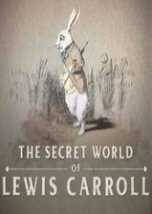
The Secret World of Lewis Carroll

   2015    History
It's a timeless classic of children's literature and the third most-quoted book in English after the Bible and Shakespeare. But what lies behind the extraordinary appeal of Alice's Adventures in Wonderland to generations of adults and children alike? To mark the 150th anniversary of its publication, this documentary explores the life and imagination of the man who wrote it, the Reverend Charles Dodgson, better known as Lewis Carroll." Broadcaster and journalist Martha Kearney delves into the biographies of both Carroll himself and of the young girl, Alice Liddell, who inspired his most famous creation. Kearney's lifelong passion for Carroll's work began as a young girl, when she starred as Carroll's heroine Alice in her local village play. She discusses the book with a range of experts, biographers and distinguished cultural figures - from the actor Richard E Grant to children's author Philip Pullman - and explores with them the mystery of how a retiring, buttoned-up and meticulous mathematics don, who spent almost his entire life within the cloistered confines of Christ Church Oxford, was able to capture the world of childhood in such a captivating way

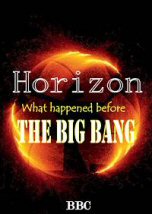
What Happened Before The Big Bang

   2010    Science
Where did everything in our universe come from? How did it all begin? For nearly a hundred years, we thought we had the answer: a big bang some 14 billion years ago. But now some scientists believe that was not really the beginning; our universe may have had a life before this violent moment of creation. Take the ultimate trip into the unknown, to explore a dizzying world of cosmic bounces, rips and multiple universes, and finds out what happened before the big bang. Horizon takes the ultimate trip into the unknown, to explore a dizzying world of cosmic bounces, rips and multiple universes, and finds out what happened before the big bang.

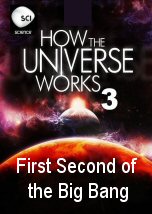
First Second of the Big Bang

   2014    Science
The first second of the Universe, the creation of everything when space, time, matter and energy burst into existence. It is the most important second in history, which seals the Universe's fate and defines everything that comes after - including us.
Series: How the Universe Works

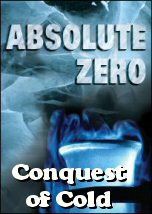
Absolute Zero Conquest of Cold

   2007    Technology
This scientific detective tale tells the story of a remarkable group of pioneers who wanted to reach the ultimate extreme: absolute zero, a place so cold that the physical world as we know it doesn't exist, electricity flows without resistance, fluids defy gravity and the speed of light can be reduced to 38 miles per hour. Absolute zero became the Holy Grail of temperature physicists and is considered the gateway to many new technologies, such as nano-construction, neurological networks and quantum computing. The possibilities, it seems, are limitless. The first episode Chronicles the major discoveries leading towards the mastery of cold, beginning with King James I's court magician, Cornelius Drebbel, who managed to air condition the largest interior space in the British Isles in 1620. Other stories will include the first "natural philosopher," Robert Boyle, a founder of the Royal Society in Great Britain; the Grand Duke Ferdinand II de Medici's involvement in the creation of the first thermometer; the establishment of the laws of thermodynamics by three young scientists, Sadi Carnot, James Joule and William Thomson; and Michael Faraday's critical achievement in liquefying several other gases which set the stage for the commercial application of cold to refrigeration and air conditioning.
Series: Absolute Zero

The Birth of Israel

   2008    History
Jeremy Bowen presents a look back at the creation of the state of Israel, examining the the events leading up to the Israeli war of Independence in 1949, its impact on Arab/Israeli relations and the implications for the Middle East. It's a one hour crash course in some of the underlying causes of the current problems in the Middle East.

The End of God

   2010    Culture
Dr Thomas Dixon delves into the BBC's archive to explore the troubled relationship between religion and science. From the creationists of America to the physicists of the Large Hadron Collider, he traces the expansion of scientific knowledge and asks whether there is still room for God in the modern world. He looks at what happens when new scientific discoveries start to explain events that were once seen as the workings of God, and explains how some of our most famous scientists have seen God in the grandest laws of the universe. Finally, he finds intriguing evidence from brain science which hints that belief in God is here to stay.