










Last Watched

"Design"  Sort by

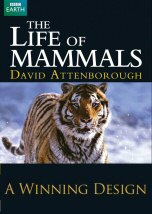
A Winning Design

   2002    Nature
A Winning Design clarifies what makes a mammal different from reptiles and birds. No, it isn't egg-laying: both the platypus and the echidna are egg-laying mammals; it's their ability to adapt. And it's this adaptability that becomes the crux of the remainder of the series. From the tiniest bat to the massive blue whale, all mammals share the ability to nurture their young on milk and regulate their own temperatures.
Series: The Life of Mammals
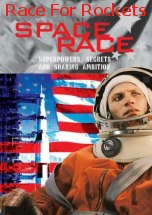
Race For Rockets

   2005    Technology
Space Race is a docu-drama chronicling the major events and characters in the American/Soviet space race. It focusses on Sergei Korolev, the Soviets' chief rocket designer, and Wernher von Braun, his American counterpart. The series was a joint effort between British, German, American and Russian production teams." In the first episode, 1944-1949, we see Wernher von Braun's work on the V-2 for the Nazis during the last years of the Second World War, his surrender to American troops and his move to the USA. We see Sergei Korolev's release from the Gulag, and how he is set to work on Soviet rockets, first attempting to copy the V-2, then building a more efficient rocket of his own.
Series: Space Race

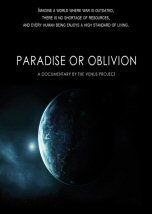
The Venus Project: Paradise or Oblivion

   2012    Technology
This documentary details the root causes of the systemic value disorders and detrimental symptoms caused by our current established system. This video presentation advocates a new socio-economic system, which is updated to present-day knowledge, featuring the life-long work of Social Engineer, Futurist, Inventor and Industrial Designer Jacque Fresco, which he calls a Resource-Based Economics.

Making of The Dark Side of the Moon

   2003    Art
Included acustic versions and interviews. The most phenomenal recording in rock & roll history: The Dark Side of the Moon. The Floyd's 1973 masterpiece remained on bestseller charts for nearly 14 years, and its enduring importance is honored here by all four members of Pink Floyd and key personnel (engineer Alan Parsons, mixing supervisor Chris Thomas, sleeve designer Storm Thorgerson, and others) who played essential roles in the landmark album's creation.

One Voice in the Cosmic Fugue

   1980    Science
Sagan discusses the story of the Heike crab and artificial selection of crabs resembling samurai warriors, as an opening into a larger discussion of evolution through natural selection (and the pitfalls of intelligent design). Among the topics are the development of life on the Cosmic Calendar and the Cambrian explosion; the function of DNA in growth; genetic replication, repairs, and mutation; the common biochemistry of terrestrial organisms; the creation of the molecules of life in the Miller-Urey experiment; and speculation on alien life (such as life in Jupiter's clouds). In the Cosmos Update ten years later, Sagan remarks on RNA also controlling chemical reactions and reproducing itself and the different roles of comets (potentially carrying organic molecules or causing the Cretaceous–Paleogene extinction event).
Series: Cosmos

Journeys in Space and Time

   1980    Science
Ideas about time and space are explored in the changes that constellations undergo over time, the redshift and blue shift measured in interstellar objects, time dilation in Albert Einstein's theory of relativity, the designs of both Leonardo da Vinci and spacecraft that could travel near light speed, time travel and its hypothetical effects on human history, the origins of the Solar System, the history of life, and the immensity of space. In Cosmos Update, the idea of faster-than-light travel by wormholes (researched by Kip Thorne and shown in Sagan’s novel Contact) is discussed.
Series: Cosmos