Virgilio Martínez is the chef/owner of Central, a restaurant in Lima, Peru that currently sits at number four on the World’s 50 Best Restaurants list. After a decade spent cooking in kitchens around the world, Martínez only found his true identity as a chef when he began exploring the different regions of his native Peru, from the ocean to the Andes. While some chefs are obsessed with a 'sense of place,' Martínez strives to offer his guests a sense of many places — entire ecosystems over the course of a tasting menu. Martínez always had an adventurous spirit, but growing up in Peru during the 70s and ‘80s meant that many parts of the country were closed off to him. As a teenager, he learned that pursuing a career in the kitchen would allow him the freedom to travel all over the world. The chef ended in charge of a restaurant in Madrid. This is really where Virgilio started to develop his experimental style. Martínez decided to leave Spain to go and work on opening his own restaurant in Peru. He decided to explore the idea of cooking dishes based on altitudes and ecosystems. Martínez runs Central’s kitchen with his wife, Pia León. They developed the altitude-based menu concept together. Martínez’s sister, Malena, has a science background, so he brought her on as part of the team to explore different terrains in search of ingredients that they could use at the restaurant. Virgilio remarks: 'We use 180 ingredients, and 50 percent of them are unknown.' The altitude-themed tasting menu was introduced in 2012, and the following year, Central landed at the bottom of the World’s 50 Best Restaurants list. Two years later, it soared to number four.
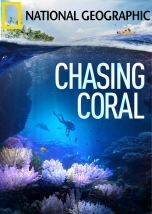
Coral reefs are the nursery for all life in the oceans, a remarkable ecosystem that sustains us. Yet with carbon emissions warming the seas, a phenomenon called 'coral bleaching' -a sign of mass coral death- has been accelerating around the world, and the public has no idea of the scale or implication of the catastrophe silently raging underwater. Chasing Coral taps into the collective will and wisdom of an ad man, a self-proclaimed coral nerd, top-notch camera designers, and renowned marine biologists as they invent the first time-lapse camera to record bleaching events as they happen. Unfortunately, the effort is anything but simple, and the team doggedly battles technical malfunctions and the force of nature in pursuit of their golden fleece: documenting the indisputable and tragic transformation below the waves. With its breathtaking photography, nail-biting suspense, and startling emotion, Chasing Coral is a dramatic revelation that won't have audiences sitting idle for long.
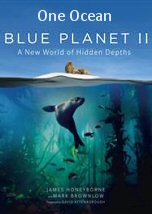
Nearly a generation after the acclaimed Blue Planet documentary was released, David Attenborough returns to narrate this groundbreaking sequel/reboot. Blue Planet II focuses more heavily on mankind's influence on the world's oceans through both global pollution and climate change. This series features a variety of revolutionary segments never before seen in a video documentary. One Ocean Footage of marine life in different environments around the north, beginning with a tropical coral reef which has medicinal properties for dolphins, and is used as a tool by tusk fish. In Japan, a shipwreck is home to the Asian sheepshead wrasse, which can change gender, while in the polar north, walruses struggle to find ice floes for their pups to rest on as climate change takes its toll on the environment.
On a vast plateau cradled in the heart of the rocky mountain range lies two million acres of unspoiled wilderness, never farmed and never fenced. Canyons, lakes, rivers and mountains, a refuge for magnificent animals and a spiritual sanctuary for generations of Americans, all resting on the largest super volcano in North America. This is Yellowstone, America's first national park, a raw and powerful beauty that truly comes to life through immersive 3D.
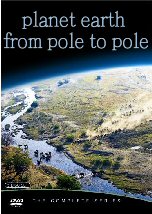
The documentary series gives a bird's-eye view of South America, as condors soar along the Andes, scarlet macaws explore the heart of the Amazon and hummingbirds and vultures see the continent's greatest sights. It is a journey that includes Machu Picchu, the Nasca Lines and the cities of Rio de Janeiro and Santiago. In Patagonia, giant petrels shadow killer whales as they hunt seals by stranding their huge bodies on the beach. At Iguassu Falls, dusky swifts dive through the cascades to huddle in communal roosts while hummingbirds bathe below. In a secret Andean location, condors soar in flocks over 40-strong and scavenge on casualties from herds of fighting guanacos. Elsewhere, a mother condor gently pushes her youngster to the edge of a 200-metre cliff, as flight school begins. Deep in the Amazon, macaws seek medicinal clay. They are joined by a host of secretive jungle animals, including spider monkeys and tapirs, all after the same remedy. In Peru, condors soar over fighting sea lions waiting for causalities and on a mass exodus north, birds converge on the Panama Canal. In Costa Rica, black vultures descend on turtles as they lay their eggs in the sand and pick off the eggs that ping-pong through the air.
Morgan Freeman narrates Island of Lemurs: Madagascar, the incredible true story of nature's greatest explorers - lemurs. Scientist Patricia Wright has a passion for preserving the life of one particular creature: the lemur. These lively animals found in Madagascar face all sorts of threats, just like so many other animals in a world in which they are increasingly crowded out by humans. Her passion for the subject is compelling and plainly evident, but it's the silent testimony of the animals themselves that really makes the case. Countless hours of footage are trimmed down to create this tapestry depicting the lives of these creatures of remarkable intelligence and ingenuity. Their daily routines and extraordinary adventures are awesome to behold, as is the way that the community functions. A full immersion into the world of the lemurs means great insights on these unusual animals.

























Martínez always had an adventurous spirit, but growing up in Peru during the 70s and ‘80s meant that many parts of the country were closed off to him. As a teenager, he learned that pursuing a career in the kitchen would allow him the freedom to travel all over the world. The chef ended in charge of a restaurant in Madrid. This is really where Virgilio started to develop his experimental style. Martínez decided to leave Spain to go and work on opening his own restaurant in Peru. He decided to explore the idea of cooking dishes based on altitudes and ecosystems. Martínez runs Central’s kitchen with his wife, Pia León. They developed the altitude-based menu concept together. Martínez’s sister, Malena, has a science background, so he brought her on as part of the team to explore different terrains in search of ingredients that they could use at the restaurant. Virgilio remarks: 'We use 180 ingredients, and 50 percent of them are unknown.' The altitude-themed tasting menu was introduced in 2012, and the following year, Central landed at the bottom of the World’s 50 Best Restaurants list. Two years later, it soared to number four.