


Last Watched

"Gas"  Sort by

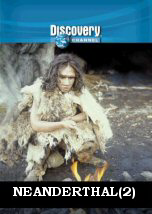
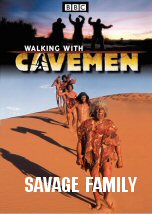
Walking with Cavemen: Savage Family

   2003    History
One and a half million years ago, a new breed of ape-man walks the land. In southern Africa, Homo Ergaster has taken the next step to becoming human. They have long, modern looking noses, which cool air as they breathe. Their hairless bodies, with millions of tiny sweat glands, mean they don't pant anymore to control their temperature - they sweat. And, above all, they have big brains - nearly two-thirds the size of ours.
Series: Walking with Cavemen
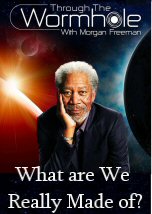
What are We Really Made of

   2011    Science
What is the universe made of? If you answered stars, planets, gas and dust, you'd be dead wrong. Thirty years ago, scientists first realized that some unknown dark substance was affecting the way galaxies moved. Today, they think there must be five times our understanding of the universe and the nature of reality itself has drastically changed over the last 100 years - and it's on the verge of another seismic shift. In a 17-mile-long tunnel buried 570 feet beneath the Franco-Swiss border, the world's largest and most powerful atom smasher, the Large Hadron Collider, is powering up. Its goal is nothing less than recreating the first instants of creation, when the universe was unimaginably hot and long-extinct forms of matter sizzled and cooled into stars, planets, and ultimately, us. These incredibly small and exotic particles hold the keys to the greatest mysteries of the universe. What we find could validate our long-held theories about how the world works and what we are made of -- or, all of our notions about the essence of what is real will fall apart.
Series: Through the Wormhole

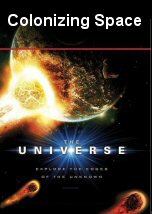
Colonizing Space

   2008    Technology
Space colonization is no longer the fodder of science fiction, it is becoming a reality. Examine the efforts underway to establish a human colony on Mars, including how they plan to grow food, recycle wastewater and introduce greenhouse gases to revive the red planet and make it more habitable for humans. Cutting-edge computer graphics are used to bring the universe down to earth to show what life would be like on Mars, and to imagine what kind of life forms might evolve in alien atmospheres.
Series: The Universe

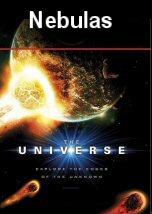
Nebulas

   2008    Science
Take a tour through the Art Gallery of the Galaxy and view what are considered the "crown jewels" of the heavens. Nebulas are mysterious clouds of gas that aren't classified as stars, planets, moons or asteroids. Astronomers use the most sophisticated techniques to view them since they are practically invisible to the naked eye. Nothing less than stunning, nebulas glow, reflect or obscure the galaxy's light with amazing swirls of color. Nebulas mark the regions where the nothingness of space first coalesces, where stars are born and where stars die. Cutting-edge computer graphics are used to bring the universe down to earth.
Series: The Universe

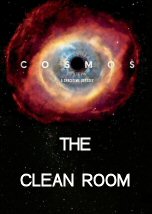
The Clean Room

   2014    Science
This episode is centered around how science, in particular the work of Clair Patterson (voiced in animated sequences by Richard Gere[33]) in the middle of the 20th century, has been able to determine the age of the Earth. Tyson first describes how the Earth was formed from the coalescence of matter some millions of years after the formation of the Sun, and while scientists can examine the formations in rock stratum to date some geological events, these can only trace back millions of years. Instead, scientists have used the debris from meteor impacts, such as the Meteor Crater in Arizona, knowing that the material from such meteors coming from the asteroid belt would have been made at the same time as the Earth. Patterson also examined the levels of lead in the common environment and in deeper parts of the oceans and Antarctic ice, showing that lead had only been brought to the surface in recent times. He would discover that the higher levels of lead were from the use of tetraethyllead in leaded gasoline resulting in government-mandated restrictions on the use of lead.
Series: Cosmos: A Spacetime Odyssey

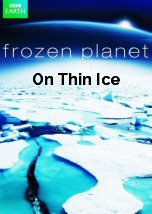
Frozen Planet: On Thin Ice

   2011    Science
Sir David Attenborough journeys to both Polar Regions to investigate what rising temperatures will mean for the people and wildlife that live there and for the rest of the planet. David starts out at the North Pole, standing on sea ice several metres thick, but which scientists predict could be Open Ocean within the next few decades. The Arctic has been warming at twice the global average, so David heads out with a Norwegian team to see what this means for polar bears. He comes face-to-face with a tranquilised female, and discovers that mothers and cubs are going hungry as the sea ice on which they hunt disappears. In Canada, Inuit hunters have seen with their own eyes what scientists have seen from space; the Arctic Ocean has lost 30% of its summer ice cover over the last 30 years. For some, the melting sea ice will allow access to trillions of dollars worth of oil, gas and minerals. For the rest of us, it means the planet will get warmer, as sea ice is important to reflect back the sun's energy. Next David travels to see what's happening to the ice on land: in Greenland, we follow intrepid ice scientists as they study giant waterfalls of meltwater, which are accelerating iceberg calving events, and ultimately leading to a rise in global sea level. Temperatures have also risen in the Antarctic - David returns to glaciers photographed by the Shackleton expedition and reveals a dramatic retreat over the past century. It's not just the ice that is changing - ice-loving adelie penguins are disappearing, and more temperate gentoo penguins are moving in. Finally, we see the first ever images of the largest recent natural event on our planet - the break up of the Wilkins Ice Shelf, an ice sheet the size of Jamaica, which shattered into hundreds of icebergs in 2009.
Series: Frozen Planet