Mathematician Dr Hannah Fry explores the mystery of maths. It underpins so much of our modern world that it's hard to imagine life without its technological advances, but where exactly does maths come from? Is it invented like a language or is it something discovered and part of the fabric of the universe? It's a question that some of the most eminent mathematical minds have been wrestling with. To investigate this question, Hannah goes head first down the fastest zip wire in the world to learn more about Newton's law of gravity, she paraglides to understand where the theory of maths and its practice application collide, and she travels to infinity and beyond to discover that some infinities are bigger than others. In this episode, Hannah goes back to the time of the ancient Greeks to find out why they were so fascinated by the connection between beautiful music and maths. The patterns our ancestors found in music are all around us, from the way a sunflower stores its seeds to the number of petals in a flower. Even the shapes of some of the smallest structures in nature, such as viruses, seem to follow the rules of maths. All strong evidence for maths being discovered. But there are those who claim maths is all in our heads and something we invented. To find out if this is true, Hannah has her brain scanned. It turns out there is a place in all our brains where we do maths, but that doesn't prove its invented. Experiments with infants, who have never had a maths lesson in their lives, suggests we all come hardwired to do maths. Far from being a creation of the human mind, this is evidence for maths being something we discover. Then along comes the invention of zero to help make counting more convenient and the creation of imaginary numbers, and the balance is tilted in the direction of maths being something we invented. The question of whether maths is invented or discovered just got a whole lot more difficult to answer
Professor Brian Cox journeys across the vastness of time and space revealing epic moments of sheer drama that changed the universe forever. The series begins this epic exploration of the cosmos with a hymn to the great luminous bodies that bring light and warmth to the universe: the stars. It is estimated that there are two hundred trillion stars in the universe, each playing their part in an epic story of creation- a great saga that stretches from the dawn of time, with the arrival of the first star, through diverse generations until the arrival of our own star, the sun, and a civilization that has grown up in its light.
The story of the longest surviving and certainly the loudest genre of rock, heavy metal. With no sign of disappearing, metal has been the most controversial and misunderstood of all rock genres. With Black Sabbath as the undisputed Godfathers, we follow their highs and lows, and, along the journey, meet Deep Purple, Judas Priest, Iron Maiden and Metallica.
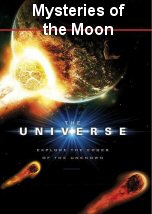
For thousands of years, mankind has found comfort in its presence. It's been a lantern for nighttime travellers, a timekeeper for farmers and a location finder for sailors at sea. For some cultures, it's even been a god. It's the only cosmic body ever visited by human beings. From afar, the Moon's luminance has captivated us since the beginning of time. And a closer look at the beacon in the dark sky reveals an ever-present source of myth, intrigue, controversy and unsolved mysteries. The field of science may cast an empirical light on some things about the Universe, but lunar experts are the first to admit they don't have all the answers when it comes to our Moon. This episode explores the theories behind Lunar Transient Phenomena that have left scientists stumped for centuries; takes to the Canadian waters to see how the Moon effects our planet through tides; and dusts off some age-old myths and weighs arguments that without our Moon, humanity may not even exist.
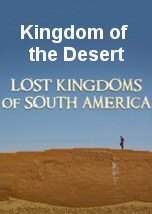
In the spectacular deserts of coastal Peru, archaeologist Dr Jago Cooper explores the dramatic rise and fall of Chimor, the first empire of South America. His journey begins among the ruins of a vast lost city once home to an all-powerful monarchy, whose subjects transformed the desert landscape, created gold and silver treasures and believed so strongly in the power of their gods that they made the most shocking of sacrifices. Chimor thrived despite facing some of the most extreme climate conditions in the world, but not even this powerful empire could withstand the forces that eventually destroyed it.
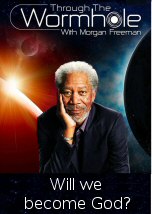
Humanity’s potential seems limitless. But could we become as powerful as God? Scientific breakthroughs grant our species seemingly divine abilities. Biologists tinkering with DNA are figuring out ways to grow new life forms, while neuroscientists try to create artificial consciousness. Statisticians around the world are using big data to predict the future and computer scientists have discovered a "God algorithm" that could solve any global problem in an instant. But to truly become God, we not only have to be all knowing, but all being. Quantum physicists are figuring out how to teleport matter at the speed of light!











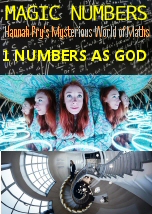
In this episode, Hannah goes back to the time of the ancient Greeks to find out why they were so fascinated by the connection between beautiful music and maths. The patterns our ancestors found in music are all around us, from the way a sunflower stores its seeds to the number of petals in a flower. Even the shapes of some of the smallest structures in nature, such as viruses, seem to follow the rules of maths. All strong evidence for maths being discovered. But there are those who claim maths is all in our heads and something we invented. To find out if this is true, Hannah has her brain scanned. It turns out there is a place in all our brains where we do maths, but that doesn't prove its invented.
Experiments with infants, who have never had a maths lesson in their lives, suggests we all come hardwired to do maths. Far from being a creation of the human mind, this is evidence for maths being something we discover. Then along comes the invention of zero to help make counting more convenient and the creation of imaginary numbers, and the balance is tilted in the direction of maths being something we invented. The question of whether maths is invented or discovered just got a whole lot more difficult to answer