



Last Watched

"Leave"  Sort by

The Social Struggle

   1995    Nature
Fourth episode examines how plants either share environments harmoniously or compete for dominance within them. Attenborough highlights the 1987 hurricane and the devastation it caused. However, for some species, it was that opportunity for which they had lain dormant for many years. The space left by uprooted trees is soon filled by others who move relatively swiftly towards the light. The oak is one of the strongest and longest-lived, and other, lesser plants nearby must wait until the spring to flourish before the light above is extinguished by leaves. Tropical forests are green throughout the year, so brute force is needed for a successful climb to the top of the canopy: the rattan is an example that has the longest stem of any plant. As its name suggests, the strangler fig 'throttles' its host by growing around it and cutting off essential water and light. Some can take advantage of a fallen tree by setting down roots on the now horizontal trunk and getting nutriment from the surrounding moss and the fungi on the dead bark. The mountain ash (eucalyptus regnans) grows so tall, that regeneration becomes a considerable problem. It is easily flammable, so its solution is to shed its seeds during a forest fire and sacrifice itself. It therefore relies on the periodic near-destruction of its surroundings in order to survive. Attenborough observes that catastrophes such as fire and drought, while initially detrimental to wildlife, eventually allow for deserted habitats to be reborn.
Series: The Private Life of Plants
The Private Life of Plants Living Together

   1995    Nature
The fifth programme explores the alliances formed between the animal and plant worlds. Attenborough dives into Australia's Great Barrier Reef and contrasts the nocturnal feeding of coral, on microscopic creatures, with its daytime diet of algae. Some acacias are protected by ants, which will defend their refuge from any predator. Besides accommodation, the guards are rewarded with nectar and, from certain species, protein for their larvae as well. Fungi feed on plants but can also provide essential nutriment to saplings (Mycorrhiza). The connection is never broken throughout a tree's life and a quarter of the sugars and starches produced in its leaves is channelled back to its fungal partners. Meanwhile, fungi that feed on dead wood leave a hollow trunk, which also benefits the tree. Orchids enjoy a similar affiliation. Lichens are the product of a relationship between fungi and a photosynthetic associate, usually algae. They are extremely slow-growing, and a graveyard is the perfect location to discover their exact longevity. Mistletoe is a hemiparasite that obtains its moisture from a host tree, while using own leaves to manufacture food. Its seeds are deposited on another by the mistletoe tyrannulet, following digestion of the fruit. The dodder (Cuscuta) is also parasitic, generally favouring nettles, and siphons its nourishment through periodic 'plugs' along its stem. The rafflesia has no stem or leaves and only emerges from its host in order to bloom — and it produces the largest single flower: one metre across.
Series: The Private Life of Plants
The Last Empire

   2016    History
China's last empire, the Qing, lasted from 1644 to 1912. It began in violence and war as the Manchus swept down from the north, but invaders became emperors, with three generations of one family ruling the country. Among them, Michael Wood argues, was China's greatest emperor - Kangxi. Under the Qing, China doubled in size to include Xinjiang in the far west, as well as Mongolia and Tibet, creating the essential shape of China today. The new dynasty tolerated a diversity of cultures and religions, including Islam. In Kaifeng, Michael visits a women's mosque with a female imam, a delightful scene that ends with laughter and selfies! The Qing also undertook huge cultural enterprises. At a traditional printing house where the wood blocks are hand-carved, we see how the Complete Tang Poems were reproduced - all 48,000 of them. We travel through the wintry countryside to a remote village where a hardy audience watch open-air opera in the snow and visit a painter's studio, and 'storytelling' houses in Yangzhou. In the 18th century, China was arguably the greatest economy in the world, and we get a fabulous sense of the rich culture that came with prosperity. But then came the clash with the British, in the first Opium War, when a British expedition destroyed the Qing navy and extracted territory and trading rights. We leave with a glimpse of the future. 'Every dynasty has risen and declined,' says Michael, 'and has needed new life to regenerate, and this time the catalyst was the British.' Among the ports China ceded was an almost uninhabited island, Hong Kong, one of today's greatest financial centres, and Shanghai, a small town then but now one of the greatest cities in world.
Series: The Story of China

Space

   2014    Art
What if we could explore the vastness of Space? Science fiction has always fed upon our need to explore – to wonder what is out there. Space journeys from Jules Verne’s earliest ideas about attempts to leave our planet, to the Star Wars far away galaxy through to Nichelle Nichols revealing how her groundbreaking role as Lt. Uhura in Star Trek led to her participation in the recruitment of NASA’s astronauts. It explores the deep sea inspiration for Avatar, finds out why Ursula K Le Guin wrote The Left Hand of Darkness and discovers how Stanley Kubrick was able to make 2001: A Space Odyssey seem so believable. In addition, the program looks at the way Dune and The Mars Trilogy embraced the challenge of world building and discusses the appeal of the beaten up ‘dirty space’ of Dark Star and Firefly. From the horrifying scenes of Alien, to the epic spectacle of Star Wars, this is a journey to the stars and the alien encounters that await us there.
Series: The Real History of Science Fiction

Earthflight Europe

   2012    Nature
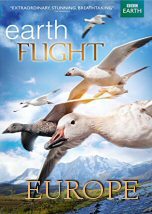
Earthflight departs on its grand European tour, using a host of techniques including taking extraordinary footage from microlites as they fly alongside imprinted birds. Among other wonders, cameras soar with cranes and geese over Venice, the white cliffs of Dover and Edinburgh. White storks leave Africa and struggle to reach Istanbul, the gateway to Europe, while cranes take an easier route over the monkey-guarded Rock of Gibraltar. In France, the white horses of the Camargue make a splash around the new arrivals. In Rome, the heat of the city lures 20 million starlings that perform nature's greatest aerial display to outwit peregrines. In Hungary, sand martins grab mayflies from the air; and at Bass Rock, gannets create Britain's greatest natural spectacle as they dive in exquisite slow-motion. The story takes an emotional turn as storks and swallows wait for their partners to return and indulge in a spot of DIY to impress. Finally, geese touch down in Svalbard to raise a family. To protect their young, a squadron of birds assemble to see off polar bears. With views of birds flying over the Loire Valley, London docklands and the bulb fieds of Holland, this is Europe as never before.
Series: Earthflight

Gold Digger

   2022    Culture
Nathan and Angela accelerate their parenting rehearsal with three-year-old, then six-year-old actors portraying their fake son, 'Adam'. Angela refuses to participate in Halloween due to her belief in Satanic conspiracies.
Nathan balances parenting duties with a rehearsal for Patrick, a man who wants to confront his brother over their late grandfather's will, which bans Patrick from inheriting money if he is dating a 'gold digger'. The rehearsal occurs in a replica Raising Cane's restaurant in a warehouse next to the relocated Alligator Lounge. To introduce real emotions to the rehearsal, Nathan stages a scenario to convince Patrick that he could inherit buried gold from the grandfather of Isaac, the actor who plays Patrick's brother. After Patrick has an emotional breakthrough during a rehearsal, he leaves the production and never returns. Nathan narrates that he is envious that self-deception is easy for some people as he ponders his fake family.
Series: The Rehearsal
Cosmos: Possible Worlds

Cosmos: Possible Worlds

2020  Science
Clash of the Gods

Clash of the Gods

2009  History
Building Giants

Building Giants

2019  Technology
The Universe

The Universe

2007  Science
How the Universe Works

How the Universe Works

2014  Science
Vietnam in HD

Vietnam in HD

2011  History