

Last Watched

"Wave"  Sort by

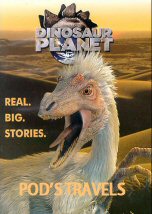
Dinosaur Planet: Pod Travels

   2003    Science
SETTING: 70 million years ago in Europe, near present-day Romania. Pod, a male pyroraptor, is alone in the world after his sisters die in a tidal wave that sweeps him out to sea. After landing on an island populated with dwarf-sized dinosaurs, Pod discovers that he's become the apex predator. But, Pod learns it's lonely at the top.
Series: Dinosaur Planet
Gravity

   2008    Science
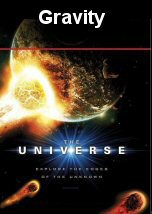
Gravity is the most powerful and exacting force in the universe. It is pervasive and penetrating. Gravity binds us together, its reach hangs stars in the sky and its grip crushes light. Gravity holds planets together, and leashes them to their suns. Without gravity, stars, comets, moons, nebulae, and even the Earth itself would not exist. Explore how science and humanity discovered, overcame and utilized gravity. Learn what it takes to propel objects into the heavens, to ride a wave or to ski down a slope. Take a front row seat as an astronaut subjects himself to the weightless wonders of the specially modified aircraft used to train astronauts known as the "Vomit Comet."
Series: The Universe

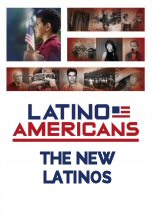
The New Latinos

   2013    History
Until World War II, Latino immigration to the United States was overwhelmingly Mexican-American. Now three new waves bring large-scale immigration from Puerto Rico, Cuba, and the Dominican Republic. As the Puerto Rican government implements a historic overhaul over a million Puerto Ricans are encouraged to leave for the US mainland, to alleviate the economic pressure. A young Juanita Sanabria arrives in New York, works hard in the garment district, but encounters hostility and discrimination. Ethnic tensions explode in youth gang warfare depicted in films like West Side Story, etching the stereotype of the knife wielding Puerto Rican in the American consciousness.
Series: Latino Americans

A Sky Full of Ghosts

   2014    Science
Tyson begins the episode by explaining the nature of the speed of light and how much of what is seen of the observable universe is from light emanated from billions of years in the past. Tyson further explains how modern astronomy has used such analyzes via deep time to identify the Big Bang event and the age of the universe. Tyson proceeds to describe how the work of Isaac Newton, William Herschel, and James Clerk Maxwell contributed to understanding the nature of electromagnetic waves and gravitational force, and how this work led towards Albert Einstein's Theory of Relativity, that the speed of light is a fundamental constant of the universe and gravity can be seen as distortion of the fabric of space-time. Tyson describes the concept of dark stars as postulated by John Michell which are not visible but detectable by tracking other stars trapped within their gravity wells, an idea Herschel used to discover binary stars. Tyson then describes the nature of black holes, their enormous gravitational forces that can even capture light, and their discovery via X-ray sources such as Cygnus X-1. Tyson uses the Ship of Imagination to provide a postulate of the warping of spacetime and time dilation as one enters the event horizon of the black hole, and the possibility that these may lead to other points within our universe or others, or even time travel. Tyson ends on noting that Herschel's son, John would be inspired by his father to continue to document the known stars as well as contributions towards photography that play on the same nature of deep time used by astronomers.
Series: Cosmos: A Spacetime Odyssey

Peril and Promise

   2013    History
In the 80s the nature of the Latino Diaspora changes again. From Cuba a second wave of refugees to United States – the Mariel exodus – floods Miami . The same decade sees the sudden arrival of hundreds of thousands of Central Americans (Salvadorans, Guatemalans, and Nicaraguans) fleeing death squads and mass murders at home like activist, Carlos Vaquerano. By the early 1990s, a political debate over illegal immigration – has begun. Globalization, empowered by NAFTA, means that as U.S. manufacturers move south, Mexican workers head north in record numbers. A backlash ensues: tightened borders, anti-bilingualism, state laws to declare all illegal immigrants felons. But a sea change is underway: the coalescence of a new phenomenon called Latino American culture-as Latinos spread geographically and make their mark in music, sports, politics, business, and education.
Series: Latino Americans

Hiding in the Light

   2014    Science
This episode explores the wave theory of light as studied by mankind, noting that light has played an important role in scientific progress, with such early experiments from over 2000 years ago involving the camera obscura by the Chinese philosopher Mozi. Tyson describes the work of the 11th century Arabic scientist Ibn al-Haytham, considered to be one of the first to postulate on the nature of light and optics leading to the concept of the telescope, as well as one of the first researchers to use the scientific method. Tyson proceeds to discuss the nature of light as discovered by mankind. Work by Isaac Newton using diffraction through prisms demonstrated that light was composed of the visible spectrum, while findings of William Herschel in the 19th century showed that light also consisted of infrared rays. Joseph von Fraunhofer would later come to discover that by magnifying the spectrum of visible light, gaps in the spectrum would be observed. These Fraunhofer lines would later be determined to be caused by the absorption of light by electrons in moving between atomic orbitals when it passed through atoms, with each atom having a characteristic signature due to the quantum nature of these orbitals. This since has led to the core of astronomical spectroscopy, allowing astronomers to make observations about the composition of stars, planets, and other stellar features through the spectral lines, as well as observing the motion and expansion of the universe, and the existence of dark matter.
Series: Cosmos: A Spacetime Odyssey
The Sky at Night

The Sky at Night

2015  Culture
Leaving Neverland

Leaving Neverland

2019  Culture
The Hunt

The Hunt

2015  Nature
Welcome to Earth

Welcome to Earth

2021  Nature
Cosmos

Cosmos

1980  Science