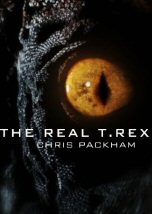
Chris Packham goes on an investigative journey into the mysteries of planet Earth's super predator - Tyrannosaurus rex. The latest groundbreaking paleontological discoveries combined with studies of modern animals are redefining this iconic dinosaur. Tackling everything from the way he looked, moved, socialized - even down to his terrifying roar - Chris strips away Hollywood myths to uncover the amazing truth, and utilizing the latest CGI wizardry, he rebuilds the most authentic T rex ever seen from the bones up.
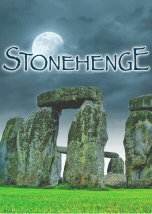
Stonehenge was shaped over centuries, but to what purpose? Was it a temple to the sun, or the moon, an astronomical calendar, or a shrine to dead ancestors? Now Stonehenge may be about to give up some of its secrets. For the first time in nearly half a century a new archaeological dig the sacred stone circle. And the men who are leading the excavation are well aware of the significance of this moment. The film exposes an investigation into a radical theory that Stonehenge, far from being a place of burial as is commonly assumed, was in fact a place of healing. The investigation takes in forensic testing of bones excavated over the past decades and hard-won permission for the first dig in 50 years at the Henge, watched live online by millions of viewers around the world. Does the theory of the healing stones bear up to modern-day forensic science?
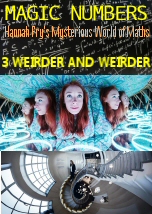
Dr Hannah Fry explores a paradox at the heart of modern maths, discovered by Bertrand Russell, which undermines the very foundations of logic that all of maths is built on. These flaws suggest that maths isn't a true part of the universe but might just be a human language - fallible and imprecise. However, Hannah argues that Einstein's theoretical equations, such as E=mc2 and his theory of general relativity, are so good at predicting the universe that they must be reflecting some basic structure in it. This idea is supported by Kurt Godel, who proved that there are parts of maths that we have to take on faith. Hannah then explores what maths can reveal about the fundamental building blocks of the universe - the subatomic, quantum world. The maths tells us that particles can exist in two states at once, and yet quantum physics is at the core of photosynthesis and therefore fundamental to most of life on earth - more evidence of discovering mathematical rules in nature. But if we accept that maths is part of the structure of the universe, there are two main problems: firstly, the two main theories that predict and describe the universe - quantum physics and general relativity - are actually incompatible; and secondly, most of the maths behind them suggests the likelihood of something even stranger - multiple universes. We may just have to accept that the world really is weirder than we thought, and Hannah concludes that while we have invented the language of maths, the structure behind it all is something we discover. And beyond that, it is the debate about the origins of maths that has had the most profound consequences: it has truly transformed the human experience, giving us powerful new number systems and an understanding that now underpins the modern world.
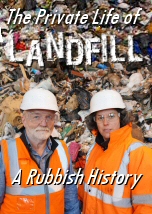
Their quest is to discover whether the items we throw away today have any value for tomorrow's world. In a unique science experiment, Dr George McGavin and Dr Zoe Laughlin chronicle the history of rubbish and explore how what we throw away tells us about the way we live our lives. With unprecedented access to one of the UK's largest landfill sites, the team of experts spend three days carrying out tests all over the site, revealing the secret world of rubbish. They also carry out three other 'archaeological' digs into historic landfills to chart the evolution of our throwaway society. Is mining trash for something valuable really viable? McGavin concluded: 'The idea of landfill mining is a pretty compelling vision of the future.'
The film uncovers the truth about how you really make decisions. Every day you make thousands of decisions, big and small, and behind all them is a powerful battle in your mind, pitting intuition against logic. This conflict affects every aspect of your life - from what you eat to what you believe, and especially to how you spend your money. And it turns out that the intuitive part of your mind is a lot more powerful than you may realise.
Psychopaths have long captured the public imagination. Painted as charismatic, violent predators lacking in all empathy, they provide intrigue and horror in equal measure. But what precisely is a psychopath? What is it that drives them to cause harm, even kill? And can they ever be cured? The film also features a series of candid interviews with prison inmates who not only describe their crimes but why they think they committed them. 'What Makes a Psychopath?' explores not only how each individual's crimes were shaped by their own life experiences, but also gives an insight into how these people think and behave. Working with the world's experts in the field, the film sheds light on the biological, psychological and environmental influences that shape a psychopath. And it looks to the future, with ground-breaking research that suggests a lifetime of incarceration is not the only option to manage violent and dangerous psychopaths.





Tackling everything from the way he looked, moved, socialized - even down to his terrifying roar - Chris strips away Hollywood myths to uncover the amazing truth, and utilizing the latest CGI wizardry, he rebuilds the most authentic T rex ever seen from the bones up.