In episodes 13 and 14, the war reaches a decisive new stage as the Allies prepare to launch Operation Overlord and open the long-awaited second front in Nazi-occupied France. Behind the invasion of Normandy lies an enormous gamble of planning, deception, weather, timing and nerve, with Dwight D. Eisenhower carrying the weight of one of the most dangerous military decisions in history. From the beaches of D-Day to the struggle to break through Hitler’s Atlantic Wall, the episode captures the fear, scale and sacrifice of the operation that begins the liberation of Western Europe. The story then moves to World War II’s often overlooked Asian theater, where Allied forces and Japan fight across jungles, mountains, plains and impossible supply routes. In Burma, India and China, commanders such as Joseph Stilwell, William Slim and Lord Mountbatten face a brutal war of disease, exhaustion, monsoon terrain and relentless Japanese resistance. From the Burma Road and the deadly airlift over the Hump to the fighting at Myitkyina, Imphal and Saipan, these episodes reveal a vast and punishing conflict far from Europe’s headlines, where survival itself becomes a battle and victory demands endurance on a staggering scale.
In episodes 17 and 18, the Second World War enters its most devastating final phase as two distant battlefields become the stage for unimaginable destruction. Across the Pacific, American forces fight island by island against an enemy determined to resist to the very last soldier. Every beachhead is won at an unbearable cost, revealing a campaign where courage, sacrifice and survival are pushed beyond all human limits. As casualties mount and Japan refuses to surrender, the conflict descends into one of the bloodiest chapters in military history. Meanwhile, the Soviet Union launches its overwhelming final offensive into the heart of Nazi Germany. As the Red Army closes in on Berlin from the east and Western Allied forces advance from the west, Hitler's collapsing regime makes one last desperate stand. Street by street, the battle for the German capital becomes a brutal struggle that seals the fate of the Third Reich. Through extraordinary archival footage and firsthand accounts, these episodes reveal how two immense campaigns—one in Europe and one in the Pacific—brought the deadliest war in history to its dramatic and unforgettable conclusion.
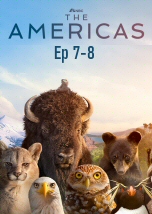
In episodes 7 and 8 of the series, the journey moves from the towering Andes to the tropical Caribbean, revealing two worlds where wildlife survives through astonishing specialization. In the Andes, spectacled bears guide their cubs down perilous cliffs, rare marvelous spatuletail hummingbirds fight and dance for mates, frogs endure freezing nights high beside retreating glaciers, torrent ducks master near-boiling mountain rivers, and thousands of flamingos gather at toxic high-altitude lakes in spectacular courtship displays. The Caribbean offers an entirely different struggle for survival. Sailfish coordinate high-speed attacks on sardine shoals, sperm whales dive into the deep around Dominica, millions of red crabs cross Cuba’s forests on their migration to the sea, and animals on isolated islands develop remarkable ways to exploit scarce resources. On Isla Jicarón, white-faced capuchins even learn to use stones as tools to crack nuts, showing how intelligence and adaptation can make the difference between survival and failure in paradise.
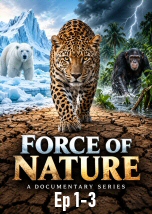
As climate chaos intensifies, animals across the planet are being pushed into conditions their bodies and instincts were never designed to face. Floods arrive where drought once ruled, storms grow stronger, seas warm and familiar habitats disappear. Narrated by Andrew Lincoln, this six-part natural history series follows wildlife confronting these extremes at close range, revealing not only the destructive power of a changing climate but also the extraordinary ingenuity, resilience and adaptability animals use to survive. In the first three episodes, the struggle begins on an increasingly extreme Earth. Burrowing owls on the North American Great Plains race to protect their chicks from tornadoes, cheetahs in Kenya battle record floods, polar bears search for vanishing sea ice and chimpanzees survive severe drought by digging their own filtered water holes. Rising waters then transform entire ecosystems: pygmy elephants face monsoon floods in Borneo, a platypus is swept into a violent flash flood in Australia, and a lone lioness in the Kalahari turns an unexpected flood into a rare hunting opportunity. Finally, along the world’s coasts, Caribbean flamingos confront a category-five hurricane, anole lizards cling on through violent winds, California sea otters struggle through huge storms and collapsing kelp forests, while clownfish on the Great Barrier Reef face a marine heatwave that threatens the very anemones on which their families depend.
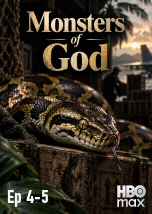
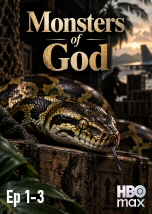
What begins as a fascination with rare and dangerous reptiles grows into a lucrative global underground built on smuggling, obsession and rivalry. From the eccentric dealers who helped create the exotic animal trade to the investigators determined to stop it, the series exposes a hidden world where protected species, major zoos, criminal networks and enormous sums of money collide. At its center are men such as Tommy Crutchfield and Hank Molt, whose bitter feud reveals how quickly passion for reptiles can turn into betrayal, trafficking and environmental damage. The documentary also shows how this trade helped reshape ecosystems and drove entire species closer to extinction. In the first three episodes, the story traces the rise of the reptile-smuggling world from the 1970s onward. The obsession with owning animals no one else could obtain fuels a booming illegal market, while authorities begin taking notice of dealers operating across borders. In Florida, Ray Van Nostrand enters the business and becomes entangled with Miami’s darker underworld of drug trafficking and gun-running, drawing the attention of the DEA. Later, his son Mike attempts to transform the family operation into a legitimate international import-export empire, only for old criminal connections and his father’s return to threaten everything he has built.



















The story then moves to World War II’s often overlooked Asian theater, where Allied forces and Japan fight across jungles, mountains, plains and impossible supply routes. In Burma, India and China, commanders such as Joseph Stilwell, William Slim and Lord Mountbatten face a brutal war of disease, exhaustion, monsoon terrain and relentless Japanese resistance. From the Burma Road and the deadly airlift over the Hump to the fighting at Myitkyina, Imphal and Saipan, these episodes reveal a vast and punishing conflict far from Europe’s headlines, where survival itself becomes a battle and victory demands endurance on a staggering scale.