The search for extraterrestrial life is an age-old quest. But recent breakthroughs make today an era like no other in the history of astronomy. From the exhilarating probing of our own solar system and the Kepler mission’s astounding discovery of thousands of extrasolar planets, to the next-generation telescopes under development, the prospects for finding life beyond Earth have never been stronger. Still, daunting hurdles remain. How can we study anything light years away, let alone a little planet? In the vast universe, where should we even start to look? Is our failure to hear any other voices in the galaxy a sign that we are special? Join leading explorers now searching the galaxy for life and intelligence on other planets—and asks, if we do find other life in the universe... what would that mean?
Medical journalist Michael Mosley teams up with scientists whose latest research is turning common knowledge about fitness on its head. They reveal why 10,000 steps is just a marketing ploy and that two minutes of exercise is all a person needs each week. They discover how to get people to stick to their fitness plans and what exercise can actually make everyone more intelligent. Whether it is for couch potatoes who hate the thought of exercise, someone too busy to consider the gym, or even for fitness fanatics who are desperate to do more - science can help everyone exercise better. By the end of January many people struggle to keep up their resolutions to be more active. The result is that people wastes millions on unused gym memberships. But new science has the answers.
This series documents various stories about exposing the greed and crime spreading through the global economy. Filmmaker Alex Gibney tells stories of corporate corruption, securities fraud and creative accounting. In the first episode, Gibney reveals shocking new details about Volkswagen's corporate deceit, and exposes the unholy alliance between governments and automakers that allowed the automaker to put tens of thousands of lives at risk - all for the sake of a $500 part.
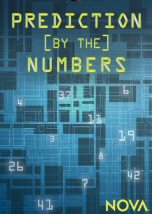
Predictions underlie nearly every aspect of our lives, from sports, politics, and medical decisions to the morning commute. With the explosion of digital technology, the internet, and 'big data,' the science of forecasting is flourishing. But why do some predictions succeed spectacularly while others fail abysmally? And how can we find meaningful patterns amidst chaos and uncertainty? From the glitz of casinos and TV game shows to the life-and-death stakes of storm forecasts and the flaws of opinion polls that can swing an election, 'Prediction by the Numbers' explores stories of statistics in action. Yet advances in machine learning and big data models that increasingly rule our lives are also posing big, disturbing questions. How much should we trust predictions made by algorithms when we don't understand how they arrive at them? And how far ahead can we really forecast?
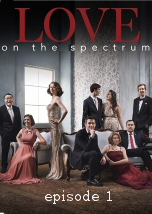
This five-part documentary series follows young adults on the autism spectrum as they explore the unpredictable world of love, dating and relationships. Most people on the spectrum have the same desire for intimacy and companionship as the rest of the population, yet difficulties in social interaction and communication are a key feature of autism, which makes finding a partner an often daunting and difficult experience. Many haven’t been on a date, ever. 'Love on the Spectrum' follows seven singles as they take their first steps into the world of dating and also couples who have found their match. In the first episode, Michael is determined to find a wife but has never been on a date. He attends a singles dinner and finds a connection. Chloe hopes to find someone who will see beyond her disabilities. Ruth and Thomas celebrate a special anniversary.
Richard Rudgley goes in search of evidence of the barbarians of the dark ages, people whose names have for 1500 years been bywords for mindless brutality. The real truth about the barbarians who marched across Europe during the Dark Ages is more shocking than what you may know. Where did they come from? Who are their descendants? Are any of their techniques and inventions still used? Richard discovers the secrets of forgotten empires, and of mighty clashes throughout Europe. The art, society and cultural legacy of the barbarians are shown to have shaped and moulded the destiny of Europe even more than the Roman Empire. In the first part of the journey through the Dark Ages we will be tracing the legacies of the Huns, Vandals and Goths, to ask whether the 'dark ages' represent a resurfacing of much older tribal lines. Sites in Austria show how sophisticated pre-Roman communities had become with evidence of stunning craftsmanship and sophisticated farming techniques which defy the image of a mindless rabble we have come to accept without challenge.













Still, daunting hurdles remain. How can we study anything light years away, let alone a little planet? In the vast universe, where should we even start to look? Is our failure to hear any other voices in the galaxy a sign that we are special? Join leading explorers now searching the galaxy for life and intelligence on other planets—and asks, if we do find other life in the universe... what would that mean?