





Last Watched

"NES"  Sort by

Dinosaur 13

   2014    Science
American paleontologist Pete Larson and his team discovered the largest and most complete Tyrannosaurus rex ever found (nicknamed 'Sue') while digging in the badlands of South Dakota. However the skeleton was seized from Larson by the federal government, followed by a ten-year-long battle with the FBI, the National Park Service, the Bureau of Indian Affairs, and Maurice Williams, on whose property the bones were discovered. Pete Larson also spent 18 months in prison." After the film aired, The Society of Vertebrate Paleontology, a society of professional academic paleontologists, issued a statement of full support for legally protecting fossils on public land and criticized Dinosaur 13 for implying that government regulations impede paleontological science

A Night With The Stars

   2011    Science
For one night only, Professor Brian Cox goes unplugged in a specially recorded programme from the lecture theatre of the Royal Institution of Great Britain. In his own inimitable style, Brian takes an audience of famous faces, scientists and members of the public on a journey through some of the most challenging concepts in physics. With the help of Jonathan Ross, Simon Pegg, Sarah Millican and James May, Brian shows how diamonds - the hardest material in nature - are made up of nothingness; how things can be in an infinite number of places at once; why everything we see or touch in the universe exists; and how a diamond in the heart of London is in communication with the largest diamond in the cosmos.

Inside the Milky Way

   2011    Science
Embark on an astounding journey across 100,000 light-years to witness key moments in the history of the Milky Way. Using cutting-edge science, National Geographic constructs a 3-D state-of-the-art CGI model of our galaxy. We'll peer into the heart of the Milky Way on the hunt for super-massive black holes, watch how stars are born and die, fly out and above the plane of our galaxy to understand its true shape and scour its dusty spiral arms for the possibility of life

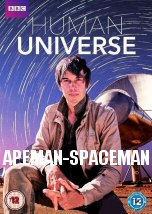
Apeman - Spaceman

   2014    History
Professor Brian Cox examines how it was that in a universe made of stars, rocks and endless space, a conscious civilisation was born. His latest adventure takes him from a submerged space station in Star City on the outskirts of Moscow, to Ethiopia, high above in the Great Rift Valley, where he encounters the geladas, mankind's distant ancestors. Despite once being Africa's most successful primate, a species who at one time roamed across the entire continent, these days they are found in one just place in the remote Ethiopian Highlands. Cox investigates why these ancestors retreated, yet modern mankind has expanded across the planet.
Series: Human Universe

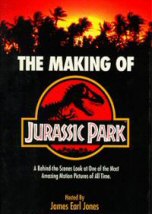
The Making of Jurassic Park

   1995    Art
This documentary treats film fans to a behind-the-scenes look at the making of Jurassic Park, one of the 90's biggest hits and a milestone in special effects development. Narrated by James Earl Jones, it includes footage of the filming process, as well as interviews with director Steven Spielberg, and other members of the cast and crew, who give their insights into what it was like working together on this project and the efforts it took to bring the film to completion.

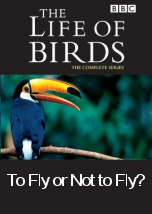
To Fly or Not to Fly

   1998    Nature
The first episode looks at how birds first took to the skies in the wake of the insects. It begins in Mexico, where Sir Attenborough observes bats being outmanoeuvred by a red-tailed hawk. Pterosaurs were the birds' forerunners, some 150 million years after dragonflies developed the means of flight, but eventually went extinct together with the dinosaurs. Birds had by then already evolved from early forms like archaeopteryx, the first creature to possess feathers. Its ancestry can be traced through reptiles, and some current species, such as the flying lizard, possibly show paths this evolution may have taken." One of the biggest birds to have ever existed was the terror bird, which proliferated after dinosaurs vanished and stood up to 2.5 metres tall. By comparison, the ostrich, while not closely related, is the largest and heaviest living bird. It was probably the evasion of predators that drove most birds into the air, so their flightless cousins evolved because they had few enemies. Accordingly, such species are more likely to be found on islands, and Sir Attenborough visits New Zealand to observe its great variety, most especially the kiwi. Also depicted is the moa, another huge creature that is now gone. The takahē is extremely rare, and high in the mountains of New Zealand, Sir Attenborough discovers one from a population of only 40 pairs. Finally, another example on the brink of extinction is the kakapo, which at one point numbered only 61 individuals. A male is heard calling — an immensely amplified deep note that can be heard at great distances from its nest.
Series: The Life of Birds
Ancient Apocalypse

Ancient Apocalypse

2022  History
Sonic Highways

Sonic Highways

2014  Art
Reel Rock

Reel Rock

2014  Culture
Unknown

Unknown

2023  Technology
Out of the Cradle

Out of the Cradle

2019  History
Cooked

Cooked

2016  Culture