






Last Watched

"Sea"  Sort by

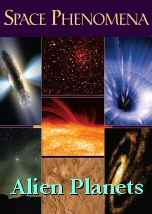
Alien Planets

   2020    Science
Our universe reveals itself in ways we’ve never seen before, thanks to new discoveries in astrobiology. Today, the advent of cutting-edge observational instruments is shedding light on amazing facts about life and the universe. NASA's next-generation space telescope TESS (Exoplanet Survey Satellite) has begun its search for Earth-like planets belonging to other star systems. How many of these 'exoplanets' can host life, and what kind of life forms can evolve in these environments?
Series: Space Phenomena
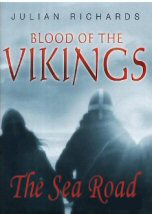
Blood Of The Vikings: The Sea Road

   2001    History
Julian Richards investigates the impact of the Vikings in Britain. This edition focuses on the archaeological trail left by the Vikings as they travelled from Norway along the sea road to Dublin. Settlements, a boat burial and evidence of trading have been discovered on the Scottish isles, and silver hoards found in Ireland suggest that Dublin was not only wealthy and important, but also a centre for trade in slaves.
Series: Blood of the Vikings

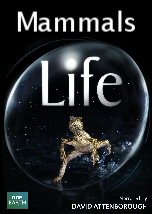
Life: Mammals

   2009    Nature
Mammals dominate the planet. They do it through having warm blood and by the care they lavish on their young. Weeks of filming in the bitter Antarctic winter reveal how a mother Weddell seal wears her teeth down keeping open a hole in the ice so she can catch fish for her pup. A powered hot air balloon produces stunning images of millions of migrating bats as they converge on fruiting trees in Zambia, and slow-motion cameras reveal how a mother rufous sengi exhausts a chasing lizard. A gyroscopically stabilised camera moves alongside migrating caribou, and a diving team swim among the planet's biggest fight as male humpback whales battle for a female.
Series: Life

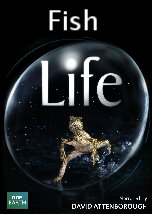
Life: Fish

   2009    Nature
Fish dominate the planet's waters through their astonishing variety of shape and behaviour. The beautiful weedy sea dragon looks like a creature from a fairytale, and the male protects their eggs by carrying them on his tail for months. The sarcastic fringehead, meanwhile, appears to turn its head inside out when it fights. Slow-motion cameras show the flying fish gliding through the air like a flock of birds and capture the world's fastest swimmer, the sailfish, plucking sardines from a shoal at 70 mph. And the tiny Hawaiian goby undertakes one of nature's most daunting journeys, climbing a massive waterfall to find safe pools for breeding.
Series: Life

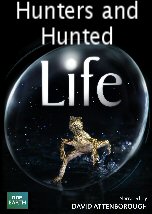
Life: Hunters and Hunted

   2009    Nature
Mammals' ability to learn new tricks is the key to survival in the knife-edge world of hunters and hunted. In a TV first, a killer whale off the Falklands does something unique: it sneaks into a pool where elephant seal pups learn to swim and snatches them, saving itself the trouble of hunting in the open sea. Slow-motion cameras reveal the star-nosed mole's newly-discovered technique for smelling prey underwater: it exhales then inhales a bubble of air ten times per second. Young ibex soon learn the only way to escape a fox - run up an almost vertical cliff face - and young stoats fight mock battles, learning the skills that make them one of the world's most efficient predators.
Series: Life

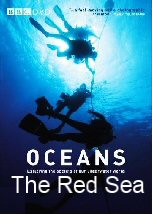
The Red Sea

   2009    Nature
The Red Sea is one of the youngest oceans in the world and one of the warmest. The northern region, with its diverse array of marine life, is one of the most visited dive locations on earth while the southern end remains virtually unexplored. It's a global hotspot for marine biology and an important trade route throughout human history, linking the trade goods of India and the Far East with the markets of Egypt and Europe.
Series: Oceans
Leaving Neverland

Leaving Neverland

2019  Culture
Walking with Cavemen

Walking with Cavemen

2003  History
The Virtual Revolution

The Virtual Revolution

2010  Technology
Oceans

Oceans

2009  Nature
Asia

Asia

2024  Nature