This remarkable science-history series investigates the blistering pace of human endeavour in space exploration, computing, energy, resources, Earth science and our understanding of the evolution of life itself. Across the last 50 years, humans have set a blistering pace and scientific discovery. We've crossed the boundaries of our solar system, made machines that can learn harnessed the power of the sun and built life from scratch. It's a period like no other in history, where human endeavour is changing everything: this is The Great Acceleration. As we race toward the future, we must examine the journey. In the first episode, Dr Shalin Naik explores the ambitious space shuttle mission that began in the '70s plus the future colonization of Mars. Over the past 50 years, space has become central to everything, from communications to entertainment to climate modelling. And as private enterprise enters space exploration, our understanding of the universe will only continue to expand. We will know if we can survive on other objects - the moon, maybe Mars, maybe even some of the moons of Jupiter and Saturn. Deep space is the last and infinite frontier. That's what we do as human beings. We explore, we learn, we make discoveries, from the moment we're born to the moment we die.
As the journey continues, there's beauty and danger in equal measure. Charley and Ewan travel through the extraordinary Bolivian desert, but the sandy roads make all more difficult. The duo ride their electric bikes through the exotic and breathtaking countryside and all the way making a challenging ascent. The riders stay in a hotel made entirely out of salt before heading to La Paz. 'Bolivia' also shows some quality work done by UNICEF when it comes to educating and working with the children. McGregor and Boorman spend time with the kids before resuming their journey and ending with a ferry ride over lake Titicaca.
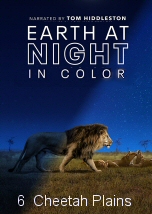
Sunset over the plains of Kenya's Maasai Mara, one of Africa's most protected wild spaces. And home to the fastest land animal on Earth, the cheetah. These agile cats have always been thought of as daylight hunters. They target prey from more than a kilometre away and chase it down at over 100 kilometres an hour. In one of these plains, two cheetah brothers attempt a high-speed night hunt with a gang of powerful hyenas on their trail.
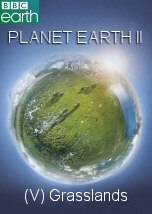
Grasslands cover one quarter of all land and support the vast gatherings of wildlife, but to survive here animals must endure the most hostile seasonal changes on the planet. From Asia's bizarre-looking Saiga antelope to the giant anteaters of Brazil, grassland animals have adapted in extraordinary ways to cope with these extremes. In the flooded Okavango, lions take on formidable buffalo in epic battles, on the savannah bee-eaters take advantage of elephants to help catch insects and, on the freezing northern tundra, caribou embark on great migrations shadowed by hungry Arctic wolves.
Rasputin is gone, but Nicholas II continues his catastrophic policies in war and at home. When Nicholas goes back to military headquarters, he is in fact leaving control of government, exactly when Russia needed to be held together by its Czar. The war by this time is deeply unpopular. It's not only unpopular, it's also arguably the engine that's causing enormous economic crisis, that's causing general unrest. Deprivation pushes the population from unrest to revolution.
Nicholas II abdicates, and civil war erupts. In May 1918, a year after the revolution, the Bolsheviks sent Anastasia, Alexei, Tatiana and Olga to join the rest of the family in Ekaterinburg. They're put in the Ipatiev mansion and It's given the name 'The House of Special Purpose.' As pro-royalist forces close in on the house where the Romanovs are imprisoned, the family's fate is sealed.















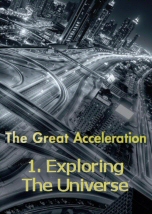





In the first episode, Dr Shalin Naik explores the ambitious space shuttle mission that began in the '70s plus the future colonization of Mars. Over the past 50 years, space has become central to everything, from communications to entertainment to climate modelling. And as private enterprise enters space exploration, our understanding of the universe will only continue to expand. We will know if we can survive on other objects - the moon, maybe Mars, maybe even some of the moons of Jupiter and Saturn. Deep space is the last and infinite frontier. That's what we do as human beings. We explore, we learn, we make discoveries, from the moment we're born to the moment we die.