In 1983 Hasbro bought the license of the Diaclone and Micro Change toys from Takara, then commissioned Marvel Comics to come up with a story-line and character names for the toys. The result: Transformers. Despite Tonka releasing the cheaper Gobots line six months earlier, Hasbro's Transformers took the toy market by storm in 1984, raking in US$150 million that year. At the peak of the toy line's popularity, The Transformers: The Movie hit theaters to further capitalize on its success, but the film polarized fans and collectors with the death of Optimus Prime and majority of the original characters. As Hasbro took full control of Transformers from Takara by the late 1980s, sales declined until the toy line was discontinued in 1991. After the failed Generation 2 reboot, Beast Wars rejuvenated the franchise in 1995. In 2007, the live-action Transformers film solidified Transformers' position as Hasbro's flagship toy line.
Exoplanets, strange worlds outside our solar system. We're discovering the cosmos is full of alien planets. Alien worlds that challenge our understanding of planetary systems. Hellishly hot worlds, violently colliding worlds, worlds getting eaten by their stars. There's much, much more out there than we had ever imagined. Exoplanets are shaking up our understanding of the universe. The cosmos is a chaotic array of the odd, the weird, and the wonderful. The more we find, the less we know.
The fourth episode sees host Neil deGrasse Tyson exploring our eternal quest to end hunger and honoring Nikolai Ivanovic Vavilov, pioneer of modern plant breeding, who risked his life for a discovery that would change the history of science. Vavilov's story is marked by both the tenacity and creativity and is particularly tragic. Interwoven into Vavilov's somber narrative are warnings and treatments of science and its ethical implications, especially when science itself comes under attack from political forces.
We inhabit a cosmos of undiscovered dimensions and paradoxical realities. We live on one level of perception, but there are others. Every once in a while, a searcher happens upon the doorway to one of these other levels. One of them discovered a paradox about reality that proved to be so profound, we have yet to understand how it could be possible. The universe, or perhaps we should say, universes have never been the same. In the counterintuitive realm of quantum mechanics, light can be two contradictory things, and somehow - no one knows how - an unseen observer can alter the nature of reality. The man who stumbled on this hole in reality and the still- unfolding technological revolution that it made possible.
When Homo sapiens, which means 'wise ones,' discovered and controlled fire hundreds of thousands of years ago, everything changed. Fire allowed us to cook food and heat dwellings, and it served as a focal point for storytelling and sharing cultural identity among community members. We don't yet have established parameters for what it means to be 'distinctly human,' It would seem the only thing that separates us from other animals, Neil deGrasse Tyson ponders, is our neurotic need to feel 'special'. Against the backdrop of the Halls of Extinction, Tyson insists that there must be a clear distinction between ourselves and animals that justifies our eating them, wearing them and even bringing an end to their species. From the birth of the devil in ancient Persia to a searing story of saintliness among macaque monkeys, this episode is an exploration of human potential for change. It concludes with the story of how one of history's greatest monsters was transformed into one of its shining lights.
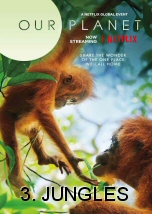
A rain forest is the richest habitat on Earth. Exactly how many species rain forests contain is unknown, but it runs into millions. And new ones are discovered every week. There are some, like the clouded leopard, we still know virtually nothing about. Although they cover just seven percent of the world's land area, jungles play a vital role in the health of the planet . Jungles and rainforests are home to an incredible variety of species like preening birds, intelligent orangutans and remarkably ambitious ants.









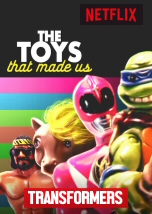


In 2007, the live-action Transformers film solidified Transformers' position as Hasbro's flagship toy line.