This series takes viewers on a journey to the frontiers of science, where researchers are tackling some of the biggest questions about life and the cosmos. The universe is hiding something. In fact, it is hiding a lot. Everything we experience on Earth, the stars and galaxies we see in the cosmos—all the 'normal' matter and energy that we understand—make up only 5% of the known universe. The other 95% is made up of two mysterious components: 'dark matter' and 'dark energy.' We can’t see them, but we know they’re there. And what’s more —these two shadowy ingredients are locked in an epic battle to control the very fate of the universe. Now, scientists are trying to shed light on the so-called 'dark sector' as the latest generation of detectors rev up, and powerful telescopes peer deeper into space than ever before to observe how it behaves. Will the discoveries help reveal how galaxies formed? In the series finale, Nova Wonders journeys to the stars and back to investigate what we know —and don’t know. Find out how scientists are discovering new secrets about the history of the universe, and why they’re predicting a shocking future.
'It's alive!' Since Dr. Frankenstein spoke those famous words, we've been alternately enthralled and terrified by the idea of creating life in the lab. Now, a revolution in genetic engineering and thrilling innovations in synthetic biology are bringing that dream—or nightmare, as the case may be—closer to reality. New tools allow researchers to use cells to create their own DNA and edit it into existing genomes with more ease and less cost than ever before. Along with renewed hopes for treating some genetic diseases, there's serious talk of using the newest technologies to bring long-extinct animals back from the dead – like the team hoping to resurrect the woolly mammoth. Science fiction is quickly becoming science fact. Another daring genetic experiment to bioengineer animals could prevent Lyme disease. But the power to make life comes with deep ethical questions. What are the potential rewards—and dangers—of tinkering with nature? This films explores the benefits and the burden of risk surrounding the controversial new technology.
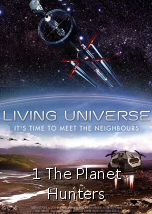
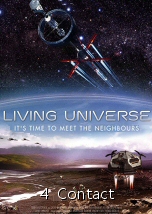
The next great voyage of human exploration has already begun: the search for life on planets orbiting distant stars. With extraordinary CGI, the world's most inspiring scientists, via extreme environments on Earth and around the solar system, the film takes viewers aboard the next generation of space ships, across the cosmos and beneath the clouds of the exo-planets to discover The Living Universe. Part 1: 'The Planet Hunters' For as long as we’ve had eyes to see and minds to wonder we’ve marveled at the stars. Since the discovery of the first so-called exoplanet in 1994, the Planet Hunters have transformed the way we see the universe. It is the year 2157, and spacecraft Artemis enters the final phase of construction.
Minerva B is a small rocky planet just like earth, where spacecraft Artemis has found water, organic molecules, and complex creatures. Is there something more to find? 'I am the mind of the spaceship, alone among the stars. 50 years ago, from a planet far away, the planet you call home, I launched. A journey of 28 trillion miles across the yawning time of space to the exoplanet, Minerva B: a small, rocky planet, much like Earth, but orbiting another sun. Here, I have found water, organic molecules, and microorganisms. When the news of my discovery reaches Earth years from now, some of you will be amazed. But others will remain unsatisfied, and you will ask, have I not found animals or birds? Have I not met intelligent life like us? And so, my search continues. I will find life of marvellous complexity, and the traces of a devastating loss.'
Chef's Table goes inside the lives and kitchens of six of the world's most renowned international chefs. Each episode focuses on a single chef and their unique look at their lives, talents and passion from their piece of culinary heaven. Jeong Kwan is a not your regular defined chef. She's living as a monk in Korea. She is connected to the spiritual side of food. Instead of trying to be the best in the world, any sense of ego is stripped from her mind and she cooks from the soul. This episode follows the daily life of Jeong Kwan, as she lovingly prepares vegan 'temple food', using ages old recipes and natural ingredients. She is a humble genius. Inspirational and meditative, gorgeously shot. She is a tiny, calm, firebrand.
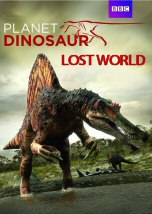
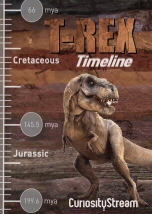
The Tyrannosaurus Rex is known as the king of the dinosaurs, but how did its reign begin? Meet Moros Intrepidus, a 180 lb., deer-sized ancestor to the T-Rex. Learn how the latest in palaeontology can now link this small dinosaur to the 19,000-pound Scotty, the largest T-Rex ever discovered. We're filling in gaps in the history of well-known dinosaurs and we're finding specimens of even the most famous dinosaur that are telling us new things about their biology, about their growth, about their size, that we didn't know before. We are nowhere at the end of learning about dinosaurs and in generations to come, we will be knowing things about the lives of these ancient creatures that would probably blow our minds.











Now, scientists are trying to shed light on the so-called 'dark sector' as the latest generation of detectors rev up, and powerful telescopes peer deeper into space than ever before to observe how it behaves. Will the discoveries help reveal how galaxies formed? In the series finale, Nova Wonders journeys to the stars and back to investigate what we know —and don’t know. Find out how scientists are discovering new secrets about the history of the universe, and why they’re predicting a shocking future.