



Last Watched

"Time"  Sort by

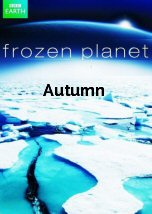
Frozen Planet: Autumn

   2011    Nature
For the animals in the polar regions, autumn means dramatic battles and epic journeys. Time is running out - the Arctic Ocean is freezing over and the sea ice is advancing at 2.5 miles per day around Antarctica. Polar bears gather in large numbers on the Arctic coast as they wait for the return of the ice. Soon, tempers fray and violent sparring contests break out. Meanwhile 2,000 beluga whales head for one special estuary, a gigantic 'whale spa' where they will thrash their snow-white bodies against the gravel and exfoliate. Inland, the tundra undergoes a dramatic transformation from green to fiery red. Here, musk ox males slam head-first into each other with the force of a 30mph car crash as they struggle to defend their harems. Frisky young caribou males play a game of 'grandma's footsteps' as they try to steal the boss's female. Down in Antarctica, Adelie penguin chicks huddle together in creches. When a parent returns from fishing, it leads its twins on a comical steeplechase - sadly there's only enough for one, so the winner gets the meal. Two months later and the chicks are fully feathered apart from downy Mohican hairdos - they're ready to take their first swim - reluctantly though, as it seems penguins are not born with a love of water! And with good reason - a leopard seal explodes from the sea and pulls one from an ice floe, a hunting manoeuvre that has never been filmed before. As winter approaches and everyone has left, the giant emperor penguin arrives and makes an epic trek inland to breed. The mothers soon return to the sea leaving the fathers to hold the eggs and endure the coldest winter on earth.
Series: Frozen Planet
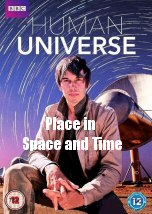
Place in Space and Time

   2014    Science
On a trip to the fortified Moroccan village of Ait-Ben-Haddou in the Atlas Mountains, Professor Brian Cox reveals how by watching the stars' motion across the night sky, it is quite natural for man to think he is at the centre of everything. That view was held for many ages, but innate human curiosity has eventually led to an understanding of mankind's true place in space and time, and an appreciation that Earth is not a focal point but a mere particle of rock in a possibly infinite expanse of space, 13.8 billion years from the beginning of the universe.
Series: Human Universe

U2 Live at the Rose Bowl 3of3

   2010    Art
The 25 October 2009 concert in Pasadena, California was streamed live on U2's YouTube channel, the first time a concert was streamed live on YouTube. Over 10 million viewers streamed the concert, making it the largest streaming event in the website's history. The shoot was directed by Tom Krueger, who had previously worked with the band on the film U2 3D.
Series: U2 Live at the Rose Bowl

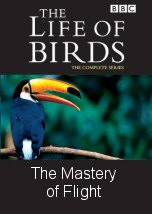
The Mastery of Flight

   1998    Nature
The second programme deals with the mechanics of flight. Getting into the air is by far the most exhausting of a bird's activities, and Sir Attenborough observes shearwaters in Japan that have taken to climbing trees to give them a good jumping-off point. The albatross is so large that it can only launch itself after a run-up to create a flow of air over its wings. A combination of aerodynamics and upward air currents (or thermals), together with the act of flapping or gliding is what keeps a bird aloft. Landing requires less energy but a greater degree of skill, particularly for a big bird, such as a swan. Weight is kept to a minimum by having a beak made of keratin instead of bone, a light frame, and a coat of feathers, which is maintained fastidiously. The peregrine falcon holds the record for being fastest in the air, diving at speeds of over 300 km/h. Conversely, the barn owl owes its predatory success to flying slowly, while the kestrel spots its quarry by hovering. However, the true specialists in this regard are the hummingbirds, whose wings beat at the rate of 25 times a second. The habits of migratory birds are explored. After stocking up with food during the brief summer of the north, such species will set off on huge journeys southwards. Some, such as snow geese, travel continuously, using both the stars and the sun for navigation. They are contrasted with hawks and vultures, which glide overland on warm air, and therefore have to stop overnight.
Series: The Life of Birds

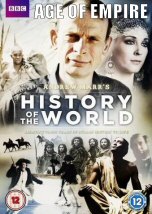
Age of Empire

   2012    History
Andrew Marr tells the story of the first empires which laid the foundations for the modern world. From the Assyrians to Alexander the Great, conquerors rampaged across the Middle East and vicious wars were fought all the way from China to the Mediterranean. But this time of chaos and destruction also brought enormous progress and inspired human development. In the Middle East, the Phoenicians invented the alphabet, and one of the most powerful ideas in world history emerged: the belief in just one God. In India, the Buddha offered a radical alternative to empire building - a way of living that had no place for violence or hierarchy and was open to everyone. Great thinkers from Socrates to Confucius proposed new ideas about how to rule more wisely and live in a better society. And in Greece, democracy was born - the greatest political experiment of all. But within just a few years, its future would be under threat from invasion by an empire in the east...
Series: History of the World

What is the Right Diet for You 2of3

   2015    Medicine
It is time to see if personalised dieting will work in normal life. The volunteers have been given one of three diets to follow - based on their genes, their hormones and their psychology. But now they are back at home, trying to stick to their personalised diets with all the stresses and temptations of real life. Dr Chris van Tulleken and Professor Tanya Byron discover how our genetic makeup can make temptation difficult to resist, how understanding the brain reveals what makes us comfort eat and what science can tell us about why we make disastrous food choices.
Series: What is the Right Diet for You
Minimalism

Minimalism

2015  Culture
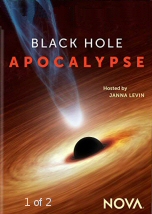
Black Hole Apocalypse

Black Hole Apocalypse

2018  Science
Mammals

Mammals

2024  Nature
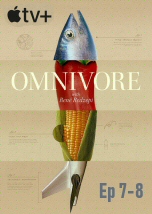
Omnivore

Omnivore

2024  Culture
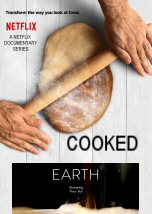
Cooked

Cooked

2016  Culture