
Last Watched

"Film"  Sort by

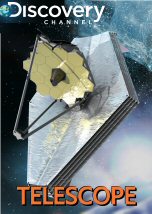
Telescope

   2016    Technology
A dynamic journey behind the scenes of the next step in the evolution of telescopes: NASA's James Webb Space Telescope. A new generation has been inspired to design and build this massive instrument, which is 100 times more powerful than the Hubble Space Telescope and will be a veritable time machine, capable of looking back on the origins of our universe and identifying signatures of potential life on planets far outside our solar system". With unprecedented access to the people and technologies that power its creation, including astrophysicists, engineers at Northrop Grumman, and personnel from NASA'S Goddard Space Flight Center and the Space Telescope Science Institute, the operations center for Hubble and Webb, Telescope spotlights the high-stakes mission of building this massive new scientific instrument. The film is a comprehensive look at the dynamic history of 400 years of telescopes starting with Galileo in 1609. The Webb is the next great telescope in society's ongoing mission to see farther into the universe and answer fundamental questions that have haunted mankind from the beginning of time. Directed by Oscar nominated filmmaker Nathaniel Kahn
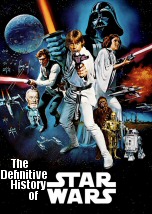
The Definitive History of Star Wars

   2015    Art
To get us in the mood for the launch of the seventh Star Wars film, discover its Definitive History. Documentary taking a behind-the-scene look at how the world's biggest, multi-billion pound movie series came into existence. Featuring rare interviews with Star Wars producers Gary Kurtz and Robert Watts and insights from those members of the creative team who won Oscars making the visual effects. Plus, a few little-known and surprising facts surrounding the film franchise.

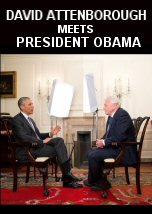
David Attenborough Meets President Obama

   2015    Nature
In a far cry from the steamy jungles of Rwanda or the icy waters of the Arctic, British naturalist Sir David Attenborough has donned a necktie and met with US president Barack Obama to discuss climate change and the future of the planet. The two met at the White House — a place the naturalist had never yet explored — on Sir David's 89th birthday in May to film the interview". It was the first time the respected wildlife filmmaker had met an American president and he seemed a little awed by the experience. Mr Obama, who grew up watching Sir David's programs, seemed equally thrilled. The president has the environment and climate change on his radar and is anxious to see progress made as his presidency comes to a close. He faces stiff opposition from Republicans in Congress on his plans to tackle climate change, but remains determined to make changes before leaving office. "I don't have much patience for anyone who denies that this challenge is real," he said. "We don't have time for a meeting of the Flat Earth Society." Sir David, who has been called "the godfather of natural history TV" by the BBC, brought to the meeting six decades dedicated to sharing the wonders of the natural world with television audiences. After initially being rejected for television because his teeth were deemed "too big", Sir David went on to make his Life on Earth television series, which has been watched by more than 500 million people worldwide. His name is now synonymous with nature, conservation and wildlife. During the television interview, the men discussed global warming, renewable energy and how children and young people hold the key to reversing the damage.

The Great European Disaster Movie

   2015    Science
Annalisa Piras and former editor of The Economist Bill Emmott, which explores the crisis facing Europe. Through case studies of citizens in different countries, the film explores a range of factors that have led to the present crisis, economic and identity challenges across Europe. High-level experts analyse how and why things are going so wrong. The film includes fictional scenes, set in a post-EU future, which feature archaeologist Charles Granda (played by Angus Deayton) travelling on a flight through a menacing storm, explaining to a child passenger what the EU was. Sombre, thought-provoking and witty, the film frames Europe through the eyes of those who have most at stake - the Europeans themselves.

Childbirth: All or Nothing

   2015    Medicine
What's your idea of the perfect birth? Do you want every medical intervention known to science or do you want to go it alone, without the help of a doctor or midwife? And what about after birth? Perhaps you'll hang on to your baby's placenta and carry it around with your newborn until it dries and drops off naturally? Or maybe you'll decide to eat it by whizzing it up into a smoothie? This film follows four pregnant women all making very different choices around their births, all determined to do it their way." 37-year-old Jo plans to deliver her baby completely alone on board her barge, without the assistance of any medical professional. By contrast, 34-year-old Anna is opting to sidestep the pains of labour and book in for a c-section at the Portland Hospital in London. Anna wants all the medication available and she doesn't want to feel a thing. There are plenty of unusual plans for after the birth too. In Devon, 33-year-old Lisa plans to lotus birth - she'll leave her baby's umbilical cord attached to its placenta and she'll keep it fresh by dusting it with salt, rose petals and lavender oil. 35-year-old Kati from Manchester is going to whizz her afterbirth into a smoothie and consume it over a number of days. She hopes it will help her stave off post-natal baby blues and bounce back as quickly as possible. Fending off bewildered looks and concerns from friends, family and medical professionals, each woman is going against convention to have the birth she wants. There are free and frank discussions between mums and daughters and decisions to go against medical advice. So does breaking with the norm and sticking to your guns pay off? And what really is the perfect birth?

Battle for the Himalayas: The Fight to Film Everest

   2015    History
Between the 1920s and the 1960s the world's great powers sent vast military-style expeditions to conquer the peaks of the Himalayas, with Everest at their head. This was a great game played - camera in hand - by Imperial Britain, Nazi Germany and superpower America. As a result, Himalayan mountaineering's most iconic, epic and tragic moments didn't just go down in history, but were caught on film - from the deaths of Mallory and Irvine on Everest in 1924, to Everest's final conquest in 1953 by Hillary and Tensing. Using footage never before seen on British television, this is the story how of how film-makers turned the great peaks into great propaganda.
Life

Life

2009  Nature
Turkey with Simon Reeve

Turkey with Simon Reeve

2017  Culture
Frozen Planet

Frozen Planet

2011  Nature
Magic Numbers

Magic Numbers

2018  Science
Solar System

Solar System

2024  Science
Natural World

Natural World

2017  Nature
The Sky at Night

The Sky at Night

2020  Science
Top Gear

Top Gear

2012  Technology