





Last Watched

"Time"  Sort by

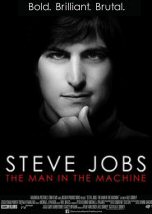
Steve Jobs Man in the Machine

   2015    History
Directed by Alex Gibney, it follows the life and work of ex-Apple CEO Steve Jobs. Gibney starts the doc by showing how much people around the world worship Steve Jobs as if he were an idol. He then provides you with a wealth of background information about Jobs' childhood, teenage and college years including how he formed Apple Inc. Fortunately, not all of the doc is hagiography because Gibney does briefly delve into the darker side of Jobs, particularly how selfish he was and mistreated those around him including his ex-wife. Jobs comes across as a charming, intelligent narcissist who knows how to captivate an audience whenever he speaks. In other words, like all great narcissists, he's a very good actor. Gibney certainly knows how to choose the right subject because Jobs' complexity makes him all the more captivating and worthy of a feature-length film. As is usually the case with Gibney's docs, this one is slickly-edited and has just the right amount of comic relief, mostly in the brief video of an young boy joyfully lists all of Apple's technological devices that Steve Jobs created. You'll catch a glimpse of what makes Jobs fallible, and find a little mildly provocative food for thought about the advancement of modern technology, i.e. how technology helps to connect us to one another yet alienates us at the same time.
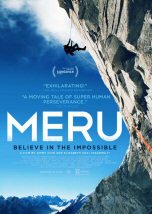
Meru

   2015    Culture
In the high-stakes game of big-wall climbing, the Shark’s Fin on Mount Meru may be the ultimate prize. Sitting at the headwaters of the sacred Ganges River in Northern India, the Shark’s Fin has seen more failed attempts by elite climbing teams over the past 30 years than any other ascent in the Himalayas. To undertake Meru, says Jon Krakauer, the bestselling author of Into Thin Air, "You can’t just be a good ice climber. You can’t just be good at altitude. You can’t just be a good rock climber. It’s defeated so many good climbers and maybe will defeat everybody for all time. Meru isn’t Everest. On Everest you can hire Sherpas to take most of the risks. This is a whole different kind of climbing."

Humpback Whale

   2006    Nature
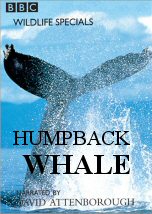
Few sounds are more beautiful or moving than the underwater songs of the humpback whale. Male whales compete with their songs, which often last for 10 minutes at a time, and can be repeated for hours on end. Whales separated by thousands of miles of sea will sing almost identical songs. Researchers have found that the songs change throughout the breeding months, following a mysterious pattern repeated across the waves. Whales also use sound to hunt. To catch herring, humpback whales release a stream of bubbles to form a shimmering, circular fishing net. Emitting a repetitive loud scream, they scare the fish into a tight ball, then lunge out of the water to swallow the shoal whole. Now it seems that the long-held image of the gentle giant must change to one of a ferocious and opportunistic hunter.

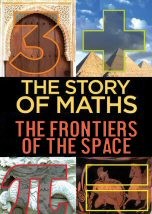
The Story of Maths The Frontiers of Space

   2008    Science
In the third episode we will see Europe by the 17th century taking over from the Middle East as the powerhouse of mathematical ideas. Great strides had been made in understanding the geometry of objects fixed in time and space. The race was on to discover the mathematics to describe objects in motion. This programme explores the work of Rene Descartes, Pierre Fermat, Isaac Newton, Leonard Euler and Carl Friedrich Gauss. Du Sautoy proceeds to describes René Descartes realisation that it was possible to describe curved lines as equations and thus link algebra and geometry. He talks with Henk J. M. Bos about Descartes. He shows how one of Pierre de Fermat’s theorems is now the basis for the codes that protect credit card transactions on the internet. He describes Isaac Newton’s development of math and physics crucial to understanding the behaviour of moving objects in engineering. He covers the Leibniz and Newton calculus controversy and the Bernoulli family. He further covers Leonhard Euler, the father of topology, and Gauss' invention of a new way of handling equations, modular arithmetic. The further contribution of Gauss to our understanding of how prime numbers are distributed is covered thus providing the platform for Bernhard Riemann's theories on prime numbers. In addition Riemann worked on the properties of objects, which he saw as manifolds that could exist in multi-dimensional space.
Series: The Story of Maths

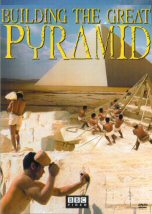
Building the Great Pyramid

       History
The Great Pyramid of Giza's construction is still shrouded in mystery, despite it being the only survivor among the Seven Wonders of the Ancient World. In Building the Great Pyramid, travel back 4,500 years with the BBC as they re-create the circumstances under which it may have been built, as well as the daily life of the population at that time. Expert archaeologists, Egyptologists, and scholars share their latest theories on what may have happened. The film combines dramatic reconstruction, location shooting and state-of-the-art CGI computer effects. Directed and written by Jonathan Stamp.

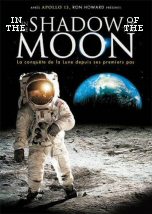
In the Shadow of the Moon

       History
In the 1960s, US President John F Kennedy proposed landing a man on the moon before the decade was finished. This film has interviews with most of the surviving astronauts of the Apollo program who were making ready to make that great voyage with an army of experts determined to make the endeavour possible. Through training, tragedy and triumph, we follow the greatest moments of one of Humanity's great achievements. The documentary reviews both the footage and media available to the public at the time of the missions, as well as NASA films and materials which had not been opened in over 30 years.
Secrets of the Dead

Secrets of the Dead

2017  History
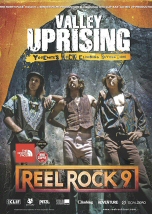
Reel Rock

Reel Rock

2014  Culture
Cosmos: Possible Worlds

Cosmos: Possible Worlds

2020  Science
Strangest Things

Strangest Things

2021  History
Our Planet

Our Planet

2019  Nature
Planet Earth II

Planet Earth II

2016  Nature
Seven Ages of Rock

Seven Ages of Rock

2007  Art