










Last Watched

" Biology"  Sort by

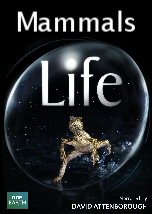
Life: Mammals

   2009    Nature
Mammals dominate the planet. They do it through having warm blood and by the care they lavish on their young. Weeks of filming in the bitter Antarctic winter reveal how a mother Weddell seal wears her teeth down keeping open a hole in the ice so she can catch fish for her pup. A powered hot air balloon produces stunning images of millions of migrating bats as they converge on fruiting trees in Zambia, and slow-motion cameras reveal how a mother rufous sengi exhausts a chasing lizard. A gyroscopically stabilised camera moves alongside migrating caribou, and a diving team swim among the planet's biggest fight as male humpback whales battle for a female.
Series: Life
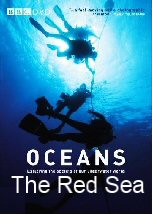
The Red Sea

   2009    Nature
The Red Sea is one of the youngest oceans in the world and one of the warmest. The northern region, with its diverse array of marine life, is one of the most visited dive locations on earth while the southern end remains virtually unexplored. It's a global hotspot for marine biology and an important trade route throughout human history, linking the trade goods of India and the Far East with the markets of Egypt and Europe.
Series: Oceans

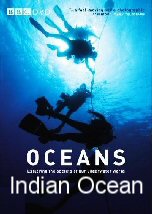
The Indian Ocean

   2009    Nature
The Indian Ocean is the third largest body of water on Earth at more than 6,000 miles wide and covering 13% of the world's surface. It is home to 5,000 species of fish, many of which only exist in the Indian Ocean. But it is also an ocean under threat from global issues such as over-fishing and climate change, which make this an ocean on the edge.
Series: Oceans

The Indian Ocean Coastal Waters

   2009    Nature
The tropical Indian Ocean is home to the Spice Islands. Characterised by beautiful sandy beaches, fringing coral reefs and coastal mangrove forests, this is a vibrant nursery area for marine life, such as whale sharks, crabs, seahorses and a great variety of fish. The coastal areas are where humans have the most direct impact on the ocean's resources.
Series: Oceans

The Arctic Ocean

   2009    Nature
With much of it covered in ice all year round and with no daylight from October to March, the Arctic Ocean is one of the world's most remarkable oceans. Its home to a multitude of unique life forms, all highly adapted to cope with the extreme and seasonal conditions. The impacts of climate change are more strongly felt here than anywhere else in the world.
Series: Oceans

Mountains

   2006    Nature
Welcome to an extreme landscape of rock, ice and snow. We tour the mightiest mountain ranges, starting with the birth of a mountain at one of the lowest places on Earth and ending at the summit of Everest. Find out how some of the most secretive animals rise to the challenge of mountain life. Share one of Earth's rarest phenomena, a lava lake that has been erupting for over 100 years. The same forces built the Simian Mountains where we find troops of gelada baboons nearly a thousand strong. In the Rockies, grizzlies build winter dens inside avalanche-prone slopes and climb the peaks to devour abundant summer moths. In another world first, the programme brings us astounding images of a snow leopard hunting on the Pakistan peaks.
Series: Planet Earth
Leaving Neverland

Leaving Neverland

2019  Culture
Cosmos: Possible Worlds

Cosmos: Possible Worlds

2020  Science
Leonardo Da Vinci

Leonardo Da Vinci

2024  History
Becoming Martian

Becoming Martian

2021  Technology
Science and Islam

Science and Islam

2017  History
Trainwreck

Trainwreck

2025  Culture
Planet Dinosaur

Planet Dinosaur

2011  Science
The Sky at Night

The Sky at Night

2023  Science