













Last Watched

"Opera"  Sort by

Dirty Wars

   2013    Culture
Investigative journalist Jeremy Scahill travels to Afghanistan, Yemen, Somalia, and other countries where the United States has taken military action in the War on Terror. In Afghanistan, he investigates the United States military and government cover-up of the deaths of five civilians, including two pregnant women killed by US soldiers from the Joint Special Operations Command. After investigating the attack, Scahill travels to other sites of JSOC intervention, interviewing both proponents and opponents, and the survivors, of such raids,including U.S. Senator Ron Wyden. Scahill also investigates the assassinations of American citizens Anwar al-Awlaki and his son Abdulrahman al-Awlaki, meeting with their family at their home in Yemen. Scahill suggests that the War on Terror is in fact a "self-fulfilling prophecy" and causes the radicalization of Muslims. He also discusses the case of Yemeni investigative journalist Abdulelah Haider Shaye who was detained, tried and sentenced on terrorism-related charges after reporting on American drone strikes.
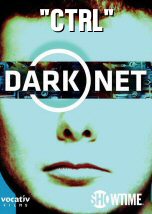

CTRL

   2016    Technology
The Internet is an uncontrollable labyrinth of content and imagery that operates under loose laws and partial anonymity - a new frontier where people can do anything and see anything, whether they should or not. In this lawless landscape, who's in control? The protectors? The abusers? In this episode meet the content moderators who watch the worst of the Internet so you don't have to; a convicted hacker whose punishment was the virtual prison of the unplugged; plus, a blackhat hacker who encrypts and holds computer files hostage.
Series: Dark Net

Is Poverty Genetic

   2014    Culture
Are the wealthy just born in the right place at the right time? Are the poor victims of a system designed to keep them down? Or do physics and biology determine who is rich and who is poor? Throughout history, distribution of wealth is governed by hidden forces: DNA, environmental stress, patterns of human migration and even the laws of thermodynamics! Nature seems to demand winners and losers in life. But does this mean greed is king, and the rich can take what they want? Or is cooperation – between microorganisms, monkeys, and humans – more essential to survival of a species?
Series: Through the Wormhole Season 5

Playing with Nuclear Fire

   2014    Technology
Playing with Nuclear Fire' - In March 2011, the Tohoku earthquake in Japan created a tsunami that killed some 16,000 people and crippled the Fukushima Daiichi nuclear power plant. In the aftermath, the government and TEPCO, the plant's operator, withheld information about the extent of the damage. Three years later, citizens and the international community are left wondering if Japan really does have the situation under control, as the government is insisting, or if the danger is far greater than anyone is willing to admit. 'No Man Left Behind' - It's estimated that over a quarter million vets from recent wars have sought treatment for PTSD. Despite these statistics, veterans often face an uphill battle to get treatment, receiving inadequate attention and, most dangerously, overprescribed narcotics and other pharmaceuticals. Ryan Duffy meets veterans struggling with mental illness and addiction.
Series: Vice

Why Do I Need You

   2015    Medicine
In ‘Why Do I Need You?’ Dr. David Eagleman explores how the human brain relies on other brains to thrive and survive. Our fundamentally social nature can hold the key to our sucdess as a species. Our brains are so fundamentally wired to interact that we are something more like a single vast super-organism. In this age of digital connection, we desperately need to understand how human brains interact if we want our civilization to have a future, if we want to avoid fanaticism and to embrace cooperation. This neural interdependence begins at birth. Dr. David Eagleman invites a group of babies to a puppet show to showcase their ability to discern who is trustworthy, and who isn’t.
Series: The Brain with David Eagleman

Solving the Secrets

   2012    Nature
Bladderwort utricularia is a pond-dweller that is among the fastest known, its traps snapping shut in less than a millisecond. As the seasons change, David demonstrates how plants operate on a different time scale to us; how they modify their lives according to the time of year. We discover insects’ hidden links with plants, both as pests and pollinators. UV-sensitive 3D cameras reveal the invisible alter-ego of plants and their flowers’ mesmerizing patterns; a parallel-dimension of strange colours and stunning patterns through which plants communicate with them. With the aid of visual effects, David steps among the swirling vortices of plant scent; communication signals with which plants are inextricably plugged in to the natural world. And using a tuning fork, he demonstrates how plants and insects can even communicate with music. As autumn envelopes the Gardens, fungi reveal themselves not as the enemies of plants but their vital allies. In Kew’s atmospheric Fungarium, David discovers a specimen that has the power of mind control and another that lives underground where it has grown to be so big it can be counted as the largest single organism on the planet. It is 6 times bigger than Kew Gardens itself.
Series: Kingdom of Plants
The Crime of the Century

The Crime of the Century

2021  Medicine
Leaving Neverland

Leaving Neverland

2019  Culture
Prehistoric Planet

Prehistoric Planet

2022  Science
Cooked

Cooked

2016  Culture
The Hunt

The Hunt

2015  Nature
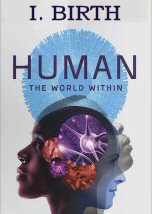
Human: The World Within

Human: The World Within

2021  Medicine
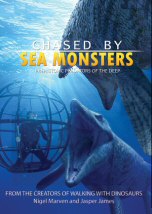
Chased by Sea Monsters

Chased by Sea Monsters

2003  Nature