

Last Watched

"Owl"  Sort by

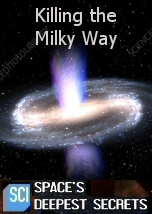
Killing the Milky Way

   2020    Science    HD
Across the universe, galaxies are going dark, and scientists don't know why the stars are losing their shine. Something is slowly drawing the curtains closed on the universe. Our milky way is under threat. Astronomers race against time to uncover the truth behind how galaxies are born and how they die before all of the lights go out.
Series: Space Deepest Secrets
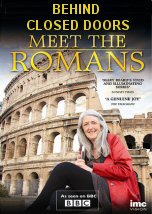
Behind Closed Doors

   2012    History
In this final episode, Mary Beard delves even deeper into ordinary Roman life by going behind the closed doors of their homes. She meets an extraordinary cast of characters - drunken housewives, teenage brides, bullied children and runaway slaves - and paints a more dynamic, lusty picture of Roman family life. Mary uncovers their preserved beds, furniture and cradles, tries on Roman wedding rings and meets some eccentric wives like Glyconis, praised by her husband for liking a drink or two, and Allia Potestas, who lived in a Roman menage a trois. Mary explores Roman parenting, childbirth and children, including Sulpicius Maximus, an 11-year-old schoolboy who was worked to death by his pushy parents, and Geminia Mater, a 5-year-old tomboy. Finally, Mary paints a more nuanced picture of Roman slavery and asks why if it was such a brutal institution did many Romans choose to be buried with their servants - living cheek by jowl in death, as in life
Series: Meet the Romans

The Genius of Charles Darwin: The Fifth Ape

   2008    Culture
Richard Dawkins deals with some of the philosophical and social ramifications of the theory of evolution. Dawkins starts out in Kenya, speaking with palaeontologist Richard Leakey. He then visits Christ is the Answer Ministries, Kenya's largest Pentecostal church, to interview Bishop Bonifes Adoyo. Adoyo has led the movement to press Kenya's national museum to sideline its collection of hominid bones pointing to man's evolution from ape to human.[5] The collection includes the Turkana Boy discovered by Kamoya Kimeu, a member of a team led by Richard Leakey in 1984. Dawkins discusses social darwinism and eugenics, explaining how these are not versions of natural selection, and that 'Darwin has been wrongly tainted'. He then meets with evolutionary psychologist Steven Pinker to discuss how morals can be compatible with natural selection. He goes on to explaining sexual selection, with peafowls as an example. To find out whether sexual selection plays a role for altruism and kindness among humans, he visits women who are looking for sperm donors, as well as a sperm bank manager. Dawkins also explains kin selection and selfish genes.

The Story of Maths The Genius of the East

   2008    Science
When ancient Greece fell into decline, mathematical progress stagnated as Europe entered the Dark Ages, but in the East mathematics reached new heights. In the second episode, Du Sautoy explores how maths helped build imperial China and discovers how the symbol for the number zero was invented in India. He also looks at the Middle Eastern invention of algebra and how mathematicians such as Fibonacci spread Eastern knowledge to the West.
Series: The Story of Maths

Flex Is Kings

   2013    Art
'Flexing' is a dance style forged in far east Brooklyn, at the dead-end of a handful of subway lines. Flex dancers channel the grittiness and crime of East New York into choreographed violence with gun movements, simulated bone-breaking, and the mimicked ripping of hearts from opponent's chests. Through battles dancers gain respect, craft an artistic identity, and sometimes find a sanctuary from the poverty and violence that saturates their neighborhood. No other style of street-dance is this violent, scary, or beautifully theatrical. In this purely do-it-yourself scene, creativity and ambition bring a community together around frequent dance-battle showcases that have begun to attract an international audience and may catapult the best dancers into careers in theater or film. Following a group of dancers for over two years, Flex is Kings explores the hopes and realities of this under-acknowledged and totally unfunded group of urban artists

The Third of May 1808

   2004    Art
Arguably the most powerful painting about war ever achieved. It portrays the slaughter of civilians after Napoleonic troops entered Madrid in 1808. The programme reveals the historical truths behind the painting and shows exactly how Goya achieved this masterpiece of protest. he painting's content, presentation, and emotional force secure its status as a groundbreaking, archetypal image of the horrors of war. Although it draws on many sources from both high and popular art, The Third of May 1808 marks a clear break from convention. Diverging from the traditions of Christian art and traditional depictions of war, it has no distinct precedent, and is acknowledged as one of the first paintings of the modern era.
According to the art historian Kenneth Clark, The Third of May 1808 is 'the first great picture which can be called revolutionary in every sense of the word, in style, in subject, and in intention'. Discover how Goya used drawings by authentic witnesses to depict a real firing squad.
Series: The Private Life of a Masterpiece
The Normans

The Normans

2010  History
Leaving Neverland

Leaving Neverland

2019  Culture
The Hunt

The Hunt

2015  Nature
Human Planet

Human Planet

2011  Culture
Dinosaur Planet

Dinosaur Planet

2003  Science