Dr Hannah Fry travels down the fastest zip wire in the world to learn more about Newton's ideas on gravity. His discoveries revealed the movement of the planets was regular and predictable. James Clerk Maxwell unified the ideas of electricity and magnetism, and explained what light was. As if that wasn't enough, he also predicted the existence of radio waves. His tools of the trade were nothing more than pure mathematics. All strong evidence for maths being discovered. But in the 19th century, maths is turned on its head when new types of geometry are invented. No longer is the kind of geometry we learned in school the final say on the subject. If maths is more like a game, albeit a complicated one, where we can change the rules, surely this points to maths being something we invent - a product of the human mind. To try and answer this question, Hannah travels to Halle in Germany on the trail of perhaps one of the greatest mathematicians of the 20th century, Georg Cantor. He showed that infinity, far from being infinitely big, actually comes in different sizes, some bigger than others. This increasingly weird world is feeling more and more like something we've invented. But if that's the case, why is maths so uncannily good at predicting the world around us? Invented or discovered, this question just got a lot harder to answer.
The turmoil of 1968 helps Nixon win the presidency. Troop strength in Vietnam peaks and the draft accelerates. Karl Marlantes endures bitter jungle fighting on Hill 484, and draftee Arthur Wiknik gets a grim introduction to combat on 'Hamburger Hill'. But shortly after winning both hills, US troops abandon them.
Nancy Silverton describes her life path involving both Los Angeles and Italy, her family and her obsession with bread. She was born in Sherman Oaks, CA in a family where going out to eat was considered a special treat. But when she entered college and found herself 'very attracted by a handsome man' who worked in a kitchen, she landed herself a job and a new passion. These details, which all lead up to her stint at Wolfgang Puck’s celebrated LA restaurant Spago in 1982, are intercut with present-day scenes of Silverton working at Osteria Mozza.
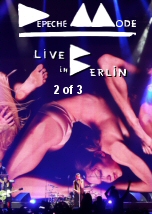
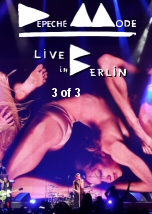
he concert not only includes performances of tracks from 'Delta Machine' but also some of their most memorable and biggest hits including 'Personal Jesus' and 'Enjoy the Silence.' Live in Berlin includes the full live show, inter-spliced with behind-the-scenes footage, multiple interviews with the band and their fans.
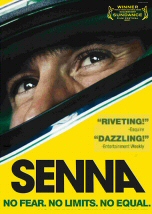
Privately, he was humble, almost shy, and fiercely patriotic, donating millions to his native Brazil and contemplating a life beyond motor-racing. Yet he is struck down in his prime on the blackest weekend in the history of the sport, watched live on television by 300 million people. Years on he is revered in Formula One as the greatest motor racing driver of all time - and in Brazil as a Saint.









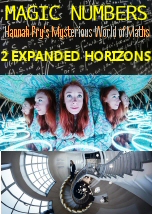


But in the 19th century, maths is turned on its head when new types of geometry are invented. No longer is the kind of geometry we learned in school the final say on the subject. If maths is more like a game, albeit a complicated one, where we can change the rules, surely this points to maths being something we invent - a product of the human mind. To try and answer this question, Hannah travels to Halle in Germany on the trail of perhaps one of the greatest mathematicians of the 20th century, Georg Cantor. He showed that infinity, far from being infinitely big, actually comes in different sizes, some bigger than others. This increasingly weird world is feeling more and more like something we've invented. But if that's the case, why is maths so uncannily good at predicting the world around us? Invented or discovered, this question just got a lot harder to answer.