




Last Watched

"Sea"  Sort by

What is the World Made of

   2010    History
In this episode, Michael demonstrates how our society is built on our search to find the answer to what makes up everything in the material world. This is a story that moves from the secret labs of the alchemists and their search for gold by the stone of the philosophers to the creation of the world's first synthetic dye - Purple - and onto the invention of the transistor. This quest may seem abstract and highly theoretical. Yet it has delivered the greatest impact on humanity. By trying to answer this question, scientists have created theories from elements to atoms, and the strange concepts of quantum physics that underpin our modern, technological world.
Series: The Story of Science
Humpback Whale

   2006    Nature
Few sounds are more beautiful or moving than the underwater songs of the humpback whale. Male whales compete with their songs, which often last for 10 minutes at a time, and can be repeated for hours on end. Whales separated by thousands of miles of sea will sing almost identical songs. Researchers have found that the songs change throughout the breeding months, following a mysterious pattern repeated across the waves. Whales also use sound to hunt. To catch herring, humpback whales release a stream of bubbles to form a shimmering, circular fishing net. Emitting a repetitive loud scream, they scare the fish into a tight ball, then lunge out of the water to swallow the shoal whole. Now it seems that the long-held image of the gentle giant must change to one of a ferocious and opportunistic hunter.

Life After People

   2008    Nature
Visit the ghostly villages surrounding Chernobyl (abandoned by humans after the 1986 nuclear disaster), travel to remote islands off the coast of Maine to search for abandoned towns that have vanished from view in only a few decades, then head beneath the streets of New York to see how subway tunnels may become watery canals. A visual journey, LIFE AFTER PEOPLE is a thought provoking adventure that combines movie-quality visual effects with insights from experts in the fields of engineering, botany, ecology, biology, geology, climatology, and archaeology to demonstrate how the very landscape of our planet will change in our absence.

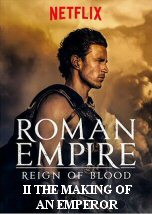
The Making of an Emperor

   2016    History
In the second episode of the series, the Germanic tribes strike as Marcus Aurelius succumbs to disease, leaving a skeptical Emperor Commodus to prosecute a war that doesn't interest him.
Series: Roman Empire: Reign of Blood

How to Live Longer

   2017    Medicine
Our lifespan is increasing by 2.5 years every decade - and a third of all babies born today can expect to live to 100. But living longer can come at a cost. Old age itself brings with it a range of debilitating illnesses, many of which are the result of accumulating damage during our lifetime. Three diseases in particular have become the main killers in the developed world - cancer, heart disease and dementia. But a revolution in bio-medicine is now offering new hope for the treatment of these ailments, and the potential to extend our lives still further. Methods such as gene editing and stem cell therapies are transforming the way medicine can conquer disease today. "How to Live Longer" counts with the guide of the Nobel laureate Sir Paul Nurse, for whom the big question isn't just what science can do to fix our bodies and extend our lives, but whether it's right to use all the tools and techniques available.
Series: The Big Think

Can We Cheat Death

   2017    Medicine
Death is life's greatest certainty. But that may be about to change. Scientists have discovered an immortal animal that may hold the secret of endless regeneration. They're on the brink of editing our DNA so that we can cure ageing like a disease. Or is dying necessary for the survival of our species?
Series: Through the Wormhole Season 8