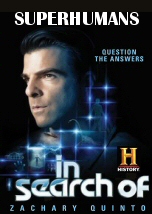
Zachary Quinto sets out to research the strangest creatures dug up from the depths of the ocean and to see how much they lend to the monsters that are depicted in myth and legend. Starting in Australia, he meets with a teenager who was savagely attacked by a swarm of mysterious flesh-eating monsters, only to jump into the water himself the next day amongst highly venomous sea creatures. From the carnivorous fish of American rivers to the eyeless monsters of the Atlantic Ocean, Zachary finds some merit in these old monster stories and is starting to understand just what we mean when we say that we know less than 1% of what waits in the depths below.
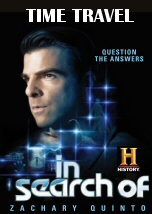
Zachary Quinto charts a journey to determine whether time travel is possible. He meets a man who claims to have traveled back in time due to a secret government program and a group of people living in Liverpool known as 'time slippers'. Zachary makes a visit to the CERN headquarters in Geneva, where he attempts to understand the origins of the universe and the dimension of time. Equipped with this new knowledge, Zachary tests his own perception of time with an elaborate skydiving experiment to see if he can slow down time itself.
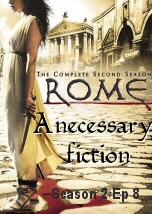
The price of Caesar's mercy: Cicero nominates Caesar to an unprecedented ten-year dictatorship and Brutus speaks in support of the motion. With martial authority and Niobe at his side, Vorenus campaigns for magistrate under Posca's advice, but is shocked to learn from Posca that Caesar has already fixed the election in Vorenus's favor. Meanwhile, Atia continues her humiliation of Servilia while denying any involvement in her assault.
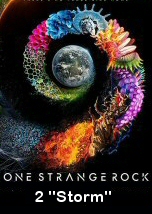
Space isn't vast and empty space but a dynamic, cosmic storm. It's a storm that could kill us, but without it we wouldn't be here at all. This is a story about the weird connections, the near misses, the lucky breaks that created this amazing world. For 4.5 billion years our planet has been battered and bruised and punched and pummeled but we're still standing. It's actually the battle that's built us and this is the tale of the tape. Ever wonder how our planet got here? It was born in a cosmic storm. The violence could have destroyed us, but instead it made us.
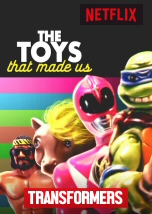
In 1983 Hasbro bought the license of the Diaclone and Micro Change toys from Takara, then commissioned Marvel Comics to come up with a story-line and character names for the toys. The result: Transformers. Despite Tonka releasing the cheaper Gobots line six months earlier, Hasbro's Transformers took the toy market by storm in 1984, raking in US$150 million that year. At the peak of the toy line's popularity, The Transformers: The Movie hit theaters to further capitalize on its success, but the film polarized fans and collectors with the death of Optimus Prime and majority of the original characters. As Hasbro took full control of Transformers from Takara by the late 1980s, sales declined until the toy line was discontinued in 1991. After the failed Generation 2 reboot, Beast Wars rejuvenated the franchise in 1995. In 2007, the live-action Transformers film solidified Transformers' position as Hasbro's flagship toy line.
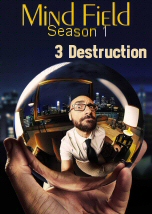
Our relationship with destruction is not a simple one. It can release endorphins and relax our minds. It can amp us up and make us even more aggressive. It can even help us regulate our emotional reactions. Can violently breaking things calm us down? Or does it simply anger us more? Find out as Michael Stevens takes a look into our urge to destroy.



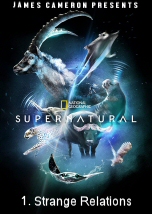








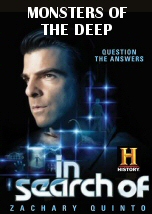

From the carnivorous fish of American rivers to the eyeless monsters of the Atlantic Ocean, Zachary finds some merit in these old monster stories and is starting to understand just what we mean when we say that we know less than 1% of what waits in the depths below.