





Last Watched

"Gen"  Sort by

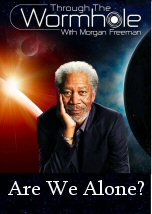
Are We Alone

   2011    Science
Aliens almost certainly do exist. So why haven't we yet met E.T.? It turns out we're only just developing instruments powerful enough to scan for them, and science sophisticated enough to know where to look. As a result, race is on to find the first intelligent aliens. But what would they look like, and how would they interact with us if we met? The answers may come to us sooner than we imagine, for one leading astronomer believes she may already have heard a hint of their first efforts to communicate
Series: Through the Wormhole
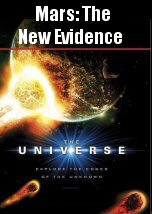
Mars: the New Evidence

   2010    Science
In the last few years, the Red Planet has yielded up many new clues that life may have once existed there...and may even exist there today. There is now have proof that water once flowed on the surface, that Mars once had lakes, and that the frozen poles are mostly water, not carbon dioxide as previously thought. Mars has snow--an aurora--and lightning generated by dust storms. Most intriguing of all are the seasonal plumes of methane that just may point to bacteria living below the surface.
Series: The Universe

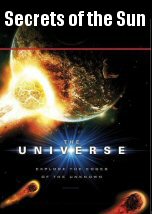
The Secrets of the Sun

   2007    Science    3D
A look at how the Sun was formed and how it could potentially die; its physical composition; how it makes energy; and the nature of solar eclipses, solar flares and sunspot activity. Behold the sun and all of its glory. Learn all things about the sun ranging from its beginning to its death. Also learn about how stars work in general and MUCH, MUCH more.
Series: The Universe

Search for ET

   2007    Science
Are we alone? SETI--the Search for Extraterrestrial Intelligence--is a privately funded project using radio telescopes and optical telescopes to scan the stars for signals.
Series: The Universe

Stopping Armageddon

   2009    Technology
It sounds like a Hollywood blockbuster: a deadly asteroid is on a collision course with Earth. But in reality, it's only a matter of time before a giant space rock threatens to wipe out civilization. An asteroid took out the dinosaurs sixty-five million years ago. Are we next? This episode analyzes the threat and explores the many ways--from a nuclear bomb to ingenious new technology--that experts are proposing to stop Armageddon
Series: The Universe

Some of the Things That Molecules Do

   2014    Science    HD
The story begins with Tyson sitting at a campfire, and telling how the wolf changed through artificial selection, and selective breeding into the dog breeds around today. He then enters the Ship of Imagination, and explains natural selection with the process that helped to create the polar bears. Along the way he talks about DNA, genes and mutation. Next he goes to a forest and describes the Tree of life, this leads him to discussing the evolution of the eye. He then discusses extinction, by going to a monument called the Halls of Extinction, dedicated to the broken branches of the tree of life. Explaining the five great Extinction events. He then tells how some life has survived, and then focuses on the tardigrade. From there he talks about what other kinds of life might have been created on other worlds. He then goes to Saturn's moon Titan. From there he speculates about life and how it first began. He then returns to Earth and tells about abiogenesis and how life changed and evolved. The show ends with an animated sequence from the original series of life's evolution from one cell to humans.
Series: Cosmos: A Spacetime Odyssey
Unknown

Unknown

2023  Science
Generation Iron

Generation Iron

2018  History
Power of Art

Power of Art

2006  Art
Eden: Untamed Planet

Eden: Untamed Planet

2021  Nature
Cosmos

Cosmos

1980  Science
Space Race

Space Race

2005  Technology