Recent archaeological sites in England offer a whole new perspective on the life and death of the seafarers and marines who built the British Empire in the 18th and 19th centuries. The bones of sailors reveal surprising and shocking facts. Apparently not only seasoned men but also half children did their service in the Royal Navy; according to the investigations, the youngest were no older than 13 years. A forensic archaeologist studies the injuries on bones discovered at the site of an battle and suggests how these people may have died. Three-hundred-and-fifty skeletons, exhumed from Royal Navy graveyards from the age of Nelson's Navy, are throwing an extraordinary new light on how these sailors lived, fought, outwitted their enemy, and, from the oldest to youngest, suffered for victory. These men were the beating heart of the most victorious fleet in history and never have so many of these sailors' remains been available for forensic investigation. Six remarkable stories stand out: the child sailor, the top man, the American gunner, the freed slave, the marine and the victim of the sailor's most dreaded disease: syphilis. Broken bones, amputations, injuries from blows with a saber or cutlass, sexually transmitted diseases, but also malnutrition - the list of causes of death is long. There is definitely no tale of seafaring romance. These fighters and sailors sailed the globe as cannon fodder, conquered an empire for the crown, and were themselves forgotten. No longer just bones in a box, the men of Nelson's Navy are back from the dead.
Now, the most famous woman to graduate college finds her voice, but when she tries to use it, a toxic culture that perpetuates misogyny will do anything to shut her up. Brooke Shields talked about her life and career. There was a time when she was a household name, a cultural phenomenon. Shields didn’t need much of an introduction. Most often, her starring role in the 1980s film 'Blue Lagoon' or her Calvin Klein ads are enough.
Predators and prey are in an arms race for survival. Hunters and hunted deploy hidden super- skills in the battle to eat or be eaten. Masterclasses in predatory perfection are vital to passing on skills. So when they're ready to hunt for real, the next generation is fully prepared for the battle between predator and prey. Life is a mission, survival. Animals have evolved secret weapons and hidden skills to outsmart their enemies. So in those life or death moments, it takes the most extraordinary super powers to prevail.
We may be smart, but we're still discovering animals have countless skills, every bit as impressive. In a world full of unexpected foes, competition is evolution's ultimate driving force. Is the secret behind the incredible diversity of life on earth, and the most extraordinary animal powers.
Mars is infested with robots, orbiting the planet and roaming the Martian surface on a mission to uncover its secrets; now, Perseverance joins this dedicated group of machines to uncover if there is, or was ever, life on the Red Planet. Our neighbor, Mars, fascinates us. It's a planet that is similar to Earth but with some big differences. Mars is rusty, dusty, frigid, and frozen. Past missions suggest that Mars was once a very different world. The Mars we see today has completely changed from the Mars of a few billion years ago. Without a time machine to explore ancient Mars, we employ a team of high-tech robot investigators, an entire fleet of robotic spacecraft exploring the planet. Working together, they dig into Mars's past to answer the ultimate question -- did Mars once have life?
New discoveries have rewritten the history of our solar system, revealing a complex and violent story that begins with the birth of our Sun from the debris of a massive galactic collision, to its eventual fate as a lone zombie star. It is a dramatic history of elegant beauty and extreme violence. The inner solar system was like a congested highway. Planets crossing lanes, frequent collisions. There were a lot of planets that could have made it but didn't, and we just happen to be one of the lucky ones that did. The players in our solar system's story are more tangled up than we ever imagined. Without all of these things interplaying, the Earth wouldn't have the stable environment that we have today, and life wouldn't be able to exist.















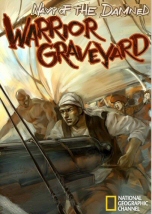







Three-hundred-and-fifty skeletons, exhumed from Royal Navy graveyards from the age of Nelson's Navy, are throwing an extraordinary new light on how these sailors lived, fought, outwitted their enemy, and, from the oldest to youngest, suffered for victory. These men were the beating heart of the most victorious fleet in history and never have so many of these sailors' remains been available for forensic investigation.
Six remarkable stories stand out: the child sailor, the top man, the American gunner, the freed slave, the marine and the victim of the sailor's most dreaded disease: syphilis. Broken bones, amputations, injuries from blows with a saber or cutlass, sexually transmitted diseases, but also malnutrition - the list of causes of death is long. There is definitely no tale of seafaring romance. These fighters and sailors sailed the globe as cannon fodder, conquered an empire for the crown, and were themselves forgotten. No longer just bones in a box, the men of Nelson's Navy are back from the dead.