Professor Brian Cox journeys across the vastness of time and space revealing epic moments of sheer drama that changed the universe forever. The series begins this epic exploration of the cosmos with a hymn to the great luminous bodies that bring light and warmth to the universe: the stars. It is estimated that there are two hundred trillion stars in the universe, each playing their part in an epic story of creation- a great saga that stretches from the dawn of time, with the arrival of the first star, through diverse generations until the arrival of our own star, the sun, and a civilization that has grown up in its light.
This illuminating ten-part series tells the story of World War ll through the ten most pivotal turning points in the conflict. Gripping story-telling illustrated with exquisitely restored and colourised archived films and supported by a global cast of stellar historians bring this crucially important era in history to life. In the first chapter, Britain and France declare war when Hitler invades Poland. In May 1940 the Germans attack Holland and Belgium as a decoy. As the Wehrmacht comes through the Ardennes and the Luftwaffe strikes in force, French leaders are caught like rabbits in headlights. The Germans are on a drug called Pervitin, which beats off fatigue, and reach the Atlantic coast. There is a danger that the Germans will encircle the Allies and cut them off from the sea. But Hitler issues his Halt Order and some 340,000 Allies are evacuated.
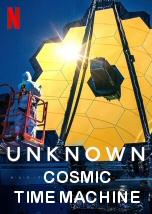
Space exploration as we’ve never seen it before, taking us behind the scenes of how NASA creates and sends the James Webb Space Telescope into space. Follows a team of engineers and scientists in an ambitious mission to launch the telescope and take the next giant leap in the understanding of the universe.
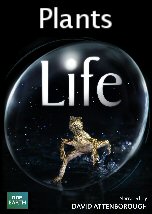
Plants' solutions to life's challenges are as ingenious and manipulative as any animal's. Innovative time-lapse photography opens up a parallel world where plants act like fly-paper, or spring-loaded traps, to catch insects. Vines develop suckers and claws to haul themselves into the rainforest canopy. Every peculiar shape proves to have a clever purpose. The dragon's blood tree is like an upturned umbrella to capture mist and shade its roots. The seed of a Bornean tree has wings so aerodynamic they inspired the design of early gliders. The barrel-shaped desert rose is full of water. The heliconia plant even enslaves a humming bird and turns it into an addict for its nectar.
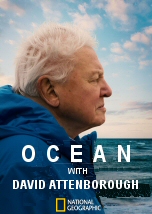
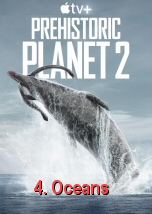
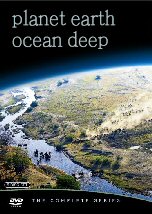
Life goes to extraordinary lengths to survive this immense realm. A 30 tonne whale shark gorges on a school of fish and the unique overhead heli-gimbal camera reveals common dolphins rocketing at more than 30km an hour. Descending into the abyss, deep sea octopus fly with wings and vampire squid use bioluminescence to create an extraordinary colour display. The first ever time-lapse footage taken from 2,000m down captures eels, crabs and giant isopods eating a carcass, completely consuming it within three hours.
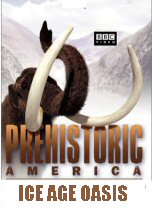
Journey through the long-vanished corners of prehistoric North America, beginning when man first entered the vast, unspoiled continent some 14,000 years ago, in this appealing BBC documentary. Witness ancient beasts, mammoths, mastodons, giant bears, and sabre-toothed cats, and see the legacies each has passed to their modern successors. Computer animation and digital effects bring to life mammoths, saber-toothed cats, giant ground sloths, short-faced bears, glyptodonts, and a plethora of smaller animals in a lush Ice Age mosaic.



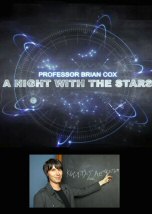





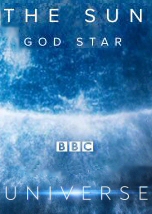


The series begins this epic exploration of the cosmos with a hymn to the great luminous bodies that bring light and warmth to the universe: the stars. It is estimated that there are two hundred trillion stars in the universe, each playing their part in an epic story of creation- a great saga that stretches from the dawn of time, with the arrival of the first star, through diverse generations until the arrival of our own star, the sun, and a civilization that has grown up in its light.