




Last Watched

"Artic"  Sort by

Artic

   2009    Nature
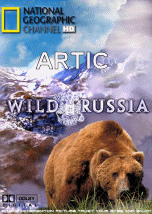
The Russian Arctic is one of the world’s most extreme habitats, yet it is a haven for polar bears, lemmings, arctic foxes and walruses. In late August, massive muskoxen bulls gather together to compete for mating dominance. Each bull can weigh 400 kilogram’s and charge at a speed of 40 kilometres an hour; a head-to-head impact can be heard more than a kilometre away
Series: Wild Russia
The Lives of the Stars

   1980    Science
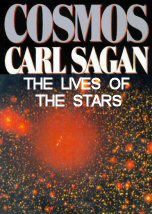
The simple act of making an apple pie is extrapolated into the atoms and subatomic particles (electrons, protons, and neutrons) necessary. Many of the ingredients necessary are formed of chemical elements formed in the life and deaths of stars (such as our own Sun), resulting in massive red giants and supernovae or collapsing into white dwarfs, neutron stars, pulsars, and even black holes. These produce all sorts of phenomena, such as radioactivity, cosmic rays, and even the curving of spacetime by gravity. Cosmos Update mentions the supernova SN 1987A and neutrino astronomy.
Series: Cosmos

Deeper, Deeper, Deeper Still

   2014    Science
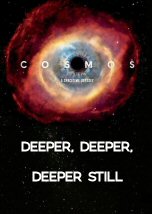
This episodes the nature of the cosmos on the micro and atomic scales, using the Ship of the Imagination to explore these realms. Tyson describes some of the micro-organism that live within a dew drop, demonstrating parameciums and tardigrades. He proceeds to discuss how plants use photosynthesis via their chloroplasts to convert sunlight into chemical reactions that convert carbon dioxide and water into oxygen and energy-rich sugars. Tyson then discusses the nature of molecules and atoms and how they relate to the evolution of species. He uses the example set forth by Charles Darwin postulating the existence of the long-tongued Morgan's sphinx moth based on the nature of the comet orchid with pollen far within the flower. He further demonstrates that scents from flowers are used to trigger olfactory centers in the brain, stimulating the mind to threats as to aid in the survival of the species. Tyson narrates how Greek philosophers Thales and Democritus postulated that all matter was made up of combinations of atoms in a large number of configurations, and describes how carbon forms the basic building block for life on earth due to its unique chemical nature. Tyson explains on the basic atomic structure of protons, neutrons, and electrons, and the nature of nuclear fusion that occurs in most stars. He then discusses the existence of neutrinos that are created by these nuclear processes in stars, and that detecting such sub-atomic particles which normally pass through matter require subterranean facilities like the Super-Kamiokande that were used to detect neutrinos from the supernova SN 1987A in the Large Magellanic Cloud before light from the explosion were observed due to their ability to pass through matter of the dying sun. Tyson compares how neutrinos were postulated by Wolfgang Pauli to account for the conservation of energy from nuclear reactions in the same manner as Darwin's postulate on the long-tongued moth. Tyson concludes by noting that there are neutrinos from the Big Bang still existing in the universe but due to the nature of light, there is a "wall of infinity" that cannot be observed beyond.
Series: Cosmos: A Spacetime Odyssey

The Clean Room

   2014    Science
This episode is centered around how science, in particular the work of Clair Patterson (voiced in animated sequences by Richard Gere[33]) in the middle of the 20th century, has been able to determine the age of the Earth. Tyson first describes how the Earth was formed from the coalescence of matter some millions of years after the formation of the Sun, and while scientists can examine the formations in rock stratum to date some geological events, these can only trace back millions of years. Instead, scientists have used the debris from meteor impacts, such as the Meteor Crater in Arizona, knowing that the material from such meteors coming from the asteroid belt would have been made at the same time as the Earth. Patterson also examined the levels of lead in the common environment and in deeper parts of the oceans and Antarctic ice, showing that lead had only been brought to the surface in recent times. He would discover that the higher levels of lead were from the use of tetraethyllead in leaded gasoline resulting in government-mandated restrictions on the use of lead.
Series: Cosmos: A Spacetime Odyssey

D-Day: As it Happens (2)

   2013    History
D-Day: As It Happens is a 24-hour history event to be broadcast across TV, web, mobile devices and social media, telling the story of this pivotal event in 20th-century history in a completely new way. Using newly-analysed archive footage, viewers can track the progress of seven people who were there on the day, each of them a real participant in the 1944 invasion. And they can do so moment by moment in real time, encountering the twists and turns of the fighting at the same time as the D-Day seven did, and learning their fate as the action unfolds in parallel with the present, Narrated by Peter Snow, with Channel 4 presenter and former marine Arthur Williams, and experts including former British Army officer Colonel Tim Collins and front-line journalist Lorna Ward. The second programme reveals what happened to the seven real people the event is following in real time, and also rounds up the events of D-Day.
Series: D-Day

Place in Space and Time

   2014    Science
On a trip to the fortified Moroccan village of Ait-Ben-Haddou in the Atlas Mountains, Professor Brian Cox reveals how by watching the stars' motion across the night sky, it is quite natural for man to think he is at the centre of everything. That view was held for many ages, but innate human curiosity has eventually led to an understanding of mankind's true place in space and time, and an appreciation that Earth is not a focal point but a mere particle of rock in a possibly infinite expanse of space, 13.8 billion years from the beginning of the universe.
Series: Human Universe