





Last Watched

"Dream"  Sort by

Waltz With Bashir

   2008    History
A wholly innovative, original, and vital history lesson, with pioneering animation, Waltz With Bashir delivers its message about the Middle East in a mesmerizing fashion. Director Ari Folman's animated quasi-documentary follows the filmmaker's emotional attempt to decipher the horrors that unfolded one night in September of 1982, when Christian militia members massacred more than 3,000 Palestinian refugees in the heart of Beirut as Israeli soldiers surrounded the area". Folman was one of those soldiers, but nearly 20 years after the fact, his memories of that night remain particularly hazy. After hearing an old friend recall a vivid nightmare in which he is pursued by 26 ferocious dogs, Folman and his friend conclude that the dream must somehow relate to that fateful mission during the first Lebanon War. When Folman realizes that his recollections regarding that period in his life seem to have somehow been wiped clean, he travels the world to interview old friends and fellow soldiers from the war. Later, as Folman's memory begins to emerge in a series of surreal images, he begins to uncover a truth about himself that will haunt him for the rest of his days.
Magician: The Astonishing Life and Work of Orson Welles

   2014    Culture
This documentary looks at the remarkable genius of Orson Welles on his centenary - the enigma of his career as a Hollywood star, a Hollywood director (for some a Hollywood failure), and a crucially important independent filmmaker. Orson Welles's life was magical: a musical prodigy at age 10, a director of Shakespeare at 14, a painter at 16, a star of stage and radio at 20, romances with some of the most beautiful women in the world, including Rita Hayworth. His work was similarly extraordinary, most notably Citizen Kane, (considered by many to be the most important movie ever made), created by Welles when he was only 25. In the years following Citizen Kane, Welles's career continued to change as he made film after film (some never finished, many dismissed) and acted in other projects often to earn money in order to keep making his own films. Magician features scenes from almost every existing Welles film, from Hearts of Age, (which he made in a day when he was only 18 years old) to rarely-seen clips from his final unfinished works like The Other Side of the Dream, The Deep, and Don Quixote, as well as his television and commercial work.

Goya: Crazy Like A Genius

   2007    Art
Written and presented by Robert Hughes, one of the world’s most prominent art commentators, this program explores the life and work of Francisco Goya—focusing on the painter’s subversive, often gruesome outlook. The video provides in-depth visual and intellectual analysis of dark Goya masterpieces, including The Dream of Reason, Witches in the Air, and The Third of May, as well as examples of his portraiture and early work—such as The Duchess of Alba, both Majas, and a gratuitously violent tapestry painting. Links between Goya’s work, deafness, and political stance are explored in detail, while observations from painter Leon Golub highlight Goya’s continuing relevance.

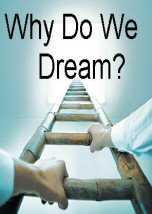
Why Do We Dream

   2009    Medicine
Horizon uncovers the secret world of our dreams. In a series of cutting-edge experiments and personal stories, we go in search of the science behind this most enduring mystery and ask: where do dreams come from? Do they have meaning? And ultimately, why do we dream? What the film reveals is that much of what we thought we knew no longer stands true. Dreams are not simply wild imaginings but play a significant part in all our lives as they have an impact on our memories, the ability to learn, and our mental health. Most surprisingly, we find nightmares, too, are beneficial and may even explain the survival of our species.

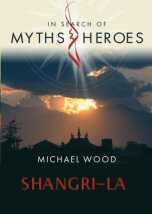
Shangri-La

   2005    History
For centuries, man has yearned for an earthly paradise, and no place better encapsulates this desire than Shangri-La - but was it ever real? The tale of an earthly paradise is among the most enduring myths in the world. From Sumerian epic to the 'islands of the blest' in Celtic literature, it has been a recurring theme through many bodies of literature and for thousands of years. Not surprisingly, then, modern people have also been drawn to the dream of a lost paradise where the ravages of time and history have been held back, where human beings live in harmony with nature, and where the wisdom of the planet is saved for future generations. In other words, to a Shangri-La.
Series: Myths and Heroes

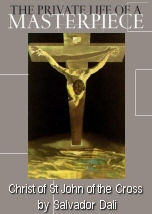
Christ of St John of the Cross by Salvador Dali

       Art
Salvador Dali's strange crucifixion is often called the greatest religious painting of the 20th century. Yet its artist was a notorious blasphemer some of whose work had outraged the Catholic Church. The Christ of St John of the Cross by Salvador Dali is the first of two extraordinary crucifixions painted by Dali in the early 1950s. The painting is based on a 'cosmic dream' Dali is said to have had, in which the nucleus of the atom was a figure of Christ himself.
The painting offers a surrealist view of the crucifixion of Christ, and is based on a drawing by the 16th century Spanish friar Saint John of the Cross. But Dali's vision was somewhat unique, using an unusual artistic perspective in which Christ is seen from above. His Christ of St. John of The Cross was inspired by a weird mix of Spanish mysticism and nuclear physics, with his Christ being modelled by a Hollywood stuntman. It's also a masterpiece of painting technique.
Series: The Private Life of a Masterpiece
Leaving Neverland

Leaving Neverland

2019  Culture
The Crusades

The Crusades

2012  History
The Rehearsal

The Rehearsal

2022  Culture
Tiger

Tiger

2020  History