



Last Watched

"God"  Sort by

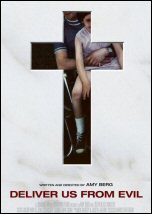
Deliver Us From Evil

   2006    Culture
From director Amy Berg: 'Just a year and a half ago, after spending over four years on the same story for CNN and CBS before that, a paedophile priest named Oliver O'Grady decided he would participate in the film I wanted to make. It became Deliver Us From Evil -- the story from inside the sickest mind possible, the secrets that were meant to stay in the private files and crypts of the Roman Catholic Church, and the blind trust in those they perceived as God's messengers that left families with no faith and children with no innocence. After filming for a week and a half, the then defrocked priest mentioned he might need to move to Canada after this film comes public. Seeing the pain, corruption and missed opportunities to provide ministry to those in need was truly a tragic story to watch and the loss was more devastating than I ever imagined. It was so difficult to be so close to such a horror story that in the priest's words "never should have happened.".
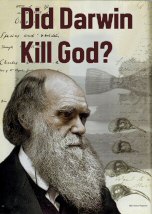
Did Darwin kill God

   2009    Science
There are some who believe that Darwin's theory of evolution has weakened religion. Conor Cunningham argues that nothing could be further from the truth.He travels to the Middle East where he shows that from the very outset, Christianity warned against literal readings of the biblical story of creation. In Britain, he reveals that, at the time, Darwin's theory of evolution was welcomed by the Anglican and Catholic Churches. Instead, he argues that the conflict between Darwin and God was manufactured by American creationists in the 20th century for reasons that had very little to do with science and religion and a great deal to do with politics and morality. Finally, he comes face to face with some of the most eminent evolutionary biologists, geneticists and philosophers of our time to examine whether the very

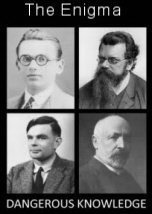
Dangerous Knowledge: The Enigma

   2007    Science
brilliant mathematicians whose genius has profoundly affected us, but which tragically drove them insane and eventually led to them all committing suicide. Kurt Gödel, the introverted confidant of Einstein, proved that there would always be problems which were outside human logic. His life ended in a sanatorium where he starved himself to death. Finally, Alan Turing, the great Bletchley Park code breaker, father of computer science and homosexual, died trying to prove that some things are fundamentally unprovable.
Series: Dangerous knowledge

Clash of the Gods: Hades

   2009    History
Go behind the veil of the ancient Greek belief in life after death to explore the myth of their most feared god - Hades - and those mortals who tried to cross his path. It is a chilling collection of tales about Hades and the underworld bearing his name, with eerie links to real world curses, ghosts and secret cults.
Series: Clash of the Gods

Clash of the Gods: The Minotaur

   2009    Historia
A half-bull half-man freak of nature, the Minotaur is one of mythology's most terrifying monsters. A bizarre tale of bestiality, human sacrifice and war, the myth of the Minotaur endures as a symbol of the beast inside all men. But archeological research has uncovered clues suggesting the Minotaur and its terrifying labyrinth were just as much fact as they were fiction. Could they have been inspired by a real place that still exists to this day?
Series: Clash of the Gods

When Knowledge Conquered Fear

   2014    Science
The episode begins with Tyson describing how pattern recognition manifested in early civilization as using astronomy and astrology to predict the passing of the seasons, including how the passage of a comet was often taken as an omen. Tyson continues to explain that the origin of comets only became known in the 20th century due to the work of Jan Oort and his hypothesis of the Oort cloud. Tyson then continues to relate the collaboration between Edmond Halley and Isaac Newton in the last part of the 17th century in Cambridge. The collaboration would result in the publication of Philosophiæ Naturalis Principia Mathematica, the first major work to describe the laws of physics in mathematical terms, despite objections and claims of plagiarism from Robert Hooke and financial difficulties of the Royal Society of London. Tyson explains how this work challenged the prevailing notion that God had planned out the heavens, but would end up influencing many factors of modern life, including space flight. Tyson further describes Halley's contributions including determining Earth's distance to the sun, the motion of stars and predicting the orbit of then-unnamed Halley's Comet using Newton's laws. Tyson contrasts these scientific approaches to understanding the galaxy compared to what earlier civilizations had done, and considers this advancement as mankind's first steps into exploring the universe. The episode ends with an animation of the Milky Way and Andromeda galaxies' merging based on the principles of Newton's laws.
Series: Cosmos: A Spacetime Odyssey