At 11 o'clock on New Year's Eve of the Cosmic Calendar, Homo erectus stood up for the first time, freeing its hands and earning the species its name. They began to move around, to explore, daring to risk everything to get to unknown places. Our Neanderthal relatives lived much as we did and did many of the things we consider to be 'human.' More restless than their cousins the Neanderthals and Denisovans, our Homo sapiens ancestors crossed seas and unforgiving landscapes, changing the land, ocean and atmosphere, leading to mass extinction. The scientific community gave our age a new name, 'Anthropocene.' Since the first civilizations we've wondered if there's something about human nature that contains the seeds of our destruction. Syukuro Manabe was born in rural Japan and took an intense interest in Earth's average global temperature. In the 1960's, he would assemble the evidence he needed to predict the increase of Earth's temperature due to greenhouse gases until it becomes an uninhabitable and toxic environment, leading to our extinction. 'This doesn't have to be,' says Neil deGrasse Tyson, 'it's not too late. There's another hallway, another future we can still have; we'll find a way.'
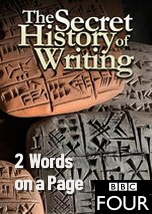
Writing itself is 5,000 years old, and for most of that time words were written by hand using a variety of tools. The Romans were able to run an empire thanks to documents written on papyrus. Scroll books could be made quite cheaply and, as a result, ancient Rome had a thriving written culture. With the fall of the Roman Empire, papyrus became more difficult to obtain. Europeans were forced to turn to a much more expensive surface on which to write: Parchment. Medieval handwritten books could cost as much as a house, they also represent a limitation on literacy and scholarship. No such limitations were felt in China, where paper had been invented in the second century. Paper was the foundation of Chinese culture and power, and for centuries how to make it was kept secret. When the secret was out, paper mills soon sprang up across central Asia. The result was an intellectual flourishing known as the Islamic Golden Age. Muslim scholars made discoveries in biology, geology, astronomy and mathematics. By contrast, Europe was an intellectual backwater. That changed with Gutenberg’s development of movable type printing. The letters of the Latin alphabet have very simple block-like shapes, which made it relatively simple to turn them into type pieces. When printers tried to use movable type to print Arabic texts, they found themselves hampered by the cursive nature of Arabic writing. The success of movable type printing in Europe led to a thousand-fold increase in the availability of information, which produced an explosion of ideas that led directly to the European Scientific Revolution and the Industrial Revolution that followed.
Nicholas II abdicates, and civil war erupts. In May 1918, a year after the revolution, the Bolsheviks sent Anastasia, Alexei, Tatiana and Olga to join the rest of the family in Ekaterinburg. They're put in the Ipatiev mansion and It's given the name 'The House of Special Purpose.' As pro-royalist forces close in on the house where the Romanovs are imprisoned, the family's fate is sealed.
Schwalmstadt Maximum Security Prison in Germany. Locked up behind the walls of this 12th-century castle are 188 of Germany's worst offenders. The prison is a fortress surrounded by a moat, and houses dangerous criminals, many of whom attend intense therapy sessions.
The world's shipping industry is facing a major challenge. If global shipping were a country it would be the sixth largest producer of greenhouse gas emissions. At current growth rates, if we do nothing, those emissions could double or even triple by 2050. But shipping companies and engineers are creating remarkable new machines to make their industry greener, using a resource that has moved man across the world’s oceans for thousands of years…Wind.
Seafood is a substantial part of the daily diet of over three billion people and oceans absorbs almost a third of all the greenhouse gases we emits. Buy the ocean it is not what it once was. Scenes of extraordinary ocean abundance now only exist in far-off places or in tales from the past. We urgently need to mend our relationship with our oceans and allow them to thrive once again. Prince William, David Attenborough and Shakira find out about inspiring people and projects across the world that can help us stop damaging the oceans and enable their revival.



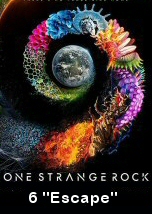






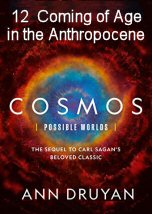


Since the first civilizations we've wondered if there's something about human nature that contains the seeds of our destruction. Syukuro Manabe was born in rural Japan and took an intense interest in Earth's average global temperature. In the 1960's, he would assemble the evidence he needed to predict the increase of Earth's temperature due to greenhouse gases until it becomes an uninhabitable and toxic environment, leading to our extinction. 'This doesn't have to be,' says Neil deGrasse Tyson, 'it's not too late. There's another hallway, another future we can still have; we'll find a way.'