



Last Watched

"Island"  Sort by

Last Human Standing

   2010    History
xamines the fate of the Neanderthals, our European cousins who died out as modern humans spread from Africa into Europe during the Ice Age. Did modern humans interbreed with Neanderthals or exterminate them? The program explores crucial evidence from the recent decoding of the Neanderthal genome. How did modern humans take over the world? New evidence suggests that they left Africa and colonized the rest of the globe far earlier, and for different reasons, than previously thought. As for Homo sapiens, we have planet Earth to ourselves today, but that's a very recent and unusual situation. For millions of years, many kinds of hominids co-existed. At one time Homo sapiens shared the planet with Neanderthals, Homo erectus, and the mysterious "Hobbits"–three-foot-high humans who thrived on the Indonesian island of Flores until as recently as 12,000 years ago. "Last Human Standing" examines why "we" survived while those other ancestral cousins died out. And it explores the provocative question: In what ways are we still evolving today?
Series: Becoming Human
City Maps

   2010    Culture
This is the story of three maps, three 'visions' of London over three centuries. The Morgan Map of 1682 was the first to show the whole of the City of London after the Great Fire of London. In 1746 John Rocque produced at the time the most detailed map ever made of London. Like Morgan's, Rocque's map is all neo-Classical beauty and clinical precision, but the London it represented had become the opposite. In engravings of the time, such as Night, the artist William Hogarth shows a city boiling with vice and corruption. Stephen Walter's contemporary image, The Island, plays with notions of cartographic order and respectability. His extraordinary London map looks at first glance to be just as precise and ordered as his hero Rocque's but, looking closer, it includes 21st century markings such as 'favourite kebab vans' and sites of 'personal heartbreak'.
Series: The Beauty of Maps

Ice

   2007    Nature
Our icy adventure begins with host Dr. Iain Stewart in the Alps, where he goes down an ice crevasse to show viewers how snowfall develops into expansive masses. Then, we see how ice can shape the earth's topography giving rise to features like Yosemite National Park and Manhattan Island, in NY. Finally, journey to Greenland and see how ice sheets and glaciers are melting at a phenomenal rate that is likely to accelerate over the coming years, changing the world as we know it.
Series: Earth, The Power of the Planet

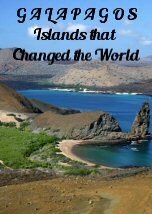
Galapagos: Islands that Changed the World

   2006    Nature
From flightless cormorants hunting underwater to giant tortoises courting on the rim of an active volcano, a look at the hidden side of Galapagos, revealing why it is such a fascinating showcase for evolution.
Series: Galapagos

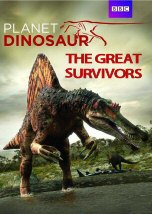
The Great Survivors

   2011    Science
The final episode explores dinosaurs' extraordinary ability to survive. Featured dinosaurs include the bizarre magyarosaurus, which lived in the shadow of the biggest flying animal - hatzegopteryx - and showed an amazing adaptation to island life; and the weird nothronychus, a carnivore that gave up meat eating. This astonishing capacity to evolve into ever more diverse and bizarre forms meant that dinosaurs not only spread throughout the world, but also dominated life upon it for more than 160 million years. It was only an unprecedented extraterrestrial event that finally saw the end of planet dinosaur.
Series: Planet Dinosaur

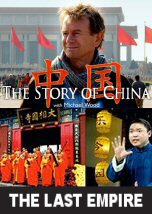
The Last Empire

   2016    History
China's last empire, the Qing, lasted from 1644 to 1912. It began in violence and war as the Manchus swept down from the north, but invaders became emperors, with three generations of one family ruling the country. Among them, Michael Wood argues, was China's greatest emperor - Kangxi. Under the Qing, China doubled in size to include Xinjiang in the far west, as well as Mongolia and Tibet, creating the essential shape of China today. The new dynasty tolerated a diversity of cultures and religions, including Islam. In Kaifeng, Michael visits a women's mosque with a female imam, a delightful scene that ends with laughter and selfies! The Qing also undertook huge cultural enterprises. At a traditional printing house where the wood blocks are hand-carved, we see how the Complete Tang Poems were reproduced - all 48,000 of them. We travel through the wintry countryside to a remote village where a hardy audience watch open-air opera in the snow and visit a painter's studio, and 'storytelling' houses in Yangzhou. In the 18th century, China was arguably the greatest economy in the world, and we get a fabulous sense of the rich culture that came with prosperity. But then came the clash with the British, in the first Opium War, when a British expedition destroyed the Qing navy and extracted territory and trading rights. We leave with a glimpse of the future. 'Every dynasty has risen and declined,' says Michael, 'and has needed new life to regenerate, and this time the catalyst was the British.' Among the ports China ceded was an almost uninhabited island, Hong Kong, one of today's greatest financial centres, and Shanghai, a small town then but now one of the greatest cities in world.
Series: The Story of China
Leaving Neverland

Leaving Neverland

2019  Culture
The Crusades

The Crusades

2012  History
The Rehearsal

The Rehearsal

2022  Culture
Tiger

Tiger

2020  History