The unearthing of a gruesome grave filled with thousands of skeletons at the beach of Kamakura in Japan could be about to unlock the true extent of the merciless violence and mystery surrounding the true origins of one of the most feared and revered warriors of all time: the Samurai. In the Middle Ages, Kamakura was the capital of Japan. The 'Shogun', a kind of aristocratic military dictator, ruled here. This shogunate ended in 1333 with the Battle of Kamakura. A drastic event in Japanese history, because this resulted in not only political, but also social, philosophical and technical innovations. The remains of the samurai warriors who fell near Kamakura now provide scientists with detailed insights into the time of the Kamakura shogunate and the bloody conflict between the shogun and the emperor. The chilling burial ground dates back to 1333. Kamakura was one of the most heavily fortified regions of Japan. When the Emperor became angered by the growing powers of the ruling Hojo family, he sought to retake control of the region, setting the stage for a war that would change the shape of the nation. Among over 4000 sets of remains, six have a unique story to tell: the husband and wife involved in a sword fight to the death; the warrior monk; a peasant boy soldier; and members of the ruling Hojo family, captured and decapitated, with their heads displayed as trophies of victory. These remains reveal the secrets of the Samurai, their ferocious fighting skills and their merciless killing techniques.
Asia, the largest and most extreme continent on Earth, is home to animals that inhabit the world's hottest deserts, tallest jungles, and highest mountains. Explore the enchanting world of Asia's wildlife in a captivating film that showcases its extraordinary creatures, from the intriguing vocalizations of the Sumatran rhinoceros to the majestic whale shark. However, it also sheds light on the pressing issues of deforestation, particularly due to the palm oil industry, which threatens the survival of countless species, including the iconic orangutan. Witness the efforts of researchers and conservationists dedicated to protecting these endangered animals in reserves like Gunung Palung National Park. This documentary serves as a poignant reminder of our shared responsibility to safeguard our planet's remarkable biodiversity. Don't miss this visually stunning and informative journey through Asia's diverse landscapes and the urgent call for conservation.
In the seventh and final episode, viewers are taken on a journey across Asia's diverse landscapes, from the vast Gobi Desert to the lush jungles of Borneo. The episode highlights the unique wildlife inhabiting these regions, such as the elusive snow leopard in Central Asia and the endangered Irrawaddy dolphin in the Mekong River. Through stunning visuals and compelling narratives, the documentary showcases the pressing conservation efforts aimed at protecting these species and their habitats.
Across cultures and continents, this documentary explores how food has shaped civilizations, beliefs, and human identity throughout history. Narrated with a global perspective, it reveals how essential ingredients — from the simplest to the most prized — have influenced economies, traditions, and ways of life. From remote landscapes to bustling markets, it offers a captivating look at how what we eat connects the past with the future. In the first two episodes, the journey dives into the explosive story of chili peppers, tracing their path from humble origins to powerful cultural symbols across the world, from mild flavors to extreme heat. It then turns to bluefin tuna, uncovering how a once-overlooked fish became one of the most coveted and controversial delicacies on the planet, exposing a dramatic tale of demand, transformation, and global impact.
In these three episodes, we see how Japan’s war in China, U.S. sanctions, and the desperate search for vital resources push the Pacific toward a decisive breaking point. Driven by military ambition and imperial ideology, Japan launches the attack on Pearl Harbor, shocking the world and bringing America fully into World War II. From that moment, the conflict becomes a vast struggle across oceans, supply lines, naval codes, aircraft carriers, submarines, and nations fighting for survival. The story then moves into the brutal battle for control of the seas, where German U-boats threaten Britain’s lifeline in the Atlantic while Japan’s powerful navy tries to dominate the Pacific. After Pearl Harbor, Japanese forces sweep through Southeast Asia with alarming speed, but on Guadalcanal their advance meets fierce resistance. In the jungle, at sea, and in the air, U.S. Marines face exhaustion, fear, and relentless combat in one of the first great tests of America’s resolve in the Pacific.




















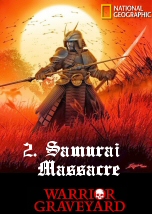










In the Middle Ages, Kamakura was the capital of Japan. The 'Shogun', a kind of aristocratic military dictator, ruled here. This shogunate ended in 1333 with the Battle of Kamakura. A drastic event in Japanese history, because this resulted in not only political, but also social, philosophical and technical innovations. The remains of the samurai warriors who fell near Kamakura now provide scientists with detailed insights into the time of the Kamakura shogunate and the bloody conflict between the shogun and the emperor.
The chilling burial ground dates back to 1333. Kamakura was one of the most heavily fortified regions of Japan. When the Emperor became angered by the growing powers of the ruling Hojo family, he sought to retake control of the region, setting the stage for a war that would change the shape of the nation. Among over 4000 sets of remains, six have a unique story to tell: the husband and wife involved in a sword fight to the death; the warrior monk; a peasant boy soldier; and members of the ruling Hojo family, captured and decapitated, with their heads displayed as trophies of victory. These remains reveal the secrets of the Samurai, their ferocious fighting skills and their merciless killing techniques.