



Last Watched

"Science"  Sort by

Who Is Afraid of a Big Black Hole

   2009    Science
Black Holes are one of the most destructive forces in the universe, capable of tearing a planet apart and swallowing an entire star. Yet scientists now believe they could hold the key to answering the ultimate question - what was there before the Big Bang? The trouble is that researching them is next to impossible. Black holes are by definition invisible and there's no scientific theory able to explain them. Meet the astronomers attempting to image a black hole for the very first time and the theoretical physicists getting ever closer to unlocking their mysteries. It's a story that takes us into the heart of a black hole and to the very edge of what we think we know about the universe.


A Leap of Faith

   2013    History
With optional Hebrew subtitles. This episode explores how the spread of the Enlightenment brought ghetto walls around Europe crashing down and allowed Jews to join the wider fabric of modern life in Europe in unprecedented ways. This Jewish renaissance saw Giacomo Meyerbeer and Felix Mendelssohn to establish the enduring tradition for Jewish musical prodigies. However the integration of Jewish talent into the mainstream of European culture and commerce eventually stirred up ancient prejudice, expressed in the new fashion of Romantic nationalism and the pseudo-science of anti-semitism.
Series: The Story of the Jews

Second Earth

   2015    Science
20 years ago, two astronomers made a remarkable discovery, one which would change the way we view the universe for ever. A planet outside our solar system, orbiting a distant star - an exoplanet. Since then, we have found worlds where it rains diamonds, ones that boil at 3,000 degrees centigrade and even a world with four suns in its sky. But the big question is - will we ever find another Earth? As we close in on the discovery of the 2,000th planet outside our solar system, or exoplanet, we investigates the techniques that are revealing so much about these alien worlds. The documentary asks if we are really any closer to finding another world like our own - a second Earth.
Series: The Sky at Night

How Do I Decide

   2015    Medicine
The human brain is the most complex object we’ve discovered in the universe, and every day much of its neural circuitry is taken up with the tens of thousands of decisions we need to make. ‘How do I decide?’ is a journey through the unseen world of decisions, and how they get made. Decisión-making is what allows us to navigate a course through life. Discover how important emotions are in making decissions and, as we learn more about our own brains, we can break away from slavery to our impulses. Neuroscience shows that you're made up of multiple competing drives and by understanding how choices battle it out in the brain, we can learn how to make better decisions.
Series: The Brain with David Eagleman

Who Will We Be

   2015    Medicine
In ‘Who will we be?’ Dr. David Eagleman journeys into the future, and asks what’s next for the human brain, and for our species. We stand at a major turning point, one where we might take control of our own development. We face a future of uncharted possibilities in which our relationship with our own body, our relationship with the world, the very basic nature of who we are is set to be transformed. For thousands of generations, humans have lived the same life cycle over and over. We are born, we control a fragile body, we experience a limited reality, and we die. But science and technology are giving us tools to transcend that evolutionary story. Our brains don't have to remain as we have inherited them. We are capable of extending our reality, of inhabiting new bodies, and possibly shedding our physical forms altogether. And we are discovering the tools to shape our own destiny. Who we become is up to us.
Series: The Brain with David Eagleman

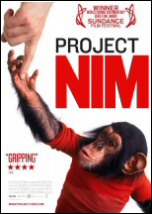
Project Nim

   2011    Science
The film tells the tale of Nim Chimpsky, a chimpanzee who was the subject of a landmark experiment to see if an ape could learn to communicate with language if raised and nurtured like a human child. This study was the brainchild of Dr. Herbert Terrace, a Columbia University behavioral psychologist who hoped to teach Nim enough language that he could eventually express what he was thinking and feeling. This would refute Noam Chomsky's thesis that language is inherent only in humans, hence his moniker, a direct pun on the famous linguists' name. The doc was a smash when it played at Sundance with this entirely different incredible but true story
Atom

Atom

2007  Science
Dynamic Genomes Series

Dynamic Genomes Series

2019  Medicine
The Mind Explained

The Mind Explained

2019  Medicine
The Human Body

The Human Body

1998  Medicine
Breakthrough

Breakthrough

2019  Medicine