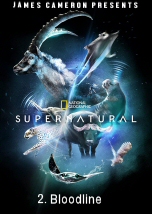
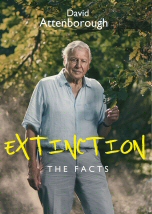
With a million species at risk of extinction, Sir David Attenborough explores how this crisis of biodiversity has consequences for us all, threatening food and water security, undermining our ability to control our climate and even putting us at greater risk of pandemic diseases. Everything in the natural world is connected in networks that support the whole of life on earth, and we are losing many of the benefits that nature provides to us. The loss of insects is threatening the pollination of crops, while the loss of biodiversity in the soil also threatens plants growth. Last year, a UN report identified the key drivers of biodiversity loss, including overfishing, climate change and pollution. But the single biggest driver of biodiversity loss is the destruction of natural habitats. Seventy-five per cent of Earth's land surface (where not covered by ice) has been changed by humans, much of it for agriculture, and as consumers we may unwittingly be contributing towards the loss of species through what we buy in the supermarket. Human activities like the trade in animals and the destruction of habitats drive the emergence of diseases. Disease ecologists believe that if we continue on this pathway, this year’s pandemic will not be a one-off event.
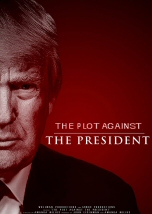
The true story of how Congressman Devin Nunes uncovered the operation to bring down the President of the United States. Following the book 'The Plot Against the President' by investigative journalist Lee Smith, this feature length documentary explores new information and additional interviews as the case unfolds. Most of the world knows about Russiagate, but most American people would not be able to explain exactly what happened, and why it was the biggest political scandal in US history. This film will be a guide, and a basis for which people will understand the events related to this case as they continue to unfold every day.
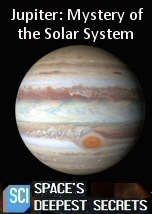
Jupiter is a turbulent world of monster magnetic fields and endless mega storms. Generations of astronomers have attempted to solve the mysteries of Jupiter, the most fierce and extreme planet in the Solar System. And now, NASA's Juno probe is revealing new evidence that could unlock the secrets of why this planet is so strange. With Juno, we're able to see Jupiter from the inside out and reach deep into its core to reveal how it grew.
New York City, September 11, 2001. The morning everything changed.102 minutes passed between the first plane's impact into One World Trade Center, the second plane's attack on Two World Trade Center, and the eventual collapse of both buildings. In that time, people around New York experienced a range of emotions. Despite the horror and the incomprehensibility of what was happening, many knew, somehow, that they had a unique responsibility to record what they saw. They reached for their cameras. This unprecedented documentary special joins hundreds of pieces of their footage and audiotape into a single, seamless historical record. It is an intensely personal perspective of the tragedy, communicating for the first time that morning s events, as they were experienced by people around New York. It is an evocative, authentic and reverential memorial to one of the most cataclysmic events in world history.
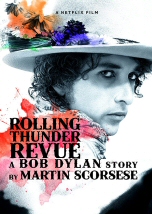
Master filmmaker Martin Scorsese captures the troubled spirit of America in 1975 along with the joyous music that Bob Dylan performed during the fall of that year. Part documentary, part concert film, part fever dream, 'Rolling Thunder Revue' is a one of a kind experience.
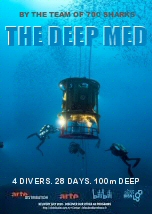
Laurent Ballesta has yet again challenged himself to a new world record: spend 28 days at a depth of 100 meters to reveal the luxuriant and unknown depths of the Mediterranean. Because people have been travelling there for thousands of years, this sea is believed to be without secrets. And yet, far below its surface, lie vast unexplored territories, luxurious gardens worthy of the finest tropical coral reefs. These natural wonders are inaccessible to the traditional diver, in a twilight zone, between 60 and 120 m, where there’s less than 1% of sunlight. If diving at such depths is always a challenge, staying there is a fantasy, a utopia that becomes reality in 'The Deep Med'.








Everything in the natural world is connected in networks that support the whole of life on earth, and we are losing many of the benefits that nature provides to us. The loss of insects is threatening the pollination of crops, while the loss of biodiversity in the soil also threatens plants growth.
Last year, a UN report identified the key drivers of biodiversity loss, including overfishing, climate change and pollution. But the single biggest driver of biodiversity loss is the destruction of natural habitats. Seventy-five per cent of Earth's land surface (where not covered by ice) has been changed by humans, much of it for agriculture, and as consumers we may unwittingly be contributing towards the loss of species through what we buy in the supermarket. Human activities like the trade in animals and the destruction of habitats drive the emergence of diseases. Disease ecologists believe that if we continue on this pathway, this year’s pandemic will not be a one-off event.