The film takes you on a gripping journey through one of history’s most devastating natural disasters—the 2004 Indian Ocean Boxing Day tsunami. With intimate, first-hand accounts from survivors around the globe, the documentary unveils the terrifying sequence of events on the morning of December 26th, 2004. Through raw and compelling personal narratives, viewers are transported to the chaotic moments when the colossal wave struck, forever altering lives and reshaping entire communities. Among these unforgettable stories is that of Rob, an Englishman whose harrowing account of trying to rescue his family from a serene Sri Lankan beach brings the human cost of the disaster into stark focus. The film not only chronicles the tragic loss of approximately 230,000 lives and the displacement of 1.4 million people but also examines the enduring impact of the tsunami on a generation defined by both profound loss and incredible resilience. This riveting portrayal promises to captivate audiences with its blend of human drama and historical significance, urging viewers to reflect on the power of nature and the strength of the human spirit.
The documentary delves deep into the mysterious and catastrophic collapse of ancient civilizations during the late Bronze Age, as empires from Greece to ancient Egypt were wiped off the map. It explores the various theories and hypotheses that have emerged to explain their sudden downfall, revealing the tumultuous events that brought an end to a once-thriving era of human history. Through invasions, mega-droughts, natural disasters, and rebellions, we discover the complex web of factors that were involved. With stunning visual imagery, expert interviews and immersive storytelling, this film offers a fascinating glimpse into one of the most pivotal and enigmatic periods of human history. And it warns that we could be facing a similar combination of threats today.
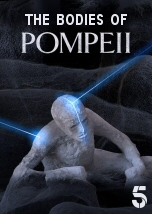
It's 79 AD and Mount Vesuvius is about to blow. In 24 hours time, the people of Pompeii and Herculaneum are going to die. They will be part of the death toll of one of the worst natural disasters in history. Starting with a forensic examination of their remains, Bettany Hughes pieces together the final 24 hours of their lives in incredible detail.
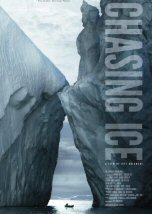
Acclaimed National Geographic photographer James Balog was once a skeptic about climate change. But through his Extreme Ice Survey, he discovers undeniable evidence of our changing planet. In Chasing Ice, Balog deploys revolutionary time-lapse cameras to capture a multi-year record of the world's changing glaciers". His hauntingly beautiful videos compress years into seconds and capture ancient mountains of ice in motion as they disappear at a breathtaking rate. Traveling with a team of young adventurers across the brutal Arctic, Balog risks his career and his well-being in pursuit of the biggest story facing humanity. As the debate polarizes America, and the intensity of natural disasters ramps up globally, Chasing Ice depicts a heroic photojournalist on a mission to deliver fragile hope to our carbon-powered planet. Directed by Jeff Orlowski
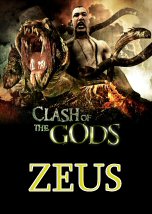
Ancient Greece's most powerful god wages an epic struggle against his father for control of the universe. It's the ultimate Clash of the Gods as the Olympians challenge the Titans in mythology's greatest showdown. This is a pivotal battle that experts believe may have been ancient code for a real world event - one of the greatest natural disasters the Earth ever experienced.
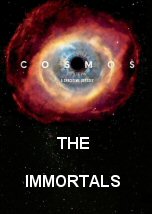
This episode covers the nature of how life may have developed on Earth and the possibility of life on other planets. Tyson begins by explaining how the human development of writing systems enabled the transfer of information through generations, describing how Princess Enheduanna ca. 2280 BCE would be one of the first to sign her name to her works, and how Gilgamesh collected stories, including that of Utnapishtim documenting a great flood comparable to the story of Noah's Ark. Tyson explains how DNA similarly records information to propagate life, and postulates theories of how DNA originated on Earth, including evolution from a shallow tide pool, or from the ejecta of meteor collisions from other planets. In the latter case, Tyson explains how comparing the composition of the Nakhla meteorite in 1911 to results collected by the Viking program demonstrated that material from Mars could transit to Earth, and the ability of some microbes to survive the harsh conditions of space. With the motions of solar systems through the galaxy over billions of years, life could conceivably propagate from planet to planet in the same manner. Tyson then moves on to consider if life on other planets could exist. He explains how Project Diana performed in the 1960s showed that radio waves are able to travel in space, and that all of humanity's broadcast signals continue to radiate into space from our planet. Tyson notes that projects have since looked for similar signals potentially emanating from other solar systems. Tyson then explains that the development and lifespan of extraterrestrial civilizations must be considered for such detection to be realized. He notes that civilizations can be wiped out by cosmic events like supernovae, natural disasters such as the Toba disaster, or even self-destruct through war or other means, making probability estimates difficult. Tyson describes how elliptical galaxies, in which some of the oldest red dwarf stars exist, would offer the best chance of finding established civilizations. Tyson concludes that human intelligence properly applied should allow our species to avoid such disasters and enable us to migrate beyond the Earth before the Sun's eventual transformation into a red giant.











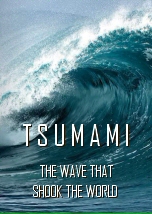


Among these unforgettable stories is that of Rob, an Englishman whose harrowing account of trying to rescue his family from a serene Sri Lankan beach brings the human cost of the disaster into stark focus. The film not only chronicles the tragic loss of approximately 230,000 lives and the displacement of 1.4 million people but also examines the enduring impact of the tsunami on a generation defined by both profound loss and incredible resilience. This riveting portrayal promises to captivate audiences with its blend of human drama and historical significance, urging viewers to reflect on the power of nature and the strength of the human spirit.