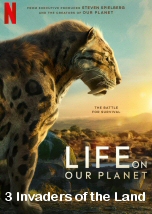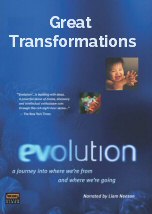







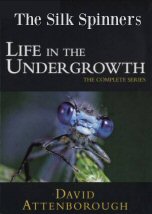




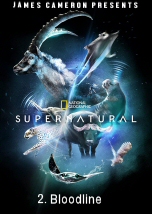
The third episode of the series is a visually stunning journey, from the earliest lichens and microplants to the imposing dinosaurs and the diversity of life forms we know today. Key moments in Earth's history are highlighted, such as the appearance of arthropods, the development of terrestrial flora and fauna, and the mass extinctions that have reshaped ecosystems. The documentary not only shows the resilience and adaptability of life on our planet but also highlights the fragility of our ecosystem and the crucial importance of preserving biodiversity for the future of Earth. This documentary is a celebration of life in all its forms and a powerful reminder of our role in protecting this incredibly diverse and dynamic world.
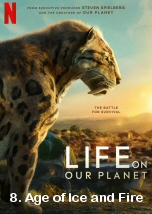
The final episode begins with a description of the extreme cold conditions that characterized the beginning of the Holocene period, and how species like the bison and the wolf adapted to survive in these hostile environments. We will witness the majesty of the woolly mammoth and the fierce cave lion, with a vivid reconstruction of their struggles for survival. We'll see the impact of climate change during this period, from the expansion of the deserts to the transformation of the tropical rainforests of Africa into grasslands, deeply affecting primates and other animals. It highlights how these changes forced primates to adapt to life on the ground, facing new challenges and predators. A crucial turn occurred with the emergence of humans as dominant predators and their influence on the extinction of large mammals. The documentary describes humanity's transition from hunter-gatherers to farmers, a change that radically altered the landscape and biodiversity of the planet. Finally, it poses a reflection on the current challenges of climate change and the sixth mass extinction, inviting viewers to consider humanity's crucial role in shaping the future of the Earth.
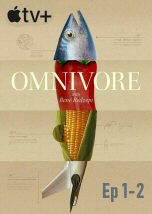
Across cultures and continents, this documentary explores how food has shaped civilizations, beliefs, and human identity throughout history. Narrated with a global perspective, it reveals how essential ingredients — from the simplest to the most prized — have influenced economies, traditions, and ways of life. From remote landscapes to bustling markets, it offers a captivating look at how what we eat connects the past with the future. In the first two episodes, the journey dives into the explosive story of chili peppers, tracing their path from humble origins to powerful cultural symbols across the world, from mild flavors to extreme heat. It then turns to bluefin tuna, uncovering how a once-overlooked fish became one of the most coveted and controversial delicacies on the planet, exposing a dramatic tale of demand, transformation, and global impact.
In these three episodes, we'll see how life on the farm becomes more ambitious, more expensive, and much more unpredictable. A major new arrival promises to transform the future of the business, while unexpected births bring fresh challenges and moments of joy among the animals. As the livestock move out to pasture and new technology is introduced to improve daily operations, every success seems to be matched by a new obstacle. What begins as a season of optimism soon becomes a race against time, budgets, and the realities of modern farming. Meanwhile, Jeremy takes a crucial step into the cattle trade and discovers that turning farm produce into a profitable venture is far more complicated than expected. His long search for a pub finally appears to be reaching a breakthrough, but expert advice reveals a daunting list of costs, regulations, and risks that threaten to derail the entire project. With major financial decisions looming and pressure mounting from every direction, the dream of building something bigger than a farm hangs in the balance.
The documentary not only shows the resilience and adaptability of life on our planet but also highlights the fragility of our ecosystem and the crucial importance of preserving biodiversity for the future of Earth. This documentary is a celebration of life in all its forms and a powerful reminder of our role in protecting this incredibly diverse and dynamic world.