



Last Watched

"Air"  Sort by

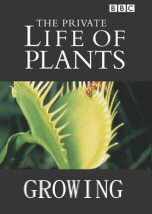
Growing

   1994    Nature
The second episode is about how plants gain their sustenance. Sunlight is one of the essential requirements if a seed is to germinate, and Attenborough highlights the cheese plant as an example whose young shoots head for the nearest tree trunk and then climb to the top of the forest canopy, developing its leaves en route. Using sunshine, air, water and a few minerals, the leaves are, in effect, the "factories" that produce food. However, some, such as the begonia, can thrive without much light. To gain moisture, plants typically use their roots to probe underground. Trees pump water up pipes that run inside their trunks, and Attenborough observes that a sycamore can do this at the rate of 450 litres an hour — in total silence. Too much rainfall can clog up a leaf's pores, and many have specially designed 'gutters' to cope with it. However, their biggest threat is from animals, and some require extreme methods of defence, such as spines, camouflage, or poison. Some can move quickly to deter predators: the mimosa can fold its leaves instantly when touched, and the Venus flytrap eats insects by closing its leaves around its prey when triggered. Another carnivorous plant is the trumpet pitcher that snares insects when they fall into its tubular leaves. Attenborough visits Borneo to see the largest pitcher of them all, Nepenthes rajah, whose traps contain up to two litres of water and have been known to kill small rodents.
Series: The Private Life of Plants

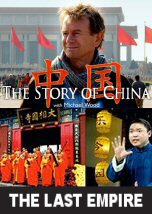
The Last Empire

   2016    History
China's last empire, the Qing, lasted from 1644 to 1912. It began in violence and war as the Manchus swept down from the north, but invaders became emperors, with three generations of one family ruling the country. Among them, Michael Wood argues, was China's greatest emperor - Kangxi. Under the Qing, China doubled in size to include Xinjiang in the far west, as well as Mongolia and Tibet, creating the essential shape of China today. The new dynasty tolerated a diversity of cultures and religions, including Islam. In Kaifeng, Michael visits a women's mosque with a female imam, a delightful scene that ends with laughter and selfies! The Qing also undertook huge cultural enterprises. At a traditional printing house where the wood blocks are hand-carved, we see how the Complete Tang Poems were reproduced - all 48,000 of them. We travel through the wintry countryside to a remote village where a hardy audience watch open-air opera in the snow and visit a painter's studio, and 'storytelling' houses in Yangzhou. In the 18th century, China was arguably the greatest economy in the world, and we get a fabulous sense of the rich culture that came with prosperity. But then came the clash with the British, in the first Opium War, when a British expedition destroyed the Qing navy and extracted territory and trading rights. We leave with a glimpse of the future. 'Every dynasty has risen and declined,' says Michael, 'and has needed new life to regenerate, and this time the catalyst was the British.' Among the ports China ceded was an almost uninhabited island, Hong Kong, one of today's greatest financial centres, and Shanghai, a small town then but now one of the greatest cities in world.
Series: The Story of China

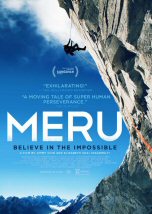
Meru

   2015    Culture
In the high-stakes game of big-wall climbing, the Shark’s Fin on Mount Meru may be the ultimate prize. Sitting at the headwaters of the sacred Ganges River in Northern India, the Shark’s Fin has seen more failed attempts by elite climbing teams over the past 30 years than any other ascent in the Himalayas. To undertake Meru, says Jon Krakauer, the bestselling author of Into Thin Air, "You can’t just be a good ice climber. You can’t just be good at altitude. You can’t just be a good rock climber. It’s defeated so many good climbers and maybe will defeat everybody for all time. Meru isn’t Everest. On Everest you can hire Sherpas to take most of the risks. This is a whole different kind of climbing."

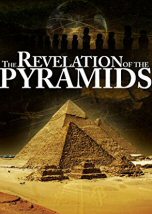
The Revelation of the Pyramids

   2010    History
An apocryphal view on the pyramids, starting in awe at the amazing achievement of the Pharaonic architecture and sculpture, most specially at Gizeh, given Cheops's pyramid's size, weight, incredibly precise carving, four pairs of slightly shifted half sides, stunningly precisely measured shapes and symmetry. Then it questions and challenges conventional Egyptology beliefs, which it calls unproven or even impossible to verify, such as the absence of machines, a wharf duration of only 20 years or accidental equinox-orientation. Next it elaborates the theory that other major pyramid technology sites in Precolombian America, Easter Island and China can't coincidentally lie on two lines intersecting at Gizeh, even if not contemporaneous and without known contacts in their ages, and have several improbable things in common, like some of their cultures. Elaborate mathematical theories and measurements indicate the Egyptians must have known some astronomy, pi and the golden number

Out of Sight

   2012    Science
The human eye is a remarkable piece of precision engineering, but it is also extremely limited. Beyond the narrow range of light that makes up the familiar colours of the rainbow is a vast spectrum of light, entirely unseen. Richard Hammond does just that, using ground-breaking new imaging technologies to take the viewer on a breath-taking journey of discovery beyond the visible spectrum, seeing the world, quite literally, in a whole new light. From death-defying aerial repairmen in the United States using ultraviolet cameras to seek out an invisible force that lurks unseen on power lines, to German scientists unlocking the secrets of animal locomotion with the world's most powerful moving x-ray camera, to infrared cameras that can finally reveal the secrets within a humble beehive, he shows how new technologies are letting us see our world anew.
Series: Invisible Worlds

Oaxaca to LA

   2020    Culture
Ewan McGregor and Charley Bormann are very close to finishing their journey. Discussions on security are still on the agenda; they cannot travel at night due to dangerous cartels. They will need to do many miles on a bus with space for the bikes inside. The team manage to get the bikes on after concerns they wouldn’t fit. Repairing and conditioning the bus is an achievement considering they did it in a few days.
Ewan and Charley get back on their bikes, and they head to their last border cross to enter the United States. After 12 hours in the border, the crew, Ewan and Charley make it to America. It’s an easy stretch to L.A. on their bikes. Ewan, the crew and family, finish the last leg. It’s done, they’ve managed to finish Long Way Up. It’s such an achievement. Episode 11 is a heartfelt finale, showcasing the end of an incredible journey from both Ewan, Charley, and the team that supported them.
Series: Long Way Up
Kingdom

Kingdom

2025  Nature
Becoming Human

Becoming Human

2010  History
Top Gear

Top Gear

2012  Technology
Vikings Season 1

Vikings Season 1

2013  History