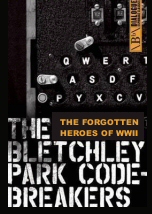
One of the main battles of the Second World War took place inside the brain of a mathematician called Alan Turing. During the war, the allies' key objective was to crack the German army's encrypted communications code. Without a doubt, the key player in the game was this interdisciplinary scientist and a long-forgotten hero. Alan Turing's breakthroughs, his story and tragic destiny, gives us a chance to look at the Second World War from a different angle.
The film reveals the secret story behind one of the greatest intellectual feats of World War II, a feat that gave birth to the digital age. In 1943 Bill Tutte, a 24-year-old maths student and a GPO engineer called Tommy Flowers combined to hack into Hitler's personal super code machine - not Enigma but an even tougher system, which he called his 'secrets writer'. Their break turned the Battle of Kursk, powered the D-day landings and orchestrated the end of the conflict in Europe. But it was also to be used during the Cold War - which meant both men's achievements were hushed up and never officially recognised.
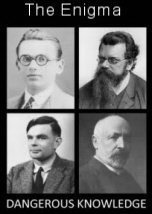
brilliant mathematicians whose genius has profoundly affected us, but which tragically drove them insane and eventually led to them all committing suicide. Kurt Gödel, the introverted confidant of Einstein, proved that there would always be problems which were outside human logic. His life ended in a sanatorium where he starved himself to death. Finally, Alan Turing, the great Bletchley Park code breaker, father of computer science and homosexual, died trying to prove that some things are fundamentally unprovable.
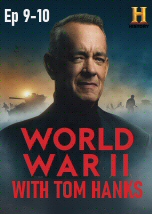
In episodes 9 and 10 of this series, the war moves from the secrecy of codebreaking rooms to one of the most brutal battlefields in history. Far from the front lines, in the quiet English countryside, a hidden struggle unfolds at Bletchley Park, where brilliant mathematicians, linguists and intelligence officers race to crack Germany’s Enigma code. Every intercepted message could save ships, reveal enemy plans and alter the fate of entire campaigns, turning silence, patience and genius into weapons as powerful as tanks or bombers. The story then shifts to the Eastern Front, where Hitler launches Operation Blue in a desperate drive toward the Soviet oil fields and the city of Stalingrad. What begins as a strategic offensive becomes a nightmare of street-by-street combat, starvation, freezing conditions and unimaginable sacrifice. As German forces are pulled deeper into the ruins and Soviet resistance hardens, Stalingrad becomes more than a battle for a city; it becomes a turning point in World War II, where ambition, endurance and catastrophe collide on a scale that changed the course of the war.








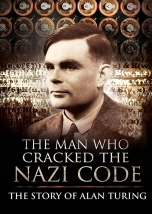
Alan Turing's breakthroughs, his story and tragic destiny, gives us a chance to look at the Second World War from a different angle.