As German forces sweep across North Africa under the command of the legendary General Rommel, a desperate struggle unfolds in the burning deserts of Libya and Egypt. Through intense combat, strategic brilliance, and extraordinary resistance, Allied soldiers face impossible odds during the siege of Tobruk and the decisive battle of El Alamein. Combining both episodes into one complete feature-length experience, this gripping documentary follows the dramatic campaign that helped change the course of the Second World War and transformed the desert into one of history’s most legendary battlefields. Using restored archival footage, detailed battle reconstructions, and powerful historical analysis, the documentary brings viewers directly into the chaos, tension, and human cost of the North African campaign. From relentless tank warfare to the psychological duel between Rommel and the Allied commanders, the story builds toward one of the most important turning points of the war, delivering a compelling and highly immersive experience for anyone fascinated by military history, strategy, and World War II.
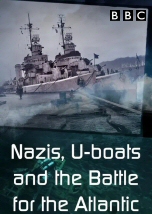
Hidden beneath the cold waters of the North Atlantic lies the untold story of one of World War II’s longest and most decisive campaigns. This documentary journeys to the north-west coast of Ireland, where deep-sea divers search for the wrecks of Hitler’s feared U-boat fleet, revealing silent battlefields that still bear the scars of war. Through these submerged remains, the film brings history to life, showing how the struggle for control of the seas shaped the fate of nations. Interwoven with the dives are personal memories from families in Northern Ireland and expert analysis from historians, uncovering the region’s vital role in the Allied fightback. As the wrecks emerge from the darkness, so do the human stories of courage, loss, and survival, transforming a military campaign into a powerful reflection on the true cost of war.
On July 25th, 2020, people all over the world filmed their lives and shared their stories to be part of a documentary film. When all the submissions were tallied, the filmmakers had received over 300,000 videos from 192 countries. The result is a stirring film about love, death, heartbreak, and hope that looks beyond geography and circumstance to explore what connects us as humans.
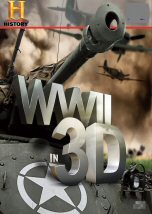
For the first time, you will see dramatic moments of WWII that were captured in 3D with stereographs and then shuttered away in secret archives and attics, until now. This stunning collection of colour 3D photos includes Allied reconnaissance photos, a trove of images that documents the rise and fall of the Third Reich, and photos secretly taken by a civilian in occupied France. WWII IN 3D also features an actual 3D motion picture film shot by the Nazis in 1943 and creates a fully immersive, three dimensional portrait of history's largest and bloodiest conflict.
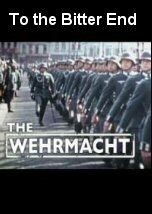
The determination of the German forces to keep on fighting in the face of defeat had disastrous consequences. After the Allied landings in the summer of 1944, the Wehrmacht was on the defensive on all fronts. It was clear to the German generals interned at Trent Park that Germany would soon lose the war. In mid-1944, Gerhard Graf von Schwerin chose to use common sense instead of blindly obeying Hitler's orders. He decided to surrender the city of Aachen to the US army to avoid bloodshed. Other commanders such as Field Marshal Ferdinand Schorner kept on pushing their soldiers to give their all. Despite being outnumbered by the Soviet forces, Schorner forced his soldiers to hold out in Sworbe, a 200 square kilometre peninsula on the coast of Estonia. Thousands of soldiers died. Yet Schorner's attitude and the urging by Hitler and Goebbels to hold out were accepted by a large number of young soldiers. By April 1944, the Ruhr pocket was completely surrounded, yet Field Marshal Model refused to surrender, so that 1.2 million German soldiers and a large number of Allied soldiers died between January and May 1945.
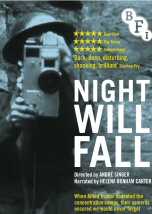
Researchers discover film footage from World War II that turns out to be a lost documentary shot by Alfred Hitchcock and Sidney Bernstein in 1945 about German concentration camps liberated by allied troops. When Allied forces liberated the Nazi concentration camps in 1944-45, their terrible discoveries were recorded by army and newsreel cameramen, revealing for the first time the full horror of what had happened. Making use of British, Soviet and American footage, the Ministry of Information’s Sidney Bernstein (later founder of Granada Television) aimed to create a documentary that would provide lasting, undeniable evidence of the Nazis’ unspeakable crimes. He commissioned a wealth of British talent, including editor Stewart McAllister, writer and future cabinet minister Richard Crossman – and, as treatment advisor, his friend Alfred Hitchcock. Yet, despite initial support from the British and US Governments, the film was shelved, and only now, 70 years on, has it been restored and completed by Imperial War Museums. This eloquent, lucid documentary by André Singer (executive producer of the award-winning The Act of Killing) tells the extraordinary story of the filming of the camps and the fate of Bernstein’s project, using original archive footage and eyewitness testimonies.
















Using restored archival footage, detailed battle reconstructions, and powerful historical analysis, the documentary brings viewers directly into the chaos, tension, and human cost of the North African campaign. From relentless tank warfare to the psychological duel between Rommel and the Allied commanders, the story builds toward one of the most important turning points of the war, delivering a compelling and highly immersive experience for anyone fascinated by military history, strategy, and World War II.