In the final two episodes of the series, the reptile trade enters a new and even more lucrative era. After prison, Tommy Crutchfield returns to find an industry transformed by the rise of genetically altered “morphs”, rare colour and pattern variations that can sell for enormous sums. What appears to be a more legitimate breeding business quickly collides again with illegal trafficking, as Operation Chameleon begins to expose the international network linking collectors, dealers and even major zoological institutions. The investigation then closes in on Anson Wong, the Malaysian trafficker described as one of the most powerful figures in the global reptile trade. As U.S. Fish and Wildlife agents work undercover to penetrate his organization, the story expands from rare snakes and lizards to critically endangered species such as the ploughshare tortoise, whose extraordinary black-market value has helped drive it toward extinction in the wild. These final episodes reveal how obsession, vast profits, corruption and international demand can turn the pursuit of exotic animals into a criminal empire with devastating consequences for wildlife.
In the final three episodes, the series follows animals being pushed to the edge as melting ice, extreme heat and prolonged drought reshape the environments they depend on. In the Himalayas, a snow leopard is forced from familiar territory, while an Arctic ground squirrel in Alaska undertakes an extraordinary migration and a young Arctic fox in Svalbard faces her first winter alone. These cold-adapted animals must rapidly change behaviours that once worked for generations as their frozen worlds become increasingly unstable. The struggle then shifts to the opposite extreme, where wombats, leopards and kangaroo rats are tested by record heat and worsening drought, pushing their remarkable physical and behavioural adaptations to their limits. In the final episode, attention turns to the people working directly to help wildlife survive these new extremes, revealing rescue efforts, scientific interventions and conservation strategies in some of the planet’s harshest environments. Together, these final chapters show that survival now depends not only on the animals’ ability to adapt, but increasingly on how far humans are willing to go to protect them.
In the final three episodes of the series, Chris Packham follows three extraordinary evolutionary journeys to discover how the relentless demands of survival transformed simple early animals into some of the most remarkable creatures alive today. In Borneo, the voracious appetite of the bat leads back more than half a billion years to the origins of the through-gut, the first anus, heads and jaws, revealing how the need to find and consume food helped reshape animal life and ultimately produced the bat’s extraordinary powers of hearing. In the Bahamas, the intelligence of dolphins opens an even deeper story: from ancient cells able to sense light to the evolution of eyes, complex brains, sophisticated senses and the remarkable minds of modern dolphins. The journey culminates with one of nature’s supreme athletes. Tracing the horse’s ancestry through hundreds of millions of years, Packham reveals how primitive muscle cells evolved into increasingly powerful systems for movement, how beating hearts supplied those muscles with oxygen, and how limbs became ever more effective tools for locomotion. Slithering, swimming, walking and running eventually converge in an animal built for extraordinary speed and endurance. Together, these final episodes reveal a breathtaking truth: hunger, perception and movement were not merely necessities of survival—they were powerful evolutionary forces that helped create the astonishing complexity of animal life.
In the final two episodes, the experiment moves from theory to real life as the twins are forced to take full control of their food choices after moving out on their own. Cooking becomes a daily challenge, exposing how habits, convenience, and culture shape what we eat. At the same time, innovators pushing plant-based alternatives step into the spotlight, as growing concerns around animal products raise urgent questions about health and sustainability. As the study reaches its conclusion, the results are finally revealed. Detailed analyses of weight, gut health, and brain function confront the twins with clear, and sometimes surprising, consequences of their diets. What began as a personal test widens into a broader reflection on the future of food, as momentum builds around a changing food industry and the choices that may redefine how we eat.
A chilling investigation dives into the looming threat scientists call “Disease X” — an unknown pathogen capable of triggering the next global pandemic. Led by physician and broadcaster Chris van Tulleken, the documentary explores how modern life, global travel, and human–animal contact are creating the perfect conditions for a catastrophic outbreak. What begins as a scientific inquiry quickly becomes a race against time to understand how close we may already be to the next crisis. To uncover where Disease X might emerge, van Tulleken retraces the fault lines of past outbreaks, from the deadly Nipah virus in Malaysia to the spread of bird flu among dairy cattle in California. Through frontline reporting, expert interviews, and unsettling real-world examples, the film reveals how fragile global health defenses truly are — and why the next pandemic may not be a question of if, but when.
The film centers on our ongoing mission to explore and come to terms with the Arctic, and the compelling stories of our many forays into this captivating place will be interwoven to create a unifying message about the state of the Arctic today. Underlying all these tales is the crucial role that ice plays in the northern environment and the changes that are quickly overtaking the people and animals who have adapted to this land of ice and snow.






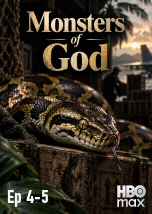



The investigation then closes in on Anson Wong, the Malaysian trafficker described as one of the most powerful figures in the global reptile trade. As U.S. Fish and Wildlife agents work undercover to penetrate his organization, the story expands from rare snakes and lizards to critically endangered species such as the ploughshare tortoise, whose extraordinary black-market value has helped drive it toward extinction in the wild. These final episodes reveal how obsession, vast profits, corruption and international demand can turn the pursuit of exotic animals into a criminal empire with devastating consequences for wildlife.