The filmmakers challenge former Indonesian death-squad leaders to reenact their mass-killings in whichever cinematic genres they wish, including classic Hollywood crime scenarios and lavish musical numbers. Anwar Congo and his friends have been dancing their way through musical numbers, twisting arms in film noir gangster scenes, and galloping across prairies as yodeling cowboys. Their foray into filmmaking is being celebrated in the media and debated on television, even though Anwar Congo and his friends are mass murderers. Medan, Indonesia. When the government of Indonesia was overthrown by the military in 1965, Anwar and his friends were promoted from small-time gangsters who sold movie theatre tickets on the black market to death squad leaders. They helped the army kill more than one million alleged communists, ethnic Chinese, and intellectuals in less than a year. As the executioner for the most notorious death squad in his city, Anwar himself killed hundreds of people with his own hands. The Act of Killing is about killers who have won, and the sort of society they have built. Unlike ageing Nazis or Rwandan génocidaires, Anwar and his friends have not been forced by history to admit they participated in crimes against humanity. Instead, they have written their own triumphant history, becoming role models for millions of young paramilitaries. The Act of Killing is a journey into the memories and imaginations of the perpetrators, offering insight into the minds of mass killers. And The Act of Killing is a nightmarish vision of a frighteningly banal culture of impunity in which killers can joke about crimes against humanity on television chat shows, and celebrate moral disaster with the ease and grace of a soft shoe dance number.
When Norwegian gamer Mats Steen died at age 25, his parents mourned what they thought was an isolated life. It was only once they had access to his blog that they discovered the deep friendships he created virtually before passing away from a degenerative muscular disease. They were unaware that Mats had long been leading a vibrant digital life that had left a profound impact on a community of fellow gamers. The film takes us on a journey through the breadth of Mats Steen's adventurous online life, introducing us to Ibelin, his charismatic World of Warcraft persona. Through reconstructed animated moments from Mats' gameplay, narrated entries from his blog and interviews with people who knew him as Ibelin, a picture of a remarkable young man emerges, one that underscores how community and soulful relationships can transcend the boundaries of the physical world.
Jessie Buckley narrates the extraordinary story of the first transatlantic communications cable. In 16 August 1858, a short message is telegraphed from County Kerry to Newfoundland, 3,000km away: ‘Europe and America are united by telegraph. Glory to God in the highest, on earth peace, good will towards men.’ The Morse code message is conducted along the new underwater transatlantic telegraph cable laid across the bed of the Atlantic Ocean. Sending the same message by ship would have taken at least ten days, but the transmission takes just hours and heralds the dawn of the modern communications age. The quest is driven by visionaries and pioneers. Among them are Cyrus Field, a wealthy businessman who, despite his immense success, ends his life in poverty; Samuel Morse, inventor of the telegraph and Morse code; Isambard Kingdom Brunel, the British engineer who pushes boundaries and budgets; and Belfast physicist Lord Kelvin, who calculates how to achieve what had hitherto been deemed impossible. Together, their ingenuity and relentless pursuit helps realise one of the great scientific accomplishments of their age for which Valentia, on Ireland’s remote western coast, is ground zero.
This rockumentary-style presidential portrait shows how Jimmy Carter reinvigorated a post-Watergate America-with the music of the counterculture, including the Allman Brothers, Bob Dylan, Willie Nelson, and Jimmy Buffett. Low on campaign funds and lacking in name recognition, Carter relied on support from these artists to give him a crucial boost in the Democratic primaries. Once Carter was elected, the musicians became frequent guests in the White House.
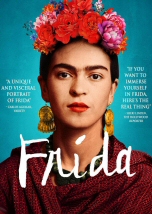
(Click CC for subtitles) Embark on a captivating journey into the heart of Frida Kahlo's vibrant existence. This profound exploration delves into the intimate world of the iconic artist, as narrated by Kahlo herself through her most personal diaries, revealing letters, thoughtful essays, and insightful interviews. Witness the raw and magical odyssey of her life, illuminated by the sorrows and joys that inspired her unforgettable art. The documentary comes alive with enchanting, lyrical animations that draw directly from the vivid colors and emotional depth of Kahlo's masterpieces, offering a visually stunning experience that mirrors the passion and complexity of her soul. This film is not just a biography; it's an immersive experience into the essence of Frida Kahlo's artistry and being, promising to leave audiences inspired, moved, and forever changed.
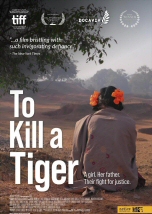
(Click CC for subtitles) Ranjit, a farmer in India, takes on the fight of his life when he demands justice for his 13-year-old daughter, the victim of a brutal gang rape. His decision to support his daughter is virtually unheard of, and his journey unprecedented. Nominated for Best Documentary Award, the film has an undeniable and unshakable power. It is one of those documentaries where anyone who watches it won’t be the same person by the end as they were when it started. To Kill a Tiger offers the viewer remarkable access to village life, not just in the modest home where Ranjit’s family make roti on an open fire, but in the fields where they herd goats and collect water from a pump. The camera finds quiet details, like Ranjit’s daughter carefully weaving ribbons into her hair. Women and men insist that the community, not the criminal court, should solve the issue with a forced marriage—to remove the ‘stain on her’. The men become increasingly hostile—to the family, and eventually to the film crew itself.









Medan, Indonesia. When the government of Indonesia was overthrown by the military in 1965, Anwar and his friends were promoted from small-time gangsters who sold movie theatre tickets on the black market to death squad leaders. They helped the army kill more than one million alleged communists, ethnic Chinese, and intellectuals in less than a year. As the executioner for the most notorious death squad in his city, Anwar himself killed hundreds of people with his own hands.
The Act of Killing is about killers who have won, and the sort of society they have built. Unlike ageing Nazis or Rwandan génocidaires, Anwar and his friends have not been forced by history to admit they participated in crimes against humanity. Instead, they have written their own triumphant history, becoming role models for millions of young paramilitaries. The Act of Killing is a journey into the memories and imaginations of the perpetrators, offering insight into the minds of mass killers. And The Act of Killing is a nightmarish vision of a frighteningly banal culture of impunity in which killers can joke about crimes against humanity on television chat shows, and celebrate moral disaster with the ease and grace of a soft shoe dance number.