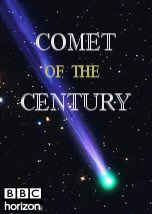












Comet ISON can well be the brightest and most spectacular comet for a generation. It appeared above the eastern horizon from December 2013 as a glorious streak across the sky. ISON has been travelling towards the sun for ten thousand years and will make only one orbit through its corona before disappearing off into the outer solar system. But as well as providing a great spectacle, ISON's tail of vaporised gas and water, hundreds of millions of kilometres long, will give insights into some of the greatest mysteries of science; it will help explain the origins of the solar system, whether earth's water was delivered on comets and even whether we are alone in the universe.
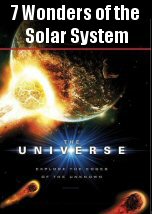
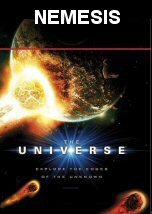
Take an exhilarating, unprecedented exploration of the seven most amazing wonders of our solar system. Our virtual tour begins with a trip to Enceladus, one of Saturn's outer moons, where icy geysers spout from its surface. Then venture to Saturn's famous rings, which contain mountain ranges that rival the Alps. Next dive into the eye of the biggest storm in the solar system--Jupiter's Great Red Spot. Soar through the Asteroid Belt, containing millions of leftover rocks from the formation of the solar system. Trek up Mount Olympus, the largest volcano, located on Mars. Have a close encounter with the searing surface of the Sun, and finish the journey by exploring our home planet Earth.
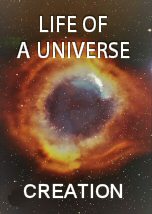
In this 2-part special, Professor Brian Cox tackles the biggest story of them all, the story of our Universe. In the first episode, Creation, Brian probes our moment of creation. How did our Universe come into existence? Was there a time before the Big Bang? Do our laws of physics inexorably lead to the existence of us?
Is there anyone out there? Astronomers have been pointing their radio telescopes at the skies for decades trying to pick up alien signals, so far without success. But now there's a new way of looking for aliens. Hitch a ride with Dr Graham Philips as he joins astronomers trawling through the galaxy looking for signs of extra-terrestrial intelligence.
For decades some have suspected that there might be others out there, intelligent beings capable of communicating with us, even visiting our world. It might sound like science fiction, but today scientists from across the globe are scouring the universe for signals from extraterrestrials. Horizon obtained exclusive access to film researchers at the Green Bank Telescope searching for radio signals from Tabby's Star, a star so mysterious that some scientists believe it might be surrounded by a Dyson Sphere, a vast energy collector built by advanced aliens.
It is the ultimate in adventure travel, but it is not for the faint of heart. But the sights — from Jupiter’s churning red eye to Saturn’s glittering rings — are out of this world. The series takes viewers on a breath-taking journey through the planets in our Solar System. See stunning images of each planet including highly detailed images captured by today’s ultra high-tech telescopes. Advanced animation takes you up close and personal with these distant worlds, as we plunge through space to get a better look at the neighbours.
But as well as providing a great spectacle, ISON's tail of vaporised gas and water, hundreds of millions of kilometres long, will give insights into some of the greatest mysteries of science; it will help explain the origins of the solar system, whether earth's water was delivered on comets and even whether we are alone in the universe.