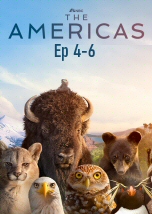









In the next three episodes the journey moves into three radically different worlds where survival depends on mastering water, ice and extreme seasonal change. In the Amazon, giant river otters hunt as a family, black caimans ambush newly hatched turtles, army ants sweep through the forest in highly organized raids and a harpy eagle guards a vulnerable chick high above the jungle floor. The rainforest emerges as a vast living system, shaped by rivers, floods, towering trees and countless species competing for food, space and the chance to raise their young. The story then heads north to Alaska and Canada, where polar bears wait for sea ice, wolves struggle through blizzards, hares evade lynx and immense caribou herds cross dangerous meltwater rivers during their ancient migrations. Finally, along the Gulf Coast, flooded swamps and subtropical wetlands become the stage for black bears, alligators, manatees, burrowing owls and one of America’s rarest wild cats, the ocelot. From the frozen Arctic to the humid marshes of Louisiana, Florida and Texas, these episodes reveal how animals adapt to landscapes that can change completely from one season to the next.
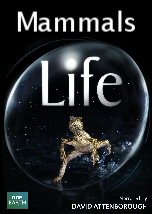
Mammals dominate the planet. They do it through having warm blood and by the care they lavish on their young. Weeks of filming in the bitter Antarctic winter reveal how a mother Weddell seal wears her teeth down keeping open a hole in the ice so she can catch fish for her pup.
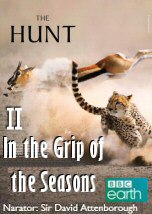
A powered hot air balloon produces stunning images of millions of migrating bats as they converge on fruiting trees in Zambia, and slow-motion cameras reveal how a mother rufous sengi exhausts a chasing lizard. A gyroscopically stabilised camera moves alongside migrating caribou, and a diving team swim among the planet's biggest fight as male humpback whales battle for a female.
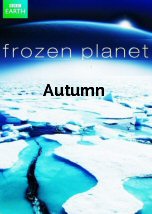
For the animals in the polar regions, autumn means dramatic battles and epic journeys. Time is running out - the Arctic Ocean is freezing over and the sea ice is advancing at 2.5 miles per day around Antarctica. Polar bears gather in large numbers on the Arctic coast as they wait for the return of the ice. Soon, tempers fray and violent sparring contests break out. Meanwhile 2,000 beluga whales head for one special estuary, a gigantic 'whale spa' where they will thrash their snow-white bodies against the gravel and exfoliate. Inland, the tundra undergoes a dramatic transformation from green to fiery red. Here, musk ox males slam head-first into each other with the force of a 30mph car crash as they struggle to defend their harems. Frisky young caribou males play a game of 'grandma's footsteps' as they try to steal the boss's female. Down in Antarctica, Adelie penguin chicks huddle together in creches. When a parent returns from fishing, it leads its twins on a comical steeplechase - sadly there's only enough for one, so the winner gets the meal. Two months later and the chicks are fully feathered apart from downy Mohican hairdos - they're ready to take their first swim - reluctantly though, as it seems penguins are not born with a love of water! And with good reason - a leopard seal explodes from the sea and pulls one from an ice floe, a hunting manoeuvre that has never been filmed before. As winter approaches and everyone has left, the giant emperor penguin arrives and makes an epic trek inland to breed. The mothers soon return to the sea leaving the fathers to hold the eggs and endure the coldest winter on earth.
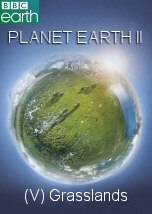
Grasslands cover one quarter of all land and support the vast gatherings of wildlife, but to survive here animals must endure the most hostile seasonal changes on the planet. From Asia's bizarre-looking Saiga antelope to the giant anteaters of Brazil, grassland animals have adapted in extraordinary ways to cope with these extremes. In the flooded Okavango, lions take on formidable buffalo in epic battles, on the savannah bee-eaters take advantage of elephants to help catch insects and, on the freezing northern tundra, caribou embark on great migrations shadowed by hungry Arctic wolves.
The story then heads north to Alaska and Canada, where polar bears wait for sea ice, wolves struggle through blizzards, hares evade lynx and immense caribou herds cross dangerous meltwater rivers during their ancient migrations. Finally, along the Gulf Coast, flooded swamps and subtropical wetlands become the stage for black bears, alligators, manatees, burrowing owls and one of America’s rarest wild cats, the ocelot. From the frozen Arctic to the humid marshes of Louisiana, Florida and Texas, these episodes reveal how animals adapt to landscapes that can change completely from one season to the next.