

Last Watched

"Cement"  Sort by

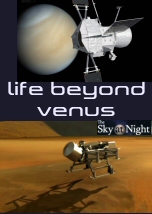
Life Beyond Venus

   2020    Science
Chris Lintott and Maggie Aderin-Pocock report on the reaction to the dramatic announcement of the discovery of phosphine gas in the clouds of Venus, a gas that could be a sign of life. Venus remains an inhospitable and unlikely host. But if not Venus, where in the solar system is the best place to look for alien life? Chris and Maggie investigate the latest missions to Mars and the icy moons of Jupiter and Saturn. Away from the search for life, Pete Lawrencepreviews the best meteor showers of the year.
Series: The Sky at Night
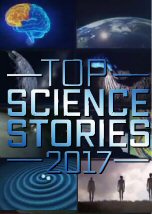

Top Science Stories of 2017

   2017    Science
Take a look back at many of the most fascinating science stories of 2017, a year full of stunning advancements in individual fields of study, from astronomy to biology, geology to history – when we piece these discoveries together we see the year in a new light.
Series: Top Science Stories

When Knowledge Conquered Fear

   2014    Science
The episode begins with Tyson describing how pattern recognition manifested in early civilization as using astronomy and astrology to predict the passing of the seasons, including how the passage of a comet was often taken as an omen. Tyson continues to explain that the origin of comets only became known in the 20th century due to the work of Jan Oort and his hypothesis of the Oort cloud. Tyson then continues to relate the collaboration between Edmond Halley and Isaac Newton in the last part of the 17th century in Cambridge. The collaboration would result in the publication of Philosophiæ Naturalis Principia Mathematica, the first major work to describe the laws of physics in mathematical terms, despite objections and claims of plagiarism from Robert Hooke and financial difficulties of the Royal Society of London. Tyson explains how this work challenged the prevailing notion that God had planned out the heavens, but would end up influencing many factors of modern life, including space flight. Tyson further describes Halley's contributions including determining Earth's distance to the sun, the motion of stars and predicting the orbit of then-unnamed Halley's Comet using Newton's laws. Tyson contrasts these scientific approaches to understanding the galaxy compared to what earlier civilizations had done, and considers this advancement as mankind's first steps into exploring the universe. The episode ends with an animation of the Milky Way and Andromeda galaxies' merging based on the principles of Newton's laws.
Series: Cosmos: A Spacetime Odyssey

Deliverance

   2014    History
All seems lost for the Allies. The Italians are defeated at Caporette, and a Bolshevik Russia pulls out of the war. But the American reinforcements are decisive, and the Allies emerge victorious. The Allies are unable to negotiate an honourable peace agreement, and the Treaty of Versailles, 20 years later, will have disastrous
Series: Apocalypse: World War 1

Framing Defense

   2015    History
In the seventh episode, as the murder trial continues, Steven's attorneys present their case that law enforcement officials planted evidence to frame him.
Series: Making a Murderer

Steve Jobs Man in the Machine

   2015    History
Directed by Alex Gibney, it follows the life and work of ex-Apple CEO Steve Jobs. Gibney starts the doc by showing how much people around the world worship Steve Jobs as if he were an idol. He then provides you with a wealth of background information about Jobs' childhood, teenage and college years including how he formed Apple Inc. Fortunately, not all of the doc is hagiography because Gibney does briefly delve into the darker side of Jobs, particularly how selfish he was and mistreated those around him including his ex-wife. Jobs comes across as a charming, intelligent narcissist who knows how to captivate an audience whenever he speaks. In other words, like all great narcissists, he's a very good actor. Gibney certainly knows how to choose the right subject because Jobs' complexity makes him all the more captivating and worthy of a feature-length film. As is usually the case with Gibney's docs, this one is slickly-edited and has just the right amount of comic relief, mostly in the brief video of an young boy joyfully lists all of Apple's technological devices that Steve Jobs created. You'll catch a glimpse of what makes Jobs fallible, and find a little mildly provocative food for thought about the advancement of modern technology, i.e. how technology helps to connect us to one another yet alienates us at the same time.
The Gene Code

The Gene Code

2011  Science
The Last Czars

The Last Czars

2019  History
The Cell

The Cell

  Science
The Hunt

The Hunt

2015  Nature
The Story of China

The Story of China

2016  History
Seven Ages of Rock

Seven Ages of Rock

2007  Art