


Last Watched

"Childhood"  Sort by

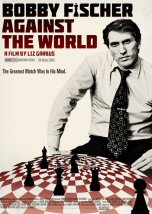
Bobby Fischer Against the World

   2011    History
Bobby Fischer Against the World is a documentary feature film that explores the life of chess Grandmaster and 11th World Champion Bobby Fischer. It incorporates interviews with chess players Anthony Saidy, Larry Evans, Sam Sloan, Susan Polgar, Gary Kasparov, Asa Hoffmann, Friðrik Ólafsson, Lothar Schmid and others. It includes never-before-seen footage from the World Chess Championship 1972. The drama of Bobby Fischer's career was undeniable, from his troubled childhood, to his rock star status as World Champion and Cold War icon, to his life as a fugitive on the run.

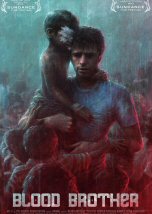
Blood Brother

   2013    Medicine
Rocky Braat went to India as a disillusioned tourist. When he met a group of children with AIDS, he decided to stay. He never could have imagined the obstacles he would face, or the love he would find.

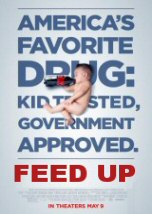
Feed up

   2014    Medicine
Upending the conventional wisdom of why we gain weight and how to lose it, Fed Up unearths a dirty secret of the American food industry—far more of us get sick from what we eat than anyone has previously realized. Filmmaker Stephanie Soechtig and TV journalist Katie Couric lead us through this potent exposé that uncovers why—despite media attention, the public’s fascination with appearance, and government policies to combat childhood obesity—generations of American children will now live shorter lives than their parents did.

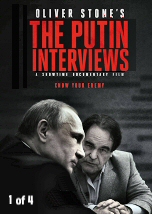
The Putin Interviews 1of4

   2017    Culture
Oscar-winning filmmaker Oliver Stone was granted unprecedented access to Russian president Vladimir Putin during more than a dozen interviews over two years, with no topic off-limits. This remarkable four-part documentary series provides intimate insight into Putin's personal and professional lives, from his childhood under communism, to his rise to power, his relations with four U.S. presidents, and his surprising takes on U.S.-Russian relations today. Witness the most detailed portrait of Putin ever granted to a Western interviewer.
Series: The Putin Interviews

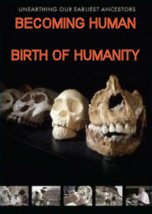
Birth of Humanity

   2010    History
We will nvestigate the first skeleton that really looks like us –Turkana Boy– an astonishingly complete specimen of Homo erectus found by the famous Leakey team in Kenya. These early humans are thought to have developed key innovations that helped them thrive, including hunting large prey, the use of fire, and extensive social bonds. The program examines an intriguing theory that long-distance running –our ability to jog– was crucial for the survival of these early hominids. Not only did running help them escape from vicious predators roaming the grasslands, but it also gave them a unique hunting strategy: chasing down prey animals such as deer and antelope to the point of exhaustion. Birth of Humanity also probes how, why, and when humans' uniquely long period of childhood and parenting began.
Series: Becoming Human

The Backbone of Night

   1980    Science
Carl Sagan teaches students in a classroom in his childhood home in Brooklyn, New York, which leads into a history of the different mythologies about stars and the gradual revelation of their true nature. In ancient Greece, some philosophers (Aristarchus of Samos, Thales of Miletus, Anaximander, Theodorus of Samos, Empedocles, Democritus) freely pursue scientific knowledge, while others (Plato, Aristotle, and the Pythagoreans) advocate slavery and epistemic secrecy.
Series: Cosmos