






Last Watched

"David Attenborough__"  Sort by

The Survival

   2012    Nature    3D    HD
David Attenborough discovers the plants that have evolved to shed their dependency on water enabling them to survive in the driest environments. The story begins at midnight in midsummer as David steps into the Princess of Wales Conservatory to witness the extraordinary nocturnal blooming of a cactus. The queen of the night, with its giant flowers, is the centre piece of a stunning symphony of cacti blooms that burst open in the desert (and at Kew) at night. In a mesmerizing 3D slow motion sequence, we discover the extraordinary connections between cacti and their natural pollinators: bats. As the sun rises, David meets other amazing plants. Species like the century plant, the Agave franzosini, which grows steadily for over 50 years, only to then flower itself to death with one mighty telegraph pole sized bloom which literally bursts out of the roof of Kew’s green house.
Series: Kingdom of Plants
Fix Our Climate

   2021    Nature
The climate is changing faster than ever, which is why 'fix our climate' is one of the five goals of the Earthshot Prize. Prince William, Sir David Attenborough and Christiana Figueres highlight inspiring and often unexpected solutions to the challenge. In this film, we'll explain the scale of the problem posed by climate change and will introduce you to some amazing people already working on climate crisis. One of these three finalists will win the Earthshot Prize and get the platform and resources they need to scale their ground-breaking work. Nine more solutions for fixing our climate will receive the same support over the course of this decade.
Series: The Earthshot Prize: Repairing Our Planet

Planet Earth III: Coasts

   2023    Nature
Discover amazing landscapes, the most amazing fights of animals on our planet, from the highest mountains to the deepest oceans, from the darkest caves to the hottest deserts with new technology. In the first episode, Sir David Attenborough explores the dangerous frontiers created by the world's coasts, where animals fight for survival amidst constant change. Cape fur seals, sea angels, lions, archer fish, flamingos and green turtles feature.
Series: Planet Earth III

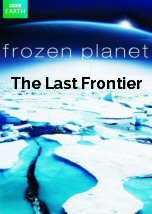
Frozen Planet: The Last Frontier

   2011    Culture
The documentary series reveals the extraordinary riches and wonders of the Polar Regions that have kept people visiting them for thousands of years. Today, their survival relies on a combination of ancient wisdom and cutting-edge science. Most Arctic people live in Siberia, either in cities like Norilsk - the coldest city on earth - or out on the tundra, where tribes like the Dogan survive by herding reindeer, using them to drag their homes behind them. On the coast, traditional people still hunt walrus from open boats - it is dangerous work, but one big walrus will feed a family for weeks. Settlers are drawn to the Arctic by its abundant minerals; the Danish Armed Forces maintain their claim to Greenland's mineral wealth with an epic dog sled patrol, covering 2,000 miles through the winter. Above, the spectacular northern lights can disrupt power supplies so scientists monitor it constantly, firing rockets into it to release a cloud of glowing smoke 100 kilometres high. In contrast, Antarctica is so remote and cold that it was only a century ago that the first people explored the continent. Captain Scott's hut still stands as a memorial to these men. Science is now the only significant human activity allowed; robot submarines are sent deep beneath the ice in search of new life-forms, which may also be found in a labyrinth of ice caves high up on an active volcano. Above, colossal balloons are launched into the purest air on earth to detect cosmic rays. At the South Pole there is a research base designed to withstand the world's most extreme winters. Cut off from the outside world for six months, the base is totally self-sufficient, even boasting a greenhouse.
Series: Frozen Planet

Protect and Restore Nature

   2021    Nature
Led by Prince William, founder of The Earthshot Prize and featuring Sir David Attenborough and other members of the Earthshot Prize Council, the series looks past the problems we face and onto the solutions that promise to deliver us all a sustainable world in which both nature and humanity can thrive.
In the first episode, David Attenborough introduces us to inspiring people with solutions to help restore nature, and reveals the three finalists of the first ever Earthshot Prize for Nature.
Series: The Earthshot Prize: Repairing Our Planet

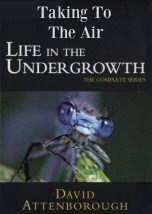
Taking To The Air

   2005    Nature
As the early June sun begins to set over a calm river in Central Hungary, masses of ghostly shapes emerge from their larval cases to take to the air for the first time. They are mayflies and in a spectacular display, thousands of them demonstrate how the very first wings were used. From the stunning aerobatics of hoverflies in an English garden to the mass migration of purple crow butterflies in the valleys of Taiwan, this episode tells the tale of the first animals ever to take to the air. Unique footage reveals the lightning fast reactions of bluebottles and hoverflies, filmed with one of the world's fastest cameras, and Sir David Attenborough handles the world's largest (and perhaps most ferocious) insect - the Titan beetle.
Series: Life in the Undergrowth
Through the Wormhole

Through the Wormhole

2011  Science
Dirty Money

Dirty Money

2018  Culture
The Climate Wars

The Climate Wars

  Nature
Food Inc

Food Inc

2009  Technology
Clarkson Farm Season 2

Clarkson Farm Season 2

2023  Nature
Arnold

Arnold

2023  History