An examination of the heavy metal music subculture that tries to explain why, despite the longevity and popularity of the genre, fans are marginalized and ridiculed for their passion. Sam Dunn is a anthropologist and a lifelong metal fan. After years of studying diverse cultures, Sam turns his academic eye a little closer to home and embarks on an epic journey into the heart of heavy metal. His mission: to figure out why metal music is consistently stereotyped, dismissed and condemned, even while the tribe that loves it stubbornly holds its ground -- spreading the word, keeping the faith and adopting styles and attitudes that go way beyond the music. Sam visits heavy metal landmarks as far flung as L.A.'s Sunset Strip, the dirty streets of Birmingham and the dark forests of Norway. Along the way, the two sides of Sam Dunn -- curious anthropologist and rabid fan -- collide, as Sam explores metal's obsession with sex, religion, violence and death, meets his heroes, and discovers some things about the culture that even he can't defend.
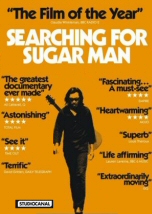
In the early 1970s, Sixto Rodriguez was a Detroit folksinger who had a short-lived recording career with only two well received but non-selling albums. Unknown to Rodriguez, his musical story continued in South Africa where he became a pop music icon and inspiration for generations. Long rumored there to be dead by suicide, a few fans in the 1990s decided to seek out the truth of their hero's fate. What follows is a bizarrely heartening story in which they found far more in their quest than they ever hoped, while a Detroit construction labourer discovered that his lost artistic dreams came true after all.
Dr Hannah Fry explores a paradox at the heart of modern maths, discovered by Bertrand Russell, which undermines the very foundations of logic that all of maths is built on. These flaws suggest that maths isn't a true part of the universe but might just be a human language - fallible and imprecise. However, Hannah argues that Einstein's theoretical equations, such as E=mc2 and his theory of general relativity, are so good at predicting the universe that they must be reflecting some basic structure in it. This idea is supported by Kurt Godel, who proved that there are parts of maths that we have to take on faith. Hannah then explores what maths can reveal about the fundamental building blocks of the universe - the subatomic, quantum world. The maths tells us that particles can exist in two states at once, and yet quantum physics is at the core of photosynthesis and therefore fundamental to most of life on earth - more evidence of discovering mathematical rules in nature. But if we accept that maths is part of the structure of the universe, there are two main problems: firstly, the two main theories that predict and describe the universe - quantum physics and general relativity - are actually incompatible; and secondly, most of the maths behind them suggests the likelihood of something even stranger - multiple universes. We may just have to accept that the world really is weirder than we thought, and Hannah concludes that while we have invented the language of maths, the structure behind it all is something we discover. And beyond that, it is the debate about the origins of maths that has had the most profound consequences: it has truly transformed the human experience, giving us powerful new number systems and an understanding that now underpins the modern world.
Discover the Eras of the Universe and the answer to this big question: When Will Time End? Once the notion that the universe started with a rapid inflation nicknamed the Big Bang became accepted by the majority of scientists, many possible fates are predicted by rival scientific hypotheses, including futures of both finite and infinite duration.
The ultimate fate of the universe is dependent on the shape of the universe and what role Dark energy will play as the universe ages.
A feature documentary about the world-famous magician, escape artist, and world-renowned enemy of deception, James 'The Amazing' Randi. The film brings to life Randi's intricate investigations that publicly exposed psychics, faith healers, and con-artists with quasi-religious fervour. A master deceiver who came out of the closet at the age of 81, Randi created fictional characters, fake psychics, and even turned his partner of 25 years, the artist Jose Alvarez, into a sham guru named Carlos. But when a shocking revelation in Randi's personal life is discovered, it isn't clear whether Randi is still the deceiver - or the deceived.
Their quest is to discover whether the items we throw away today have any value for tomorrow's world. In a unique science experiment, Dr George McGavin and Dr Zoe Laughlin chronicle the history of rubbish and explore how what we throw away tells us about the way we live our lives. With unprecedented access to one of the UK's largest landfill sites, the team of experts spend three days carrying out tests all over the site, revealing the secret world of rubbish. They also carry out three other 'archaeological' digs into historic landfills to chart the evolution of our throwaway society. Is mining trash for something valuable really viable? McGavin concluded: 'The idea of landfill mining is a pretty compelling vision of the future.'










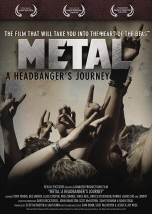



Sam Dunn is a anthropologist and a lifelong metal fan. After years of studying diverse cultures, Sam turns his academic eye a little closer to home and embarks on an epic journey into the heart of heavy metal. His mission: to figure out why metal music is consistently stereotyped, dismissed and condemned, even while the tribe that loves it stubbornly holds its ground -- spreading the word, keeping the faith and adopting styles and attitudes that go way beyond the music.
Sam visits heavy metal landmarks as far flung as L.A.'s Sunset Strip, the dirty streets of Birmingham and the dark forests of Norway. Along the way, the two sides of Sam Dunn -- curious anthropologist and rabid fan -- collide, as Sam explores metal's obsession with sex, religion, violence and death, meets his heroes, and discovers some things about the culture that even he can't defend.