Orbiting Earth at around 27.000 km/h, the International Space Station is one of humanity’s greatest engineering achievements, but also one of the most unforgiving places ever built. Astronauts and mission controllers recount moments when routine work suddenly became a fight for survival: a spacesuit filling with water, toxic ammonia spraying across a spacewalker, dangerous temperature extremes, radiation, fire, contamination and the constant threat of collision. The series reveals how every mission depends on training, improvisation and split-second decisions in an environment where even a small failure can become fatal. Across the two episodes, presented here together in a single uninterrupted video, the danger escalates from the hazardous construction and maintenance of the station to the growing risks of life aboard it. Astronauts face micrometeoroids and space debris travelling at lethal speeds, docking emergencies and system failures, culminating in the extraordinary 2021 incident when the newly arrived Nauka module unexpectedly fired its thrusters and sent the entire ISS rotating out of control. With communications at risk and the structure under immense strain, crews in orbit and controllers on Earth must work together to regain control. The result is a gripping story of courage, science and survival inside a machine that has kept humans continuously living in space for more than two decades.
Embedded on the front line, a journalist follows a Ukrainian platoon tasked with an almost impossible objective: crossing 2,000 meters of heavily fortified forest to retake a small but crucial village from Russian control. As the soldiers advance step by step, the camera captures the raw reality of modern warfare—exhaustion, fear, solidarity, and the constant presence of death—turning a military operation into an intimate portrait of those fighting it. As the mission unfolds, the film goes beyond tactics and gunfire to confront the deeper cost of war. The journalist witnesses shattered landscapes, broken bodies, and minds pushed to their limits, while doubts grow about how—and when—the conflict might end. What emerges is a haunting reflection on courage and survival, and on a generation forced to measure hope in meters gained at devastating cost.
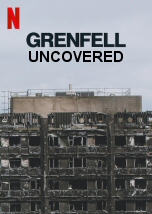
A harrowing yet essential documentary uncovers the avoidable disaster that claimed 72 lives in one of the UK’s worst residential fires. Through powerful testimonies of survivors, families and firefighters, the film reveals how a series of decisions—by authorities, contractors and building managers—turned a seemingly routine refurbishment into a catastrophic inferno. Exploring decades of warnings ignored, regulatory failure and corporate negligence, the documentary stitches together hidden emails, inquiry evidence and personal pain to show exactly how this tragedy wasn't just a fire, but a systemic collapse. It is both a memorial for the lost and a call for justice for those still fighting the consequences.
In the shadow of the Second World War, entire cities across Britain were plunged into darkness as waves of enemy bombers lit the skies with fire and destruction. Through newly restored archival footage and rare color images, the story unfolds of ordinary men, women, and children enduring nightly raids, shelters, and uncertainty. Survivors’ voices weave a vivid picture of fear, resilience, and solidarity in a nation pushed to the brink. Blending breathtaking visuals with powerful testimonies, this documentary immerses viewers in the heart of the Blitz like never before. It is a journey into the courage and spirit that defined wartime Britain, revealing how a population under siege discovered unity, sacrifice, and hope in the face of devastation.
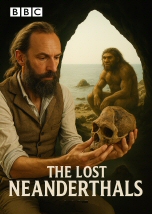
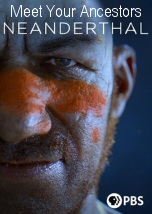
In the heart of southern France, the Mandrin Cave has drawn archaeologists for over three decades, its soils preserving an extraordinary archive of human life stretching back tens of thousands of years. Within its layers lie traces of fire, tools, and bones that tell the story of survival in a harsh prehistoric world. In 2015, the remarkable discovery of a Neanderthal individual—nicknamed Thorin—revealed that these ancient humans once lived side by side with the first Homo sapiens to arrive in the region. Following an international team of scientists, the investigation uncovers fragile relics of the Palaeolithic era that are rewriting our understanding of how two human species encountered one another. With every excavation, new details emerge about resilience, adaptation, and coexistence, offering a powerful re-examination of what it meant to be human 50,000 years ago. This is not only the story of the Neanderthals’ fate, but also of the deep roots of our own identity.
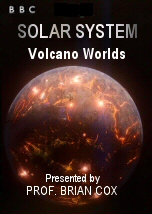
Embark on an extraordinary journey across our cosmic neighborhood to witness the hidden wonders of planets, moons, and asteroids—each world more astonishing than the last. Cutting-edge imaging and breathtaking visuals unveil the solar system in ways never imagined, revealing alien landscapes, colossal storms, and secrets that challenge everything we know about our place in the universe. In the first episode, you can explore volcanic realms where otherworldly landscapes are sculpted by fire and ice. Discover planets and moons blanketed with enormous volcanoes, some erupting so violently that plumes rise into the darkness of space. From oceans of molten rock to frozen geysers launching towering jets of vapor, these spectacular worlds showcase the raw power and beauty of nature beyond Earth.










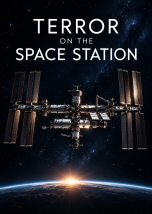



Across the two episodes, presented here together in a single uninterrupted video, the danger escalates from the hazardous construction and maintenance of the station to the growing risks of life aboard it. Astronauts face micrometeoroids and space debris travelling at lethal speeds, docking emergencies and system failures, culminating in the extraordinary 2021 incident when the newly arrived Nauka module unexpectedly fired its thrusters and sent the entire ISS rotating out of control. With communications at risk and the structure under immense strain, crews in orbit and controllers on Earth must work together to regain control. The result is a gripping story of courage, science and survival inside a machine that has kept humans continuously living in space for more than two decades.