






Last Watched

"Fur"  Sort by

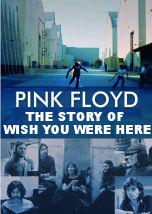
Pink Floyd: The Story of Wish You Were Here

   2012    Art
The film gives an extensive insight into the concept, the recording of the songs and the designing of the album cover. It includes exclusive interviews with almost every key person, who participated in producing the album. The band is represented by all three surviving members – David Gilmour, Nick Mason and Roger Waters. Other participating people include: Joe Boyd, Venetta Fields, Jill Furmanovsky, Roy Harper, Brian Humphries, Peter Jenner, Nick Kent, Aubrey Powell, Ronnie Rondell Jr. (who depicted the 'urning man' on the original cover), Gerald Scarfe, and Storm Thorgerson.

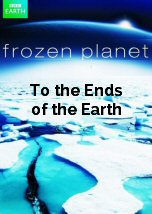
Frozen Planet: To the Ends of the Earth

   2011    Nature
Our journey begins with David Attenborough at the North Pole, as the sun returns after six months of darkness. We follow a pair of courting polar bears, which reveal a surprisingly tender side. Next stop is the giant Greenland ice cap, where waterfalls plunge into the heart of the ice and a colossal iceberg carves into the sea. Humpback whales join the largest gathering of seabirds on earth to feast in rich Alaskan waters. Further south, the tree line marks the start of the Taiga forest, containing one third of all trees on earth. Here, 25 of the world's largest wolves take on formidable bison prey. At the other end of our planet, the Antarctic begins in the Southern Ocean where surfing penguins struggle to escape a hungry sea-lion and teams of orcas create giant waves to wash seals from ice floes -a filming first. Diving below the ice, we discover prehistoric giants, including terrifying sea spiders and woodlice the size of dinner plates. Above ground, crystal caverns ring the summit of Erebus, the most southerly volcano on earth. From here we retrace the routes of early explorers across the formidable Antarctic ice-cap - the largest expanse of ice on our planet. Finally, we rejoin David at the South Pole, exactly one hundred years after Amundsen then Scott were the first humans to stand there
Series: Frozen Planet

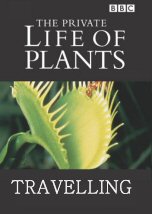
The Private Life of Plants: Travelling

   1994    Nature
Sir David Attenborough reveals plants as they have never been seen before - on the move and dangerously devious. About the major problems of life - growing, finding food, reproduction - and the varied ways plants have evolved to solve it. Filmed from the plant's point of view, using computer animations, fibre-optics and unique time-lapse photography. The first episode looks at how plants are able to move". The bramble is an aggressive example: it advances forcefully from side to side and, once settled on its course, there is little that can stand in its way. An altogether faster species is the birdcage plant, which inhabits Californian sand dunes. When its location becomes exposed, it shifts at great speed to another one with the assistance of wind — and it is this that allows many forms of vegetation to distribute their seeds. While not strictly a plant, the spores of fungi are also spread in a similar fashion. One of the most successful (and intricate) flowers to use the wind is the dandelion, whose seeds travel with the aid of 'parachutes'. They are needed to travel miles away from their parents, who are too densely packed to allow any new arrivals. Trees have the advantage of height to send their seeds further, and the cottonwood is shown as a specialist in this regard. The humidity of the tropical rainforest creates transportation problems, and the liana-species Alsomitra macrocarpa is one plant whose seeds are aerodynamic 'gliders'. Some, such as those of the sycamore, take the form of 'helicopters', while others, such as the squirting cucumber release their seeds by 'exploding'. Water is also a widely used method of propulsion. The tropical sea bean Entada gigas has one of the biggest fruits of all plants and is dispersed by water streams. However, most plants use living couriers, whether they be dogs, humans and other primates, ants or birds, etc., and to that end, they use colour and smell to signify when they are ripe for picking.
Series: The Private Life of Plants

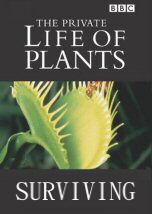
Surviving

   1995    Nature
the final episode deals with plants that live in hostile environments. Attenborough visits Ellesmere Island, north of the Arctic Circle, to demonstrate that even in a place that is unconducive to life, it can be found. Algae and lichens grow in or on rock, and during summer, when the ice melts, flowers are much more apparent. However, they must remain close to the ground to stay out of the chilling wind. In the Tasmanian mountains, plants conserve heat by growing into 'cushions' that act as solar panels, with as many as a million individual shoots grouped together as one. Others, such as the lobelia in Mount Kenya, have a 'fur coat' of dense hairs on their leaves. The saguaro cactus in the Sonoran Desert flourishes because of its ability to retain vast amounts of water, which can't be lost through leaves because it has none. Many desert dwellers benefit from an accelerated life cycle, blooming rapidly within weeks after rainfall. Conversely, Mount Roraima is one of the wettest places on Earth. It is a huge sandstone plateau with high waterfalls and nutrients are continuously washed away, so plants have to adapt their diet if they are to survive. A bladderwort is shown invading a bromeliad. Inhabitants of lakes have other problems to contend with: those that dominate the surface will proliferate, and the Amazon water lily provides an apt illustration. Attenborough ends the series with an entreaty for the conservation of plant species.
Series: The Private Life of Plants

Colours Of Earth

   2015    Science
In this episode, Helen seeks out the colours that turned planet Earth multicoloured. To investigate the essence of sunlight Helen travels to California to visit the largest solar telescope in the world. She discovers how the most vivid blue is formed from sulfur atoms deep within the Earth's crust and why the presence of red ochre is a key sign of life. In gold, she discovers why this most precious of metals shouldn't even exist on the surface of the planet and in white, Helen travels to one of the hottest places on Earth to explore the role salt and water played in shaping planet Earth.
Series: Colour The Spectrum of Science

Blood Filled Streets

   2016    History
After the murder of his brother Frank, Al Capone is out for revenge against William Dever and the Chicago police. He plots to kill every undercover cop that was in Cicero on the day of Frank’s death. Before he can set his plan in motion, however, Johnny Torrio returns from Italy and reclaims his control of their criminal empire. Torrio forbids Capone from killing cops, fearing it would spark an all-out war. Despite Capone’s personal loss, Torrio returns to a booming business that’s raking in $10 million a month. However, as Torrio and Capone’s empire grows, it becomes harder to keep smaller factions under control. After a small group of Italian mobsters attacks one of Dean O’Banion’s distilleries, O’Banion blames Torrio and decides to end their business partnership. He announces his retirement to Torrio and offers Torrio an opportunity to buy him out. Torrio meets O’Banion at the Seine Brewery on May 19, 1924, with the buyout money. Chicago police raid the brewery and arrest Torrio while letting O’Banion walk free: O’Banion had set the whole thing up. With prior convictions, Torrio serves a mandatory prison sentence but is first released on bail. He vows to kill O’Banion as payback and gives Capone his blessing to kill O’Banion. Capone spends months planning the hit. Capone knows that catching O’Banion off guard is nearly impossible, so he places an order with O’Banion’s flower shop for nearly $20,000 worth of flowers, knowing that O’Banion personally oversees his biggest arrangements. On November 10, 1924, O’Banion works in his shop preparing the flower delivery. Two of Capone’s men enter the shop and fatally gun O’Banion down. Four days later, Chicago’s most powerful Irish gangster is laid to rest in one of the most lavish funerals Chicago has ever seen. More than two dozen cars are required to transport floral arrangements as a crowd of 10,000 mourns the death of the infamous gangster. Torrio and Capone attend the funeral, infuriating O’Banion’s top lieutenants, Hymie Weiss and Bugs Moran. Chaos breaks out as smaller gangs through the city begin a turf war. It’s the beginning of an era of bloodshed in Chicago known as the Beer Wars. Over 300 people are murdered at a rate of 75 to 100 murders a year.
Series: The Making of the Mob
Planet Earth

Planet Earth

2007  Nature
Frozen Planet

Frozen Planet

2011  Nature
Food Inc

Food Inc

2009  Technology
Breakthrough

Breakthrough

2019  Medicine
Leaving Neverland

Leaving Neverland

2019  Culture
Frozen Planet II

Frozen Planet II

2022  Nature